





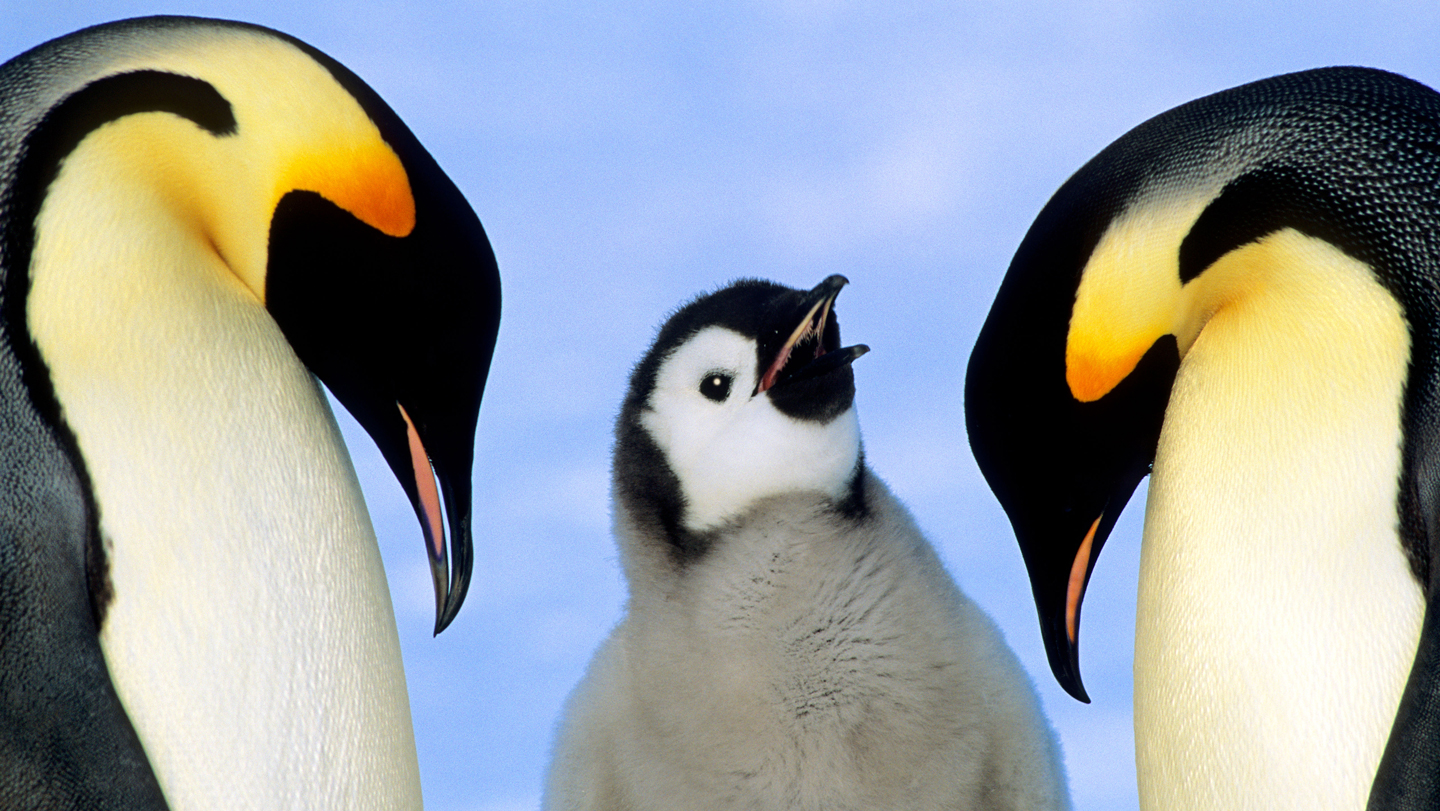
Imagine for a moment the sheer grit of a creature that calls the harshest place on Earth home—the Antarctic ice shelves, where winds howl like banshees and temperatures plunge to dizzying lows. Emperor penguins, the majestic giants of the penguin world, are nature’s unwavering warriors, standing tall at over three feet and weighing up to 80 pounds. For millennia, they’ve navigated a life filled with relentless challenges: frigid blizzards that can freeze a creature solid in minutes, epic journeys across treacherous ice to find food, the constant shadow of predators like leopard seals lurking beneath the waves, and the harsh reality of starvation when krill—that tiny shrimp-like lifeline—becomes scarce. Their breeding ritual alone is an awe-inspiring feat of endurance. Males huddle together in the dead of winter, fasting for months while incubating a single egg on their feet, their bodies forming massive, protective clusters against the onslaught of nature’s fury. Females, meanwhile, venture out to sea for feeding sprees that can last weeks, returning just in time to relieve their mates and nurture the fluffy chicks that emerge. This delicate dance has ensured the survival of their species, a testament to the resilience woven into the fabric of life in this frozen frontier. But now, as humanity’s fingerprints mark the warming planet, these emperors are facing an adversary far more insidious than any storm or seal—a silent, global shift that’s rewriting the rules of their icy kingdom. Climate change, driven by our insatiable hunger for fossil fuels and industrial expansion, threatens to unravel the very threads of their existence, pushing them perilously close to the precipice of extinction.
It was on April 9, a date etched in the annals of conservation history, that the International Union for Conservation of Nature (IUCN) delivered a somber verdict: emperor penguins, scientifically known as Aptenodytes forsteri, were elevated from “threatened” to “endangered” status on their Red List. This global roster, curated by a vast network of 17,000 scientists and experts from more than 160 countries, serves as a pulse check on the planet’s wild inhabitants, categorizing them by their risk of vanishing forever. An “endangered” label is no mere bureaucratic stamp; it’s a crimson alert screaming that these birds now teeter on the brink of “a very high risk of extinction in the wild.” Picture it as a family going bankrupt—once thriving but now overwhelmed by unseen debts. For emperor penguins, that debt is racking up in the form of disintegrating sea ice, the immovable platform they depend on like a solid foundation for their homes. Over the past decade, Antarctica has witnessed unprecedented lows in sea ice coverage, with the ice fracturing and receding earlier in the year, thanks to rising global temperatures melting polar regions at an alarming pace. These changes disrupt the penguins’ sacred breeding grounds, where stable “fast” ice—frozen solid for months—is essential. Without it, their world crumbles, exposing vulnerabilities that were once mitigated by the predictability of winter’s chill. It’s a story of unnatural acceleration, where our carbon emissions are chipping away at the ice like vultures circling a wounded prey, forcing these ancient survivors to confront an existential crisis born not from their own making, but from ours.
Vivid imagery captured by satellites in 2022 paints a heartbreaking scene of catastrophe near the Bellingshausen Sea, where five entire emperor penguin colonies were swallowed by the jaws of a thawing ocean. The sea ice beneath them shattered prematurely, plunging an estimated 10,000 fragile chicks into a nightmare of drowning in icy waters or succumbing to hypothermia. These young ones, with their soft, undeveloped feathers lacking waterproofing powers, were ill-equipped for such betrayal. One can only imagine the tragic poetry in it—the tender chaos of fluffy chicks, barely hatched, squalling in confusion as the world they knew disintegrated around them. Parents, valiant guardians in black-and-white tuxedos, could do little but watch helplessly as their offspring perished, a sacrificial toll in the gamble of survival. Current estimates peg the global emperor penguin population at around 595,000 breeding adults, a stark decline of 10 to 22 percent since 2009, underscoring the urgency of their plight. Projections from the IUCN cast a dark shadow into the future, predicting that this number could halve by 2080 unless drastic action is taken to curb climate change. It’s reminiscent of watching a cherished grandparent fade, their vibrant stories and wisdom eroding slowly yet unrelentingly—except here, it’s an entire lineage of emperor penguins facing potential erasure, their huddling rituals and epic migrations reduced to fading echoes in the wind.
“It’s more than just birds; it’s a wake-up call for all of us,” reflects Martin Harper, CEO of BirdLife International, the driving force behind the emperor penguin assessment. In a press statement laden with the weight of responsibility, he declared, “The emperor penguin’s move to Endangered is a stark warning: Climate change is accelerating the extinction crisis before our eyes.” These words resonate like a clarion bell, urging humanity to confront the interconnected web of life we share with these creatures. The penguins’ decline isn’t isolated—it’s a symptom of a broader malaise, where the ice floes that cradle their existence are melting into oblivion, courtesy of greenhouse gases trapping heat in our atmosphere. Experts point to the penguins’ dependence on stable sea ice as the crux of the issue, but underlying it all is our collective culpability. From the smoke stacks of factories pumping CO2 to the exhaust fumes of our daily commutes, every human action contributes to this icy unraveling. Yet, there’s a flicker of hope in Harper’s call; it implores us to envision a different path, one where innovation and policy shift toward renewable energies, where conservation efforts protect Antarctic sanctuaries, ensuring emperor penguins can continue their age-old march against adversity. Without it, we risk not just losing these symbols of endurance but also dulling the sharp edge of wonder in our own lives, for who among us hasn’t felt inspired by tales of survival against the odds?
Shifting our gaze southward across the Antarctic expanse, another marine marvel finds itself entangled in the same web of woe: the Antarctic fur seal, known scientifically as Arctocephalus gazella. These sleek predators, with their luxurious pelts and playful antics, have long prowled the fringes of South Georgia Island and beyond, thriving in a balance that now teeters precariously. In 1999, the IUCN deemed them of “least concern,” a status that screamed stability with a thriving adult population of about 2.2 million. But by 2025, that number had cratered to a mere 944,000, a breathtaking plummet of over 50 percent that plunged them into endangered territory. It’s a sobering fall, like a bustling community emptied by unchecked calamity, leaving behind a ghost town of echoes. The fur seals’ world, once abundant, is now besieged by the creeping tide of global warming, manifesting in rising ocean temperatures that brew havoc beneath the waves.
For Antarctic fur seals, climate change strikes at the heart of sustenance, much like drought throttling a farmer’s crops. Their diet hinges on krill, those minuscule crustaceans swarming in the cold waters, but as sea ice diminishes and ocean heat rises, krill populations migrate to deeper, darker depths beyond reach. Seal pups, dependent on abundant krill for growth and survival, face starvation’s cruel grip, with first-year mortality rates soaring as a direct result. Visualize a mother seal nurturing her pup on a rocky outcrop, her vigilant eyes scanning for threats, only for the krill feast to vanish like smoke. This isn’t just ecological disruption; it’s a poignant reminder of how interconnected life’s threads are—disrupt one, and the fragile tapestry unravels. The seals’ plight mirrors that of the emperors: a shared Antarctic destiny shaped by our planet’s fever, urging us to ponder our legacy. Will we preserve these icons of the wild, or consign them to history books? As stewards of Earth’s future, the choice weighs heavily, inviting reflection on the personal toll of inaction and the profound joy of safeguarding such wonders for generations yet unborn. In humanizing these stories, we glimpse our own vulnerabilities, inspiring empathy and action to heal the frozen wounds before it’s too late.