

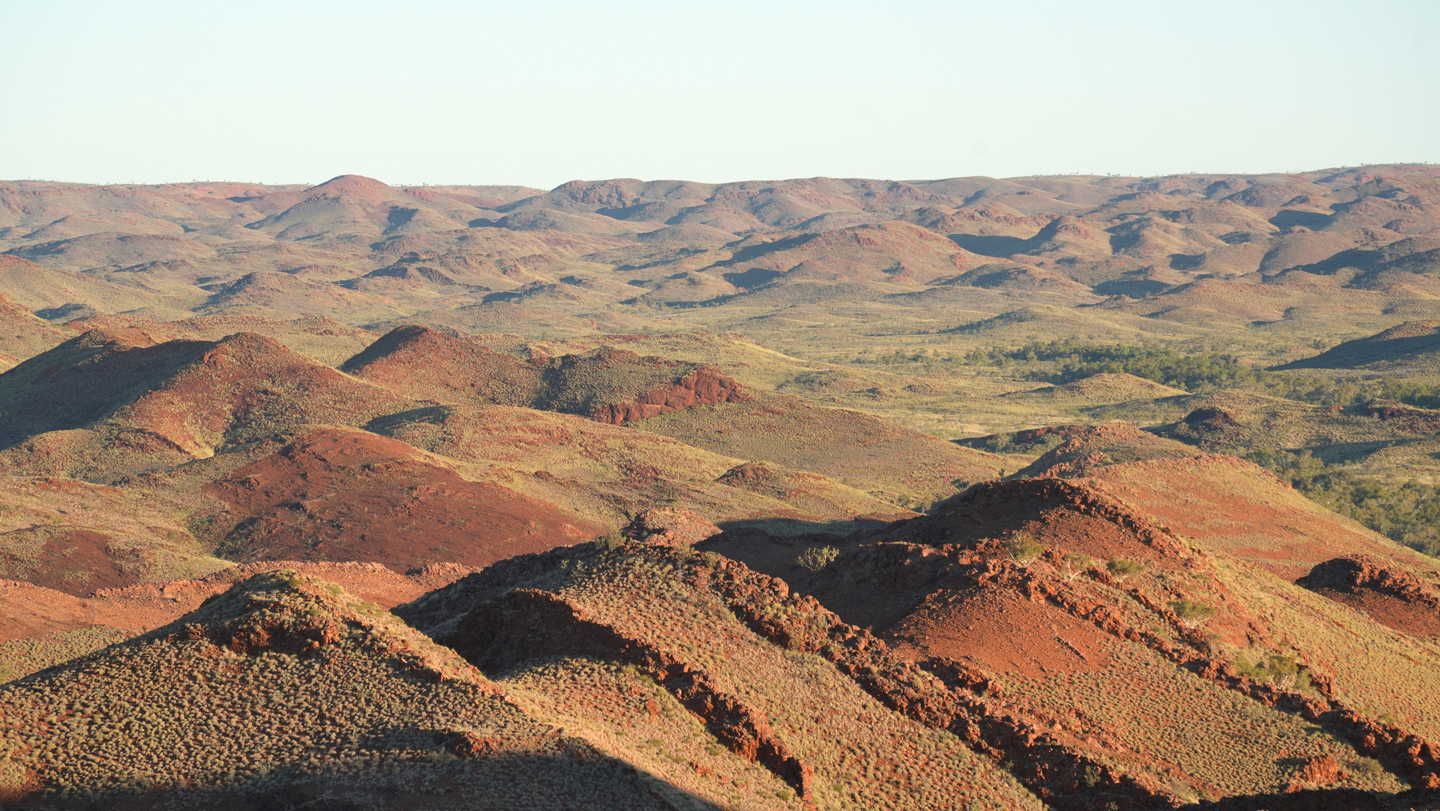
Imagine standing in the dusty, craggy hills of Western Australia’s Pilbara region, a place that feels like the edge of the world with its ancient, sun-baked rocks stretching out under a relentless sky. This isn’t just any old landscape; it’s a time capsule holding secrets from Earth’s earliest days. Researchers have just uncovered the oldest evidence yet that tectonic plates—those massive puzzle pieces of our planet’s crust—were sliding around, reshaping the surface in ways that set the stage for life as we know it. Tiny magnetic crystals embedded in the bedrock have recorded this movement, starting around 3.48 billion years ago. That’s a staggering 140 million years earlier than our previous understanding, pushing the timeline back to a period when our planet was still fiery and volatile. It’s like finding a hidden diary that rewrites the first chapters of Earth’s history, and it’s thanks to scientists like Alec Brenner from Yale University, who see this as crucial for grasping how our world became habitable. Without tectonics stabilizing the climate and fostering complexity, who knows if intelligent beings like us would ever have emerged?
Diving deeper into why this matters, tectonics isn’t just about earthquakes and mountains—though those are part of it. Picture the continents like gigantic, slow-moving rafts on a molten sea beneath our feet. In today’s world, these plates drift lazily, colliding and crunching to form ranges like the Himalayas or creating volcanoes when one plate dives under another in a process called subduction. This recycling of the crust is surprisingly vital; as rocks form and break down, they pull carbon dioxide from the air, acting like a natural thermostat to keep Earth’s climate steady over eons. Scientists believe this stability paved the way for complex life to thrive, evolving from single-celled critters in the oceans to creatures that roam the land. But pinning down when tectonics kicked off has been a hot debate among geologists, with guesses swinging wildly from a cozy 1 billion years ago to the wild early days of 4 billion years back, right after Earth cooled enough to sprout a solid shell. Now, with these Pilbara rocks, we’re zooming closer to the truth, revealing tectonics as an ancient force that tamed a chaotic planet into a nurturing home. It’s fascinating how something as seemingly mundane as plate shifting could be the unsung hero of biology, turning our blue marble from a barren rock into a vibrant world.
To uncover this ancient dance, scientists turn to a clever trick of nature: paleomagnetism. Think of microscopic crystals of a mineral called magnetite as tiny compasses embedded in rocks, locking in the Earth’s magnetic field like a snapshot in time. When rocks form, these crystals orient themselves based on the planet’s north pole, acting like frozen breadcrumbs that reveal where on the globe the rock once sat. By analyzing older and older stones, researchers can trace how continents wandered like nomads across the face of Earth. But it’s not easy; magnetism is delicate, easily erased by intense heat or pressure from deep underground. “It’s a very, very tenuous property,” notes paleomagnetic expert Roger Fu from Harvard University, likening it to trying to hear a whisper in a storm. The older the rock, the harder it is to extract that faint signal, and that’s why these ancient Pilbara formations are a godsend—they’ve preserved their magnetic story better than almost anything else from that era. It’s like piecing together a jigsaw puzzle from fragments scattered by time, requiring patience and ingenuity to see the big picture of Earth’s restless youth.
Building on this tool, Brenner and his team had already made waves with discoveries in another Pilbara spot, showing that a chunk of crust drifted over 5,000 kilometers in about 160 million years starting 3.34 billion years ago. For context, that’s like watching a modern continent shamble from New York to Paris and back, but we had a nagging doubt: was it the plates moving, or was the whole planet’s magnetic core flipping like a spinning top? They couldn’t fully rule out the magnetic shift explanation, making their findings intriguing but incomplete. Imagine being a detective with strong evidence but missing the smoking gun—exciting, yet frustrating. That earlier study hinted at motion, but left room for other interpretations, fueling debates in geology’s corridors. It’s human nature to question what’s not fully proven, turning scientific pursuit into a thrilling chase for clarity.
Then came the breakthrough in an area called North Pole Dome, where Brenner and Fu gambled years of fieldwork on rocks pushing 3.48 billion years old. After relentless searching for a clear magnetic signal—a “big gamble,” as Brenner calls it—they struck gold. The crystals betrayed a rapid northward sprint of 2,500 kilometers, over just several million years, shifting latitudes from Berlin’s chilly climes to around central Greenland’s icy fringes. But what sealed it wasn’t just this one region’s tale; corroborating evidence from equally ancient rocks in South Africa showed they stayed put near the equator during the same timeframe. “There was relative motion between two different parts of Earth’s surface,” Brenner explains. “The only way to do that is with plates.” This dual confirmation wiped away the shadow of doubt, proving independent plate movement—a tectonic tango where different continental bits perform their own steps. Previously, the earliest solid proof of such relative shifts was from 2.5 billion years ago, tied to crust fragments now in Wyoming and Canada. Now, the Pilbara rocks have yanked that timeline back, revealing plates grinding and gliding far earlier than we thought, like the planet’s natural symphony starting centuries before the audience arrived.
What’s even more mind-blowing is the speed: during that brief eruptive phase, the crust raced at 47 centimeters per year, about six times faster than any plate moves today. John Valley, a geochemist at the University of Wisconsin–Madison, thinks it’s plausible because Earth was a hotter, more malleable beast back then, with surplus heat escaping like steam from a pressure cooker. This warmth made the crust more flexible, allowing whiplash movements that powered volcanoes and mountain-building on steroids. Valley’s own work, using tough zircon crystals, suggests subduction—the sinking of plates—might have been happening as early as 4.2 billion years ago, just 300 million years after Earth formed, possibly hinting at even earlier tectonics. But he cautions that subduction isn’t synonymous with full plate tectonics; it could have been a tease, with the crust mostly standing still in other ways. Still, these findings open doors, making us wonder if life itself took off because of this early churning. For future hunters, the challenge is finding intact rocks older than 3.48 billion years—most have lost their magnetic whispers. “There are rocks at 3.7 or 3.8 billion years where this might be possible,” Valley muses, setting the stage for more voyages into Pilbara’s dusty archive. In the end, this isn’t just science; it’s a story of our planet’s wild adolescence, teaching us that stability and life emerged from chaotic motion, reminding us to cherish the ground beneath our feet. Who knew a handful of ancient crystals could feel so alive and urgent?