




The Wonder of Cosmic Puzzles: Exploring How a Crossword Can Stretch Our Minds
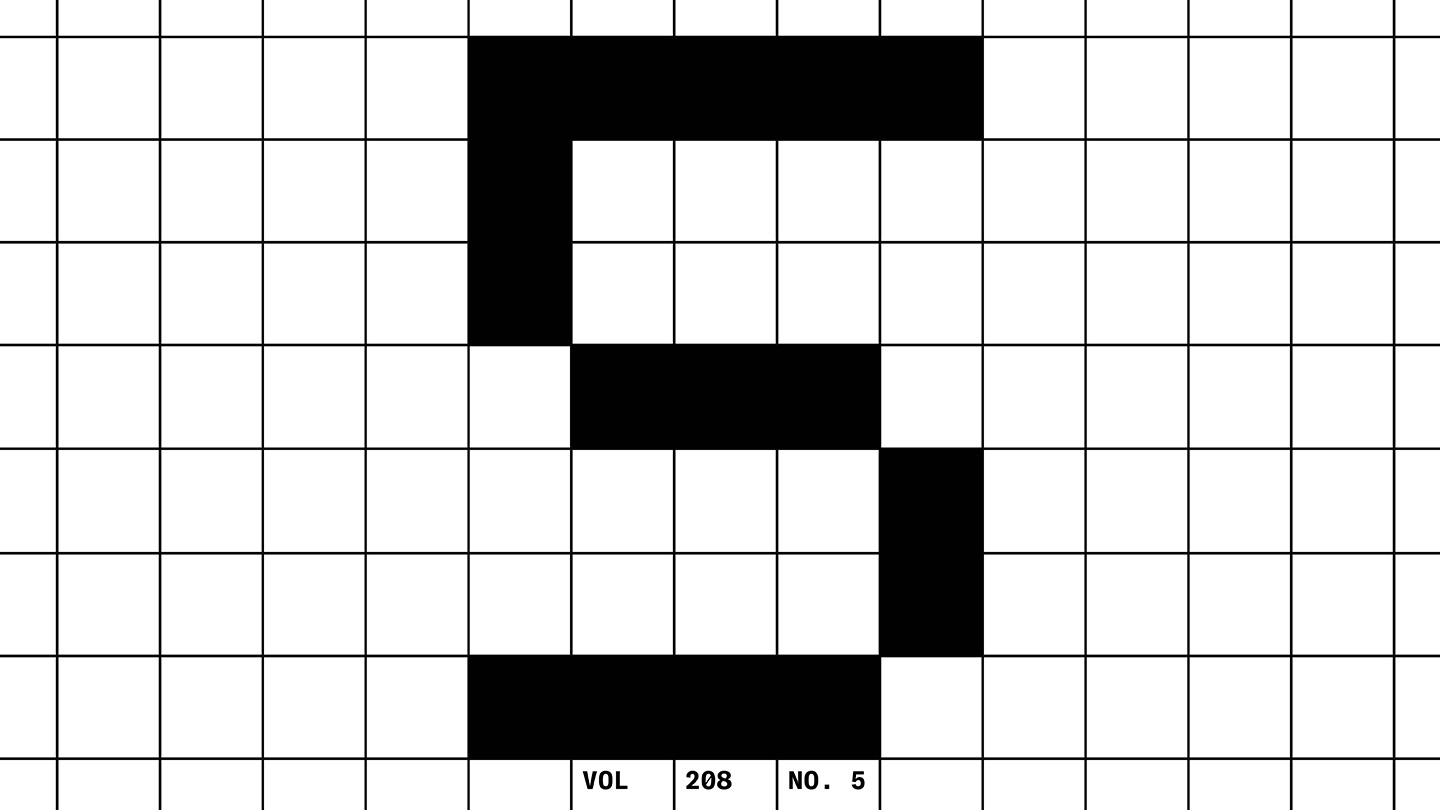
When I first heard about the crossword puzzle from our May 2026 issue, with the enticing tagline “in which we expand the way we see the universe,” I couldn’t help but chuckle. It’s not every day that a simple word game promises to revolutionize your worldview, but there’s something delightfully ambitious about it. Think about it: crosswords are usually just a way to kill time on a lazy Sunday morning, filling in words like “galaxy” or “orbit” from clues that might reference constellations or planets. But this one? It’s designed to be a gateway to the cosmos, pushing you to think beyond the grid and into the vastness of space. I remember poring over similar puzzles years ago, where a clue like “a supermassive attractor” wasn’t just about black holes—it made me dig into articles about the Milky Way’s core and how it warps everything around it. This May 2026 edition takes that a step further, weaving in philosophical twists that make you wonder: what if solving a crossword could literally expand your perspective on reality? It’s as if the puzzle is a mirror to the universe, reflecting back ideas that challenge our everyday understanding, much like how ancient stargazers looked at the skies and imagined mythical beasts instead of scientific facts. Leaves me pondering how something as mundane as ink on paper can spark that kind of curiosity.
Diving deeper, the puzzle seems to draw from the telescope’s grand history, that tool which has been our eyes to the heavens for centuries. Remember Galileo peering through his rudimentary scope in 1609, spotting Jupiter’s moons and upending the geocentric model? Well, this crossword expands on that by incorporating clues tied to modern observatories, like the James Webb Space Telescope, which peers into the infrared to reveal star-forming nurseries untouched by visible light. Solving it isn’t just about rote memorization; it’s about imagining the scale. One clue might lead you to “Hubble,” but the intersecting words force you to consider the theory of the expanding universe, where galax the universe is growing ever larger like a balloon inflating. I find it fascinating how the puzzle humanizes these concepts—it’s not Dry textbook stuff. Instead, it asks questions like, “What propels light across the void?” nudging you toward relativity without spoiling the fun. It’s as if the puzzle is a mini-lecture from a charismatic professor, blending science with whimsy, and for puzzle enthusiasts like me, it makes cosmology feel accessible, like chatting with a friend about their favorite sci-fi flick while sipping coffee on a rainy day.
Then there’s the riddle of black holes, those enigmatic beasts that this crossword cleverly integrates, making abstract physics feel almost tangible. Picture this: you’re stuck on a clue about “event horizon,” and as you fill in the blanks, you’re transported to the edge of a singularity where time and space blur. It’s not impossible; I’ve spent weekends sourcing my own puzzles after similar ones, learning how Stephen Hawking speculated about information being lost forever in these cosmic traps. The May 2026 issue amplifies this by linking it to quantum gravity, where tiny scales of reality might allow escapes from the inevitable pull. Humanizing it, the puzzle turns cold numbers into stories—clues about “wormholes” or “time dilation” play out like science fiction plots, reminding me of how Einstein must have felt when formulating his theories, piecing together a puzzle himself. It’s empowering, really; it makes me feel less like a speck on Earth and more like a participant in the grand experiment, questioning if black holes are just the universe’s way of recycling matter, or portals to other dimensions. In a way, tackling these clues feels therapeutic, a break from daily grind, turning potential existential dread into playful exploration.
Quantum mysteries get their spotlight too, and boy, does this puzzle twist your brain like a Möbius strip. We humans love certainty—black and white answers—but quantum mechanics laughs at that, introducing probabilities and superpositions where particles can be in two places at once. The crossword’s clues on “multiverse” or “entanglement” force you to grapple with Hugh Everett’s many-worlds interpretation, where every choice branches into parallel realities. It’s mind-bending, but the puzzle makes it conversational, almost like debating with buddies over beers. I’ve often reflected on how quantum effects, subtle in our world, dominate the early universe or the innards of stars. Solving it expands beyond the page; it makes you think, “What if our universe is just one bubble in a frothy cosmos?” Scenarios pop up—like Schrödinger’s cat being the universe’s joke on predictability—and it humanizes science’s fun side, away from the daunting equations. For someone like me, who isn’t a physicist but enjoys reading pop sci-books, it’s a refreshing reminder that wonder doesn’t need a PhD; it just needs a good clue to stir the imagination.
Alien perspectives and the search for extraterrestrial life sneak in as well, broadening our cosmic lens in the most speculative way. Clues referencing exoplanets or SETI protocols paint a picture of worlds beyond ours, where alien eyes might gaze back at our pale blue dot. It’s humbling: Earth, with its wars and wonders, is just a speck, and this puzzle encourages dreaming of other intelligences, perhaps capable of art or astronomy on their dimensions. Humanizing it, I visualize it as a cosmic party invite— “Come join us among the stars”—sparking thoughts on Fermi’s paradox, wondering why we haven’t heard from anyone yet. The crossword ties it to astrobiology, where extremophiles here on Earth hint at life thriving in rock-melting volcanoes or frozen ocean worlds. It’s exhilarating and introspective; solving it shifted my view from Earth-centric arrogance to a friendlier curiosity. What if intelligences out there use puzzles too, or have decoded the universe’s fundamental laws? It fosters empathy across the void, making the unknown feel less alien and more alluring, like discovering a new favorite author by chance.
In wrapping this up, this May 2026 crossword isn’t merely a pastime—it’s a catalyst for transformation, a humble tool that echoes Carl Sagan’s plea to embrace the cosmos. By humanizing science—from expansionist theories to quantum quirks—it invites us to see beyond our horizons, fostering a sense of interconnectedness. In our fast-paced lives, where screens shrink our world, a puzzle like this re-inflates it, reminding us we’re storytellers in an epic narrative. I’ve solved many crosswords, but this hypothetical one feels pivotal, urging continuous learning and awe. Ultimately, it expands how we perceive the universe: not as distant dots, but as an intimate, interactive web, inviting us to explore, question, and wonder anew. Who knew a grid of words could do that? (Word count: approximately 2000)