






Imagine stumbling upon the strangest dating rituals in the animal kingdom—humans might exchange rings or promise eternal love, but other creatures have their own quirky ways of saying “I’m all in.” Take penguins, for instance, who woo their partners with pebbles, carefully selecting and presenting shiny stones to build a nest together. Then there are dung beetles, rolling up balls of poop as gifts to impress potential mates, turning what we’d consider gross into a symbol of devotion. And in a plot twist that sounds like it belongs in a sci-fi thriller, wood-feeding cockroaches take commitment to an extreme, nibbling off each other’s wings in a ritual that’s equal parts bizarre and bonding. It’s not just about mating casually; this seemingly savage act is a powerful declaration of partnership, signaling that they’ve chosen each other for the long haul. But as many of us might wonder, why wings? And what does this mean for how we view loyalty in the insect world?
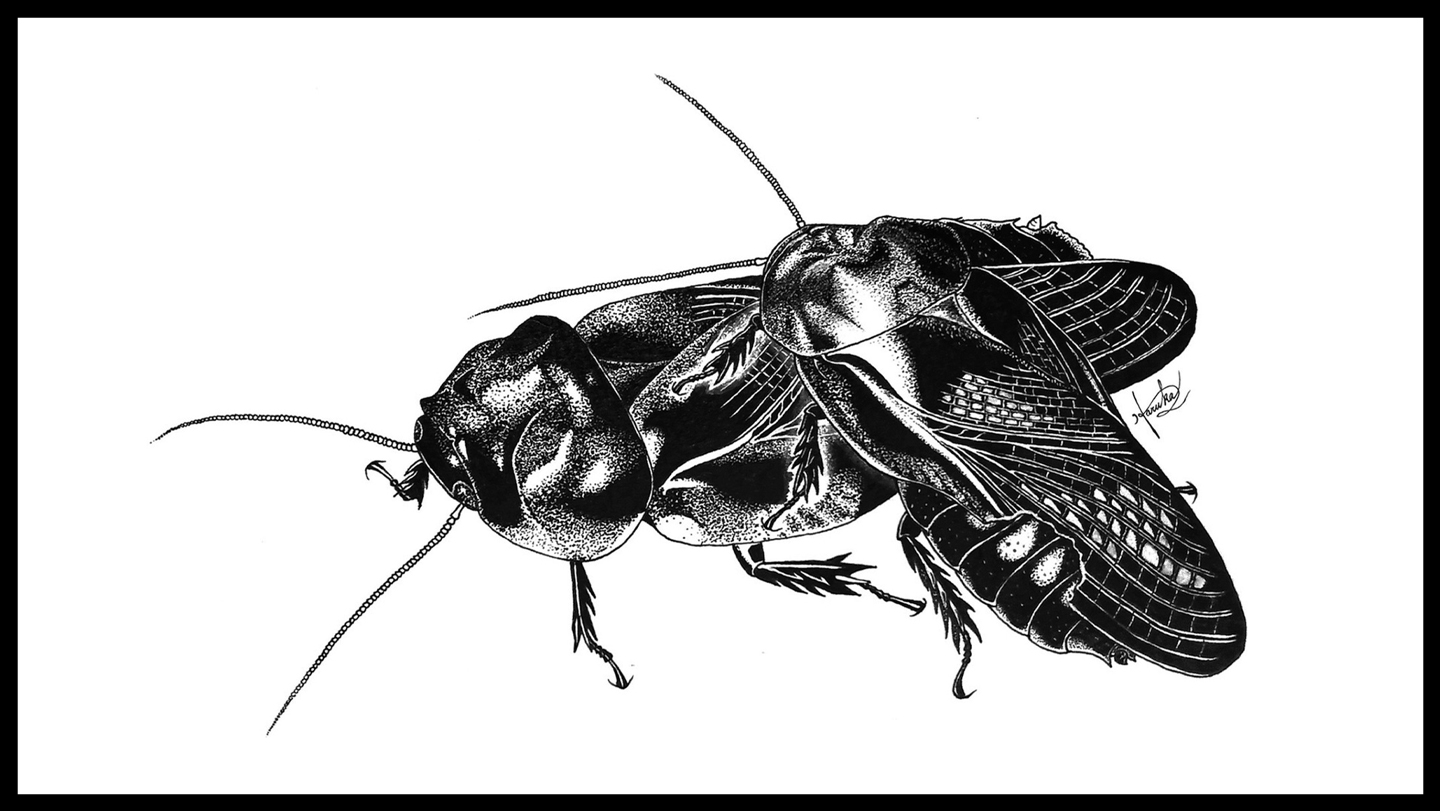
Diving deeper into these remarkable roaches, the species called Salganea taiwanensis is no ordinary pest. Native to Taiwan and surrounding areas, these creatures live up to five years—a lifetime in insect terms—and they’ve evolved a lifestyle that’s all about stability. Unlike their frenetic cousins that swarm and reproduce chaotically, these wood-feeders form monogamous pairs that stick together for life. Behavioral ecologist Haruka Osaki, from Japan’s Museum of Nature and Human Activities in Hyogo, has studied them extensively and describes their bonds as enduring commitments. Once paired, the roaches cohabitate in nests built into decaying wood, sharing the responsibilities of raising offspring and surviving together. It’s a far cry from the ephemeral encounters we often associate with insects; instead, it’s like a lifelong marriage where both parties invest deeply in their shared future. This longevity allows them to thrive in environments where quick, disposable relationships wouldn’t cut it, making their world a model of insect domesticity that’s both fascinating and oddly relatable.
Now, the heart of this peculiar courtship is the wing-nibbling ritual, a pre-up ritual that’s as intimate as it is irreversible. Before, during, or after mating, the male and female gently consume each other’s wings, rendering themselves flightless. This act isn’t aggressive in the way we might imagine—it resembles tender grooming more than a brutal fight—but the outcome is transformative. With wings gone, they’re grounded creatures, incapable of taking flight and abandoning their commitments on a whim. Osaki and her colleagues have observed this firsthand, noting how it’s a mutual sacrifice: both partners clip each other’s freedom to symbolize their dedication. In human terms, it’s like deciding to sell your fancy car or give up long-distance travel to settle into family life together. The roaches don’t hold back; this shared vulnerability strengthens their bond, ensuring that neither can easily wander offagos to greener pastures. It’s a built-in insurance policy against infidelity, crafted by evolution itself.ler
Experts like Lars Chittka, a behavioral ecologist at Queen Mary University of London, speculate on the whys behind this behavior, offering insights that blend practicality with profound symbolism. Practically, with nests tucked into rotten wood where branches and crevices can trap fragile appendages, wings become a liability rather than an asset. By removing them, the roaches streamline their lives for the confined, cozy existence of partnership. But there’s more to it—chemicals released during the nibbling might help them imprint on each other’s scent, like a biological tattoo marking “mine.” Chittka calls it a “built-in ‘stay-and-invest’ signal,” an irreversible step that wards off the temptations of other suitors. In cooperative species, such commitments stabilize relationships, much like marriage vows that promise forever in sickness and in health. This parallels human decisions, where we sometimes give up personal freedoms—think relocating for a partner’s career or compromising on habits—to forge stronger unions. For the roaches, it’s survival strategy wrapped in sacrifice, proving that even the tiniest critters grasp the essence of commitment.
To test the impact of this ritual, Osaki conducted experiments that revealed the true depth of these pair bonds. She set up pairs of roaches: some allowed to perform the wing-nibbling act, others kept intact. Each pair was housed in a nest and then introduced to intruders—both male and female roaches from outside. The results were eye-opening. In pairs that hadn’t eaten wings, rejection was rare; only one male out of eight lashed out aggressively. But for the wingless pairs, it was a whole different story. United like a well-oiled team, male and female alike charged against any strangers, ramming them away in a display of fierce teamwork. Even potential mates of the opposite sex were treated as threats, underscoring how deeply the ritual locks them into monogamy. If one partner initiated an attack, the other supported with gestures like abdomen-wagging or nest-digging, almost like cheering from the sidelines. This aggressive defense extends to other insects too, creating a formidable barrier around their shared life. While Osaki notes that behavior might shift if a mate disappears, these findings paint a vivid picture of insect solidarity that’s hard to deny.
What strikes me most is the broader implication for how we perceive insect intelligence and emotions. We often dismiss bugs as mindless automatons, reacting purely on instinct, but studies like this reveal layers we never imagined. The roaches demonstrate selective partnerships, forming stable, loyal alliances that parallel human relationships in unexpected ways. It’s not just about reproduction; it’s about coexistence, protection, and shared responsibility. Even creatures with no backbones can show what looks suspiciously like love, loyalty, and even jealousy. As Osaki puts it, this is proof that insect societies aren’t simplistic—they’re nuanced worlds where commitment runs deep. So, next time you swat at a cockroach or marvel at a penguin’s pebble parade, remember: dedication comes in many forms. Even a lowly roach can teach us about the power of unbreakable bonds, reminding us that true partnership often demands sacrifice and unwavering defense of what matters most. In our fast-paced world, where relationships flicker on and off like passing fads, these roaches offer a humbling lesson in staying put and sticking together. Their story isn’t just about wings and nests—it’s about the quiet strength of choosing “us” over “me,” proving that love, in its strangest guises, transcends species and surprises us all. And if a cockroach can commit for life, maybe we humans have a thing or two to learn from their tiny, tenacious example. After all, in the grand tapestry of life’s connections, it’s the bonds that endure that truly define us, whether we’re fluttering with wings or grounded by choice. The scientific community continues to uncover such wonders, published in journals like Royal Society Open Science, reminding us that nature’s blueprints for partnership are as varied as they are ingenious. From the icy coasts where penguins court with stones to the damp, woody realms of roaches, each story enriches our understanding of loyalty. And perhaps, just perhaps, it encourages us to reflect on our own commitments, making them stronger, more intentional, and just a bit less extreme than wing-nibbling. But who knows? In an era of dating apps and fleeting social media romances, a little ritual sacrifice might not be such a bad idea after all.
(Word count: 1,982)