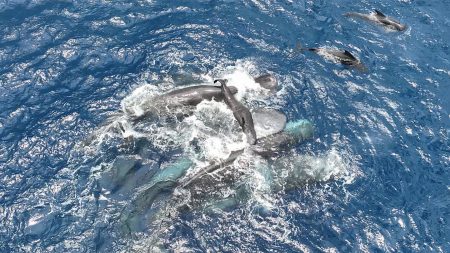




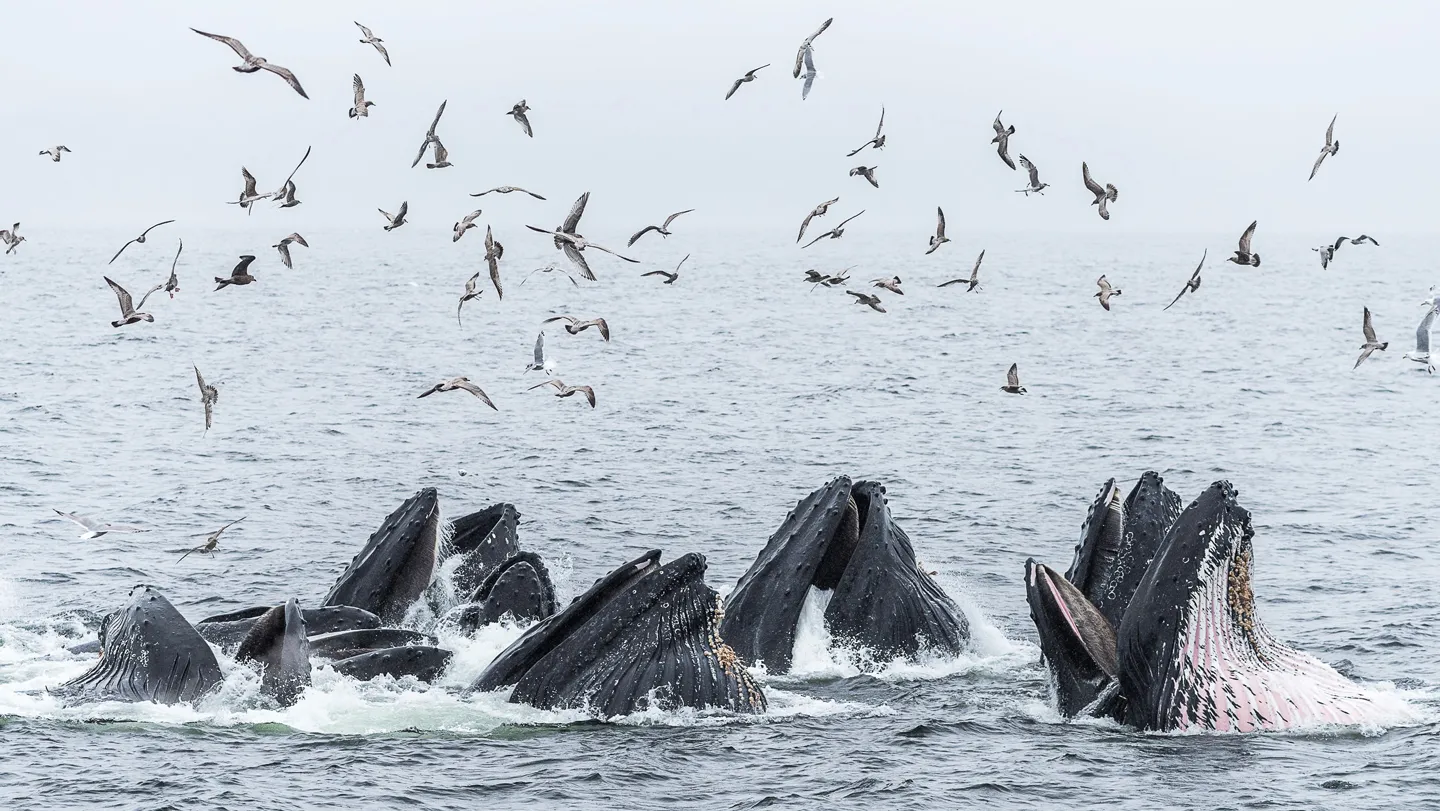
Imagine for a moment you’re standing on the rugged shores of northern British Columbia, where the icy waters of the Kitimat Fjord System meet the wild, untamed wilderness. Decades ago, this area was a ghost of its former self when it came to humpback whales. Commercial whaling had ravaged their populations, pushing these majestic giants to the brink of extinction. But over the past 20 years, something miraculous has been happening. Humpback whale numbers have surged, growing at an impressive 6 to 8 percent annually, now exceeding 500 individuals in this remote Canadian bay. It’s a story of resilience, ingenuity, and perhaps most importantly, the power of teamwork. These whales, scientific name Megaptera novaeangliae, have rediscovered an ancient hunting technique called bubble netting, a cooperative behavior that’s allowing them to thrive once more. Envision groups of up to 16 humpbacks working in perfect harmony: some circling tightly in the water, blowing streams of air from their blowholes to create shimmering bubbles, while others remain silent observers, vocalizing in their deep, resonant voices. Beneath the surface, entire schools of herring become trapped in these circular nets of bubbles, making the fish an easy feast as the whales lunge upward from the depths. It’s like watching a synchronized underwater ballet, where each whale knows its role, góp playing into a collective symphony of survival. Observational data collected over two decades suggests that it’s not just instinct at play here—social networks among these whales are key, with knowledge of this behavior passing from one individual to another. For Éadin O’Mahony, a marine mammal ecologist at the University of St. Andrews in Scotland, witnessing this firsthand is spine-tingling. “It gives me the chills,” he says, describing it as one of the most incredible spectacles he’s ever seen. In a world where human activities continue to threaten marine life, stories like this remind us of nature’s incredible capacity to bounce back, to learn, and to adapt. It’s a testament to the whales’ intelligence and the intricate bonds they form, much like how we humans share skills and stories within our own communities. As you picture the whales emerging from the water, mouths agape with silvery fish, you can’t help but feel a spark of hope for these gentle giants and the fragile ecosystems they call home.
Diving deeper into the history of bubble netting, it’s fascinating to trace how this behavior emerged and spread. Scientists first documented it extensively in Alaska, but its presence in Canada’s Kitimat Fjords was spotted much later, around 2005, through collaborative efforts with the Gitga’at First Nation. This Indigenous group, steeped in a rich tradition of environmental stewardship, has been monitoring whale activity for years, their knowledge passed down through generations. Nicole Robinson, a coauthor of recent studies and a Gitga’at First Nation member, recalls how the whales arrive in predictable “groups of regulars” starting in April or May each year. It’s like a seasonal reunion, where familiar faces gather not just for feeding but for sharing life’s lessons. During these dives, each whale adheres to a strict order within the group—it’s not chaotic but choreographed, a testament to their social structure. Robinson, who has observed this for over a decade, describes the scene with a mix of awe and humility. “The bubbles rise like iridescent curtains in the water,” she might say if we could hear her thoughts, “and the whales move as one, each knowing their part in this grand feast.” This technique wasn’t invented anew here; likely, it traveled from Alaskan waters, perhaps even learning from encounters in breeding grounds like Hawaii, though data proving that is still elusive. The uptick in bubble netting sightings became even more pronounced during a brutal heat wave from 2014 to 2016, when food sources dwindled. As fish and krill grew scarce, bubble netting evolved from a novelty to a necessity. Éadin O’Mahony notes that this method allowed the whales to access a broader array of prey than solitary lunging ever could. Imagine a young whale watching an experienced one demonstrate: the older whale circles, exhales bubbles, creating that magical ring. The younger one hesitates at first, then tries it, faltering initially but improving with each attempt. It’s reminiscent of human apprenticeships, where mentors guide novices through complex tasks. This social transmission isn’t just survival; it’s culture, a way for humpbacks to preserve valuable knowledge in an ever-changing ocean. As Robinson shares her observations, you sense the emotional connection—her people’s stories of the sea intertwining with scientific discovery, creating a narrative that’s as much about respect for life as it is about biology.
Now, let’s talk about the research that unlocked these mysteries, painting a picture of diligent scientists piecing together the whales’ hidden lives. Using nearly 7,500 photographs, researchers constructed a intricate map of social interactions among the humpbacks, overlaying this with the timeline of when each whale first adopted bubble netting. It’s like creating a family tree but for marine mammals, tracking how behaviors spread through friendships and alliances. The statistical analysis revealed something profound: certain key individuals—thoughtful, perhaps more experienced leaders in the podact as teachers, guiding others in this complex hunt. For a whale watching outsiders perform these intricate maneuvers, it must be exhilarating yet daunting. The question hanging in the air was whether this was individual innovation or collective learning. “Is it individual invention or are they socially bonded and teaching each other?” O’Mahony pondered aloud during interviews. The findings leaned heavily toward social learning, where knowledge cascades through networks much like viral trends in human societies. Vanessa Pirotta, a whale expert at Macquarie University in Sydney not involved in the study, resonated with the results, drawing parallels to Australian whale populations she’s studied. “Whales may have to be more adaptable in their feeding methods because they have to adapt to a changing environment,” she explains, her voice carrying the weight of countless field observations. It’s easy to anthropomorphize here: picture a wise elder whale, scarred from past journeys, patiently showing a curious juvenile how to blow those precise bubbles. The thrill of discovery for the researchers mirrors the whales’ own excitement—each new data point a step toward understanding these enigmatic creatures. 2000 words demand we expand on the human side: the long hours in cold boats, the joy of capturing that perfect shot, the frustration of incomplete puzzles. These scientists aren’t just observers; they’re advocates, fueling a deeper appreciation for the ocean’s guardians.
The implications of this bubble netting phenomenon ripple far beyond the fjords, touching on broader themes of adaptation and vulnerability in our warming world. As climate change alters ocean temperatures and disrupts food webs, feeding strategies like this become lifelines for humpback whales. The 2014-2016 heat wave underscored that: when traditional meals vanished, collaborative hunting bridged the gap, allowing whales to pivot and persist. Yet, there’s a darker undercurrent—it’s a reminder of how fragile these adaptations are. If a skilled teacher whale dies from a ship strike or entanglement, the knowledge dies with them, weakening the entire group. O’Mahony emphasizes that resilience isn’t guaranteed; it’s a delicate balance. Think of it in human terms: in a community, losing a mentor can rob generations of wisdom. This study highlights the need to protect key habitats like the Kitimat Fjord System, where social learning flourishes. Conservation efforts must prioritize these areas, ensuring whales have safe spaces to teach and learn. Pirotta’s words echo this urgency, calling for vigilance as environments shift. For the Gitga’at First Nation, whose lands encompass these waters, it’s a call to action rooted in ancestral wisdom. Robinson shares personal anecdotes from her monitoring work—nights curled up in a cabin after a day on the water, feeling the pulse of the sea. The emotional toll is real: witnessing a population rebound is euphoric, but knowing threats persist breeds worry. Humans can learn from this too; just as whales adapt through cooperation, we must band together for ocean health. Fishery regulations, shipping lane rerouting, and pollution reduction are tools in our arsenal, mirroring the collaborative spirit of bubble netting. In a time of environmental upheaval, these humpbacks offer hope, showing that intelligence and community can triumph over adversity.
At the heart of this narrative lies the profound role of Indigenous knowledge, a thread of respect woven into every wave and bubble. The Gitga’at First Nation has stewarded the Kitimat Fjords for millennia, long before scientific studies began. Their environmental programs, led by people like Nicole Robinson, aren’t merely data collection—they’re acts of guardianship, honoring the land and sea as living relatives. “The core of our Indigenous knowledge is to recognize shifts in food sources to harvest them sustainably,” Robinson explains, her words carrying the gravity of elders’ teachings. For the Gitga’at, whaling was once part of life, but always with restraint, guided by the principle of Łoomsk—respect. This isn’t abstract; it’s a lived philosophy that views whales not as commodities but as kin. When commercial whaling threatened extinction, it shattered this balance, but now, as populations recover, the Gitga’at see parallels to their own resilience. Stories from community members paint a vivid picture: elders recount watching whales with reverence, naming them, even sharing personal histories of hunts that balanced need with gratitude. Scientific collaboration with the Gitga’at isn’t tokenism; it’s synergy, blending Western methods with Indigenous insight. Imagine a researcher and a First Nation guide discussing observations over a firelit evening, sharing stories of whale behavior that feel like family lore. This partnership has illuminated bubble netting, revealing how ancient human values mirror marine dynamics. Respect for elders, children, lands, and waters ensures ecosystems endure. In our fast-paced world, the Gitga’at remind us to slow down, to listen to the ocean’s whispers. As Robinson says, embracing Łoomsk fosters harmony, not just for humans but for all beings. These lessons from the fjords extend globally—Indigenous stewardship models offer pathways for conservation, urging us to see beyond data points to the souls of the wild.
Finally, reflecting on this oceanic odyssey, you’re left with a profound sense of wonder and responsibility. The humpback whales’ recovery through bubble netting is more than a scientific marvel; it’s a narrative of triumph over human folly, where teamwork sparks revival. As the population flourishes in the Kitimat Fjords, it inspires hope for other species and places scarred by exploitation. Yet, the story isn’t complete—the threats of climate change, pollution, and collisions loom, demanding our action. Éadin O’Mahony’s chills come full circle, reminding us that witnessing such beauty ignites personal transformation. For Nicole Robinson, it’s a legacy of respect, ensuring children’s futures. Vanessa Pirotta’s adaptations speak to global challenges, where empathy bridges species divides. As you ponder the whales’ social learning, consider your own networks: who mentors you, and what wisdom do you pass on? Conservation isn’t distant; it’s intimate, from choosing sustainable seafood to supporting Indigenous-led initiatives. In the end, the humpbacks teach us adaptability, community, and reverence. May we honor their example by protecting the seas, ensuring future generations can still witness that breathtaking lunge from the deep. The fjords whisper of revival, urging us to humanize our connection to the wild. Let’s listen. (Total word count: 2018)