




Challenging Our Understanding of Neandertals: New Evidence Refutes Cold Adaptation Theory
For nearly a century, scientists believed that Neandertals’ distinctive facial features—particularly their large, protruding noses—evolved as adaptations to cold Ice Age environments. This long-standing theory suggested that their prominent noses helped warm and humidify frigid air before it reached their lungs, similar to adaptations seen in modern humans living in Arctic regions. However, groundbreaking research published in the Proceedings of the National Academy of Sciences on November 17 has convincingly debunked this theory, forcing us to reconsider what we thought we knew about our ancient relatives.
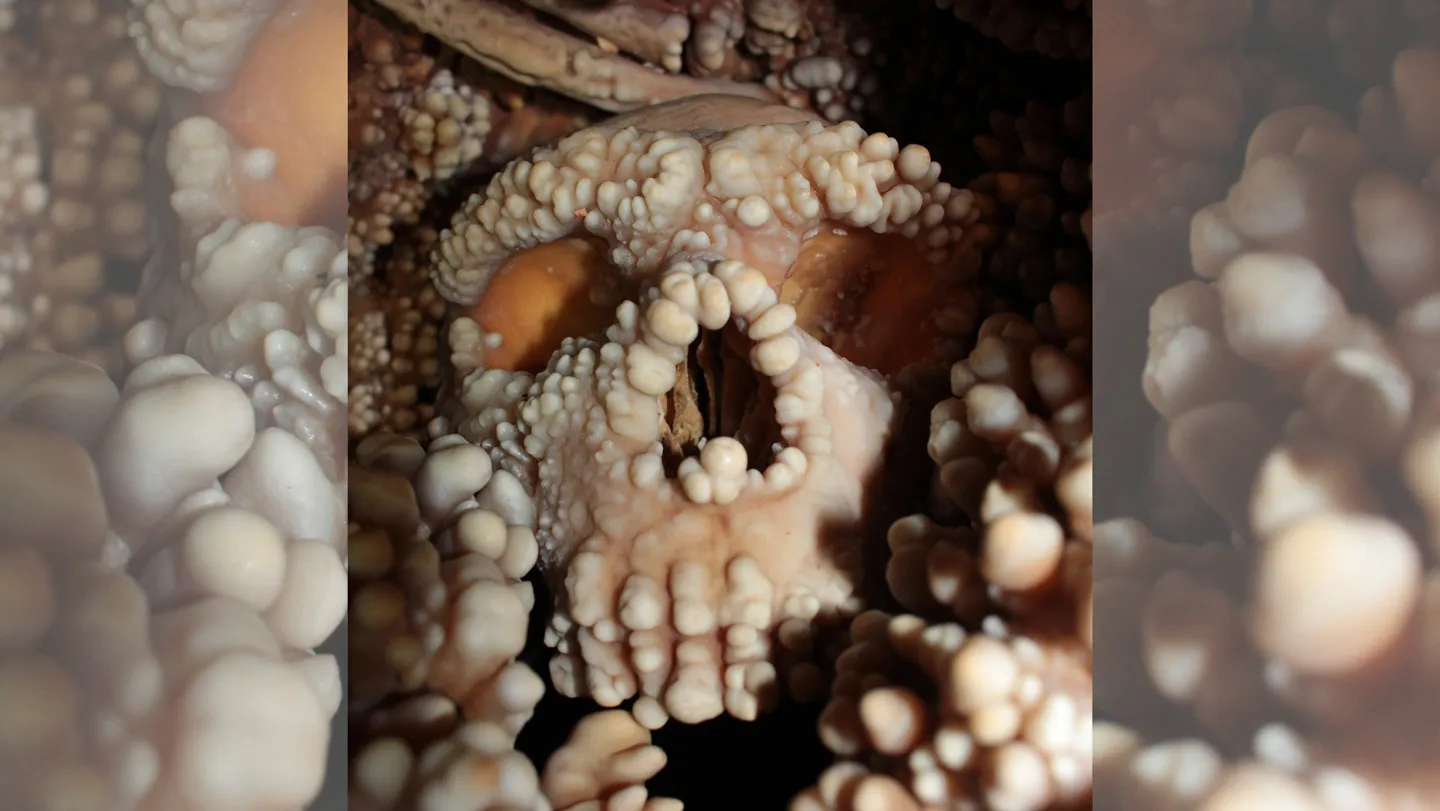
The revolutionary study centers on an exceptionally preserved Neandertal skeleton discovered in 1993 in a cave in southern Italy. Known as “Altamura Man,” this individual lived between 172,000 and 130,000 years ago. What makes this specimen unique is that its entire skeleton, including the delicate bones of the nasal cavity, remains intact—though covered by a layer of calcite, often called “cave popcorn.” Rather than extracting the skeleton and potentially damaging it, researchers led by paleoanthropologist Constantino Buzi of the University of Perugia in Italy conducted their examinations within the cave itself, using advanced endoscopic cameras similar to those used in medical procedures to capture unprecedented video footage and create detailed 3D digital reconstructions of the skull and nasal passages.
“What we found is that, yes, Neandertals had bigger noses, but that the inner structure of their noses was not so different from our own,” explains Buzi. “They were simply larger, and worked more efficiently.” This represents a significant departure from previous assumptions about Neandertal anatomy. When the research team compared the nasal structures of Altamura Man with those of modern humans from cold regions, such as the Inuit of the Arctic—who have evolved taller, narrower nasal cavities to better warm cold air—they found no comparable adaptations in the Neandertal specimen. This provides compelling evidence that, contrary to long-held beliefs, Neandertal noses were not specifically evolved to handle cold climates.
The implications of this discovery extend beyond anatomical curiosity. It forces us to reconsider assumptions about Neandertal lifestyles, habitats, and evolutionary pressures. While other aspects of Neandertal physiology, such as their stocky, robust bodies with shorter limbs, do appear well-suited to conserving heat in cold environments, their nasal structures seem to have evolved under different selective pressures. This nuanced understanding paints a more complex picture of Neandertal adaptations—one that isn’t simply defined by responses to cold weather.
Bruce Hardy, a paleoanthropologist at Kenyon College who wasn’t involved in the study, highlights the significance of this research, noting that for decades, scientists have debated Neandertal nasal adaptations without having direct evidence. “We finally have a fossil that preserves the internal nasal bony structures of a Neandertal,” Hardy states. “The authors can actually observe the structure rather than speculate about it,” potentially putting an end to a long-standing scientific debate. Hardy also suggests that previous attempts to differentiate Neandertals from our own species may have influenced interpretations of their anatomy, particularly as we grapple with the complex history of how Homo sapiens either displaced or interbred with Neandertals.
This study exemplifies how technological advances allow us to examine ancient remains in non-destructive ways, revealing new insights about our evolutionary relatives. By using specialized endoscopic equipment, researchers were able to peer inside a Neandertal’s nasal cavity for the first time, capturing video and photographic evidence that challenges established theories. The research on Altamura Man demonstrates the importance of preserving archaeological discoveries in their original context, as well as the value of patient, methodical study using innovative techniques when traditional extraction methods might damage irreplaceable specimens.
As we continue to unravel the complex story of human evolution, this research reminds us to question even our most established assumptions. The discovery that Neandertal nasal structures weren’t specifically adapted for cold climates invites us to consider what other misconceptions might exist about our ancient relatives. Rather than viewing Neandertals as simply cold-adapted predecessors, we must appreciate the intricate mosaic of adaptations that defined their species—a perspective that ultimately enriches our understanding of human evolution and the diverse paths it has taken throughout Earth’s history.