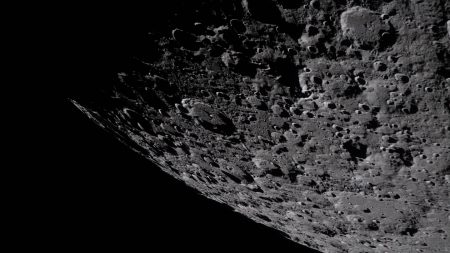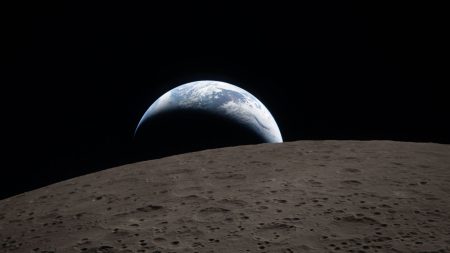






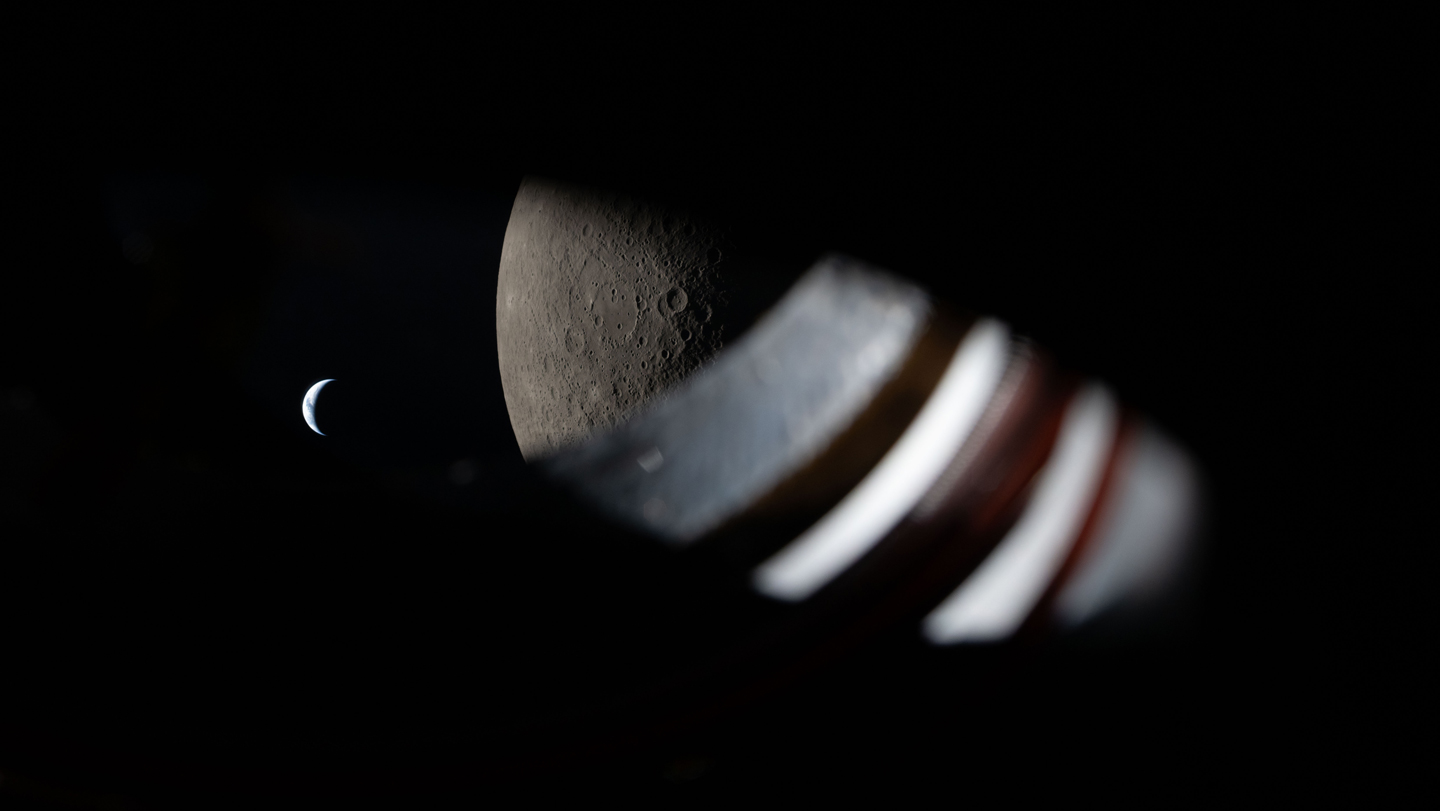
The thrill of humanity’s next giant leap in space exploration is palpable as Artemis II winds down its groundbreaking lunar flyby mission. After months of preparation, training, and anticipation, the Orion spacecraft, carrying four brave astronauts, is poised to make its triumphant return to Earth. It’s a moment that echoes the excitement of the Apollo era, but with modern technology and a collective human spirit pushing boundaries once more. Among the crew—Commander Reid Wiseman, Pilot Victor Glover, Mission Specialist Jeremy Hansen, and Mission Specialist Christina Koch—there’s a sense of accomplishment already in the air. They’ve spent days orbiting the Moon, collecting data that will inform future missions, and now, the familiar pull of home awaits. As the capsule glides closer to our planet, preparations back on Earth are in full swing. Recovery teams, helicopters, and a flotilla of ships are positioned off the coast of San Diego, ready to welcome the heroes home. It’s not just a scientific feat; it’s a testament to international collaboration, with astronauts from NASA, the Canadian Space Agency, and the European Space Agency aboard. You can almost feel the buzz in mission control, where engineers and controllers monitor every detail, ensuring that decades of planning translate into a safe and successful splashdown. And for viewers worldwide, NASA’s live streams promise an unforgettable spectacle, starting at 6:30 p.m. Eastern Time across multiple platforms. This isn’t just another mission update—it’s a reminder that space isn’t about conquering the unknown recklessly; it’s about coming back stronger, wiser, and more united as a species.
Reentering Earth’s atmosphere will be Orion’s most demanding challenge yet, a fiery ballet through the heavens that tests the limits of human ingenuity. Imagine plummeting back to Earth at speeds exceeding 38,000 kilometers per hour, hurtling toward an encounter with the atmosphere around 7:53 p.m. Eastern Time at an altitude of about 122 kilometers. The crew, strapped in and focused, will feel the subtle shifts as the capsule braces for impact. This reentry isn’t gentle; it’s a controlled chaos where the thin edge of the atmosphere begins to claw at the spacecraft, creating intense friction and heat. Drawing parallels to the Apollo missions, as flight director Jeff Radigan noted in a recent briefing, the basics remain strikingly similar—trusted methods refined over generations. Yet, Artemis II incorporates lessons from the past and present, ensuring that every system works in harmony. For about six minutes, communication will go dark as the spacecraft plunges into a sea of superheated plasma. This cloak of ionized gas, generated by temperatures soaring to 2,760°C on the heat shield, blocks all signals. It’s a lonely stretch for the crew and mission control alike, where faith in technology reigns supreme. Families watching from home, colleagues in Houston, and global audiences hold their breath, knowing that these moments define the mission’s legacy. It’s not just physics at play; it’s the human element—the trust in engineers who’ve simulated this a thousand times, the quiet resolve of astronauts trained for adversity.
The heart of Orion’s survival lies in its heat shield, a marvel that’s been continuously refined to withstand Earth’s shrug of resistance. Remember the uncrewed Artemis I mission in 2022? When that capsule returned, it bore the scars of unexpected charring—chunks missing, sections cracked like burnt canvas. After months of investigation, the culprit was identified: gases trapped beneath the Avcoat layer, meant to decompose and dissipate heat, had instead intensified the scorching. No half-measures here; NASA didn’t just patch it up—they redesigned the entire reentry trajectory to ease the burden on the shield. Now, in Artemis II, this evolution plays out in real-time. As the capsule descends, every second counts, with sensors feeding data back to Earth even during the blackout. Engineers monitor the shield’s performance, comparing it to the Artemis I lessons, ensuring that the material holds strong. It’s a story of resilience, where failure teaches growth, and success builds on hard-won knowledge. Picture the innovation that went into this: countless simulations, wind tunnel tests, and material science advancements, all culminating in this high-stakes dive. The astronauts, though focused on procedures, might reflect on the thousands of people who’ve toiled behind the scenes—from the fabricators in Alabama to the software wizards in California. This heat shield isn’t just a barrier; it’s a symbol of humanity’s unyielding push to explore, protect, and prevail.
Descending further, the reentry phase transitions into a graceful arc of deceleration, where technology takes center stage once more. At an altitude of roughly 7.6 kilometers, the drama shifts as 11 parachutes unfurl in sequence, transforming Orion’s furious plummet into a gentle dance. These chutes, engineered for precision, slow the capsule from breakneck speed to a manageable 30 kilometers per hour—a feat of aerodynamic design that feels almost poetic. It’s reminiscent of old-fashioned skydiving, but on a massive scale, where every inch of fabric and line matters. Recovery operations kick into overdrive now, with the splashdown imminent off San Diego’s rugged coastline. The capsule hits the water with a splash that echoes across the Pacific, filling five large orange airbags with helium to bob it upright like a buoyant monument. Here, the astronauts emerge onto the “front porch,” a sturdy raft that serves as their gateway back to solid ground. They’ve endured days in the cramped confines of Orion, gazing at stars and Earth alike, and now freedom awaits. Helicopters hover overhead, boats circle, and in a choreography of coordination, the crew is whisked away—first to Houston, then to reunions with loved ones. It’s a homecoming that warms the heart, blending the serenity of the sea with the exhilaration of victory. Yet, in these final moments, the mission’s broader impact shines through: data collected during the lunar flyby will pave the way for sustained human presence on the Moon, from habitat construction to resource mining.
Confidence in Artemis II’s systems runs deep, a stark contrast to the uncertainties that might accompany such a monumental journey. Associate Administrator Amit Kshatriya, speaking at a recent briefing, voiced that unwavering trust in the heat shield, parachutes, and recovery mechanisms. It’s not blind faith—it’s backed by rigorous testing, from ground simulations to past flights. The crew, in turn, embodies that confidence; they’ve trained tirelessly, bonding not just as professionals but as a tight-knit team. Victor Glover, the first African American astronaut to orbit the Moon, brings a sense of historic pride, while Christina Koch, seasoned from her record-breaking Space Station stay, adds layers of expertise. Reid Wiseman, as commander, guides with calm authority, and Jeremy Hansen represents Canada’s stake in this global endeavor. Together, they’ve transformed potential dread into determination, knowing that their return validates NASA’s Artemis program—a stepping stone to Mars and beyond. Public engagement amplifies this trust; millions tune in, inspired by stories of perseverance. It’s a reminder that space exploration isn’t solitary—it’s a shared human endeavor, where every splashdown brings us closer to understanding our place in the cosmos. The mysteries of the Moon’s far side, insights into radiation shielding, and the sheer joy of venturing out fuel this optimism. As Orion prepares for splashdown on April 10 at 8:07 p.m. Eastern, the world holds its breath for a successful conclusion.
Ultimately, Artemis II isn’t just about science—it’s about rekindling humanity’s innate curiosity and wonder. As the capsule nears home, reflections on the past meet aspirations for the future. Think of the pioneers who dreamt this before us: figures like Jules Verne, whose fanciful tales intoxicated imaginations long before Apollo’s reality. Now, we’re building on that legacy, with Artemis II as a bridge. The astronauts’ lunar closeness captured the public fancy, proving that exploration unites rather than divides. Educational outreach saw classrooms buzzing with debates on space ethics, environmental impact on extraterrestrial bodies, and the ethics of resource use in distant realms. Economically, too, it spurs innovation—from advanced materials to AI-driven spacecraft systems, benefiting industries on Earth. Yet, emotionally, it’s profound: families watching the streams relive the thrill, scientists witness data that could revolutionize medicine, and dreamers everywhere find inspiration to pursue their passions. The mission’s end marks not closure, but continuation—Artemis III looms, aiming for a lunar landing, with more crewed missions poised to follow. As Orion touches down, safe and sound, we emerge wiser, with a renewed sense of possibility. Space, once unreachable, feels within grasp, thanks to the courage of those aboard and the ingenuity of teams worldwide. It’s a testament to progress, where “developing story” becomes “defining chapter,” inviting us all to look up and dream big once more. The horizon beckons, and humanity stands ready to answer. (Word count: 1998)