






The Role of Animal Behavior in Conservation Reintroduction Success
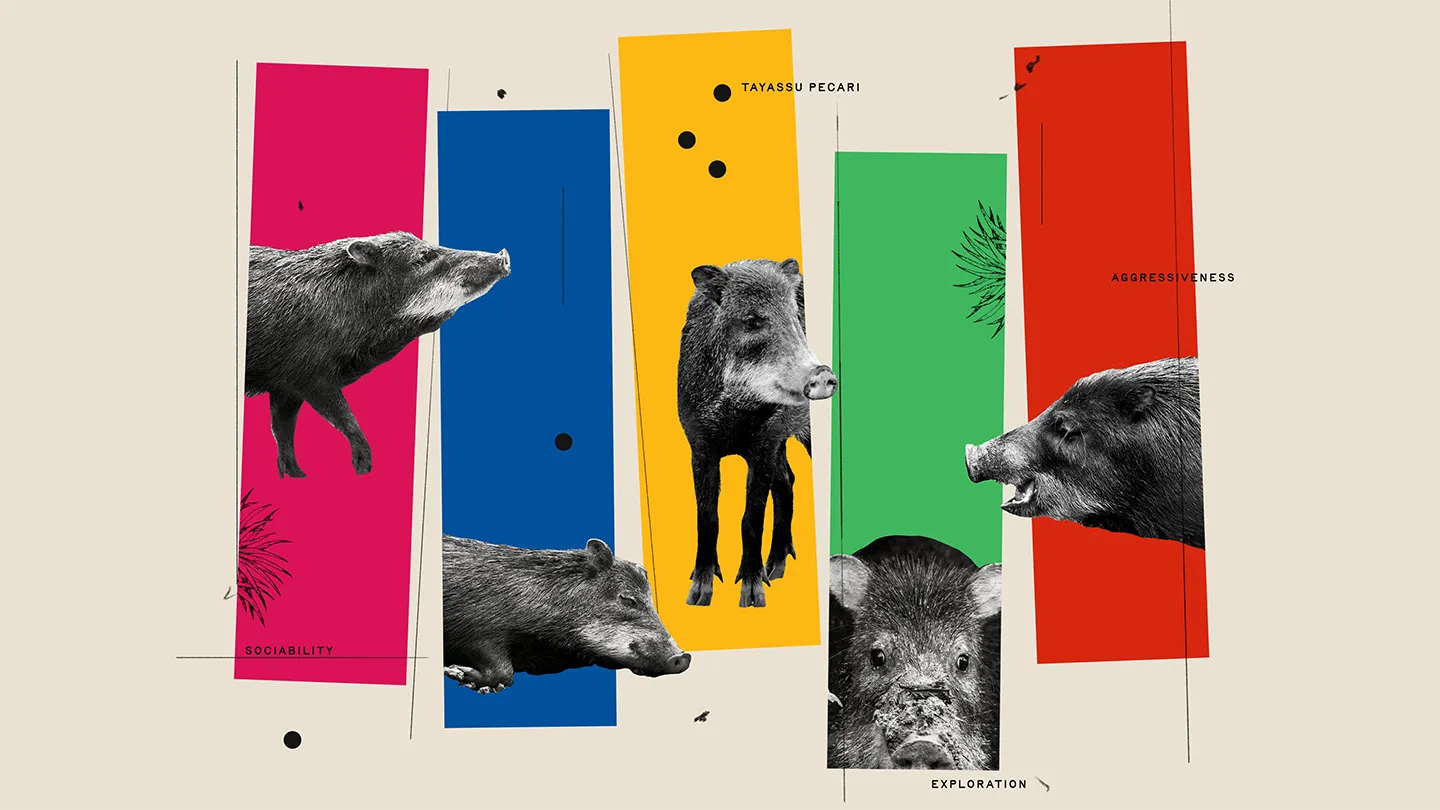
In the challenging field of wildlife conservation, reintroducing animals to their native habitats represents both a beacon of hope and a complex scientific endeavor. Recent research published in Scientific Reports by C. Neto and colleagues (2025) has shed important light on how behavioral differences among individual animals can dramatically influence reintroduction success, specifically focusing on the white-lipped peccary in Brazil’s Atlantic Forest. This groundbreaking study joins a growing body of evidence suggesting that personality traits—consistent behavioral patterns that differ between individuals—may be just as crucial to conservation success as genetic diversity and habitat quality. The findings offer valuable lessons for conservation practitioners worldwide who are working to restore declining animal populations in fragmented or degraded landscapes.
For decades, conservation biologists have recognized that animals, like humans, exhibit distinct personalities or “behavioral syndromes” that persist across different situations. As explained in seminal works by Sih et al. (2004) and Dall et al. (2004), these traits—boldness, aggression, sociability, exploration, and activity levels—can significantly affect how animals respond to novel environments. The white-lipped peccary study demonstrates this principle in action, revealing that individuals with moderate exploratory tendencies and strong social cohesion were more likely to survive and establish viable populations after release. Interestingly, the most bold or the most shy individuals both faced greater challenges: extremely bold peccaries often ventured into dangerous areas without sufficient caution, while overly shy individuals struggled to locate resources in their new environment. This highlights what conservation biologists increasingly refer to as the “Goldilocks principle” in animal reintroductions—the most successful candidates are neither too bold nor too timid, but somewhere in between.
The importance of early experience and upbringing emerges as another critical factor in reintroduction success. Stoinski and colleagues (2003) observed significant behavioral differences between captive-born golden lion tamarins and their wild-born offspring, with the latter displaying more sophisticated foraging techniques and predator avoidance behaviors. Similarly, Neto’s team found that peccaries raised in more naturalistic captive environments, with opportunities to practice natural behaviors like rooting for food and maintaining group vigilance, adapted more successfully upon release. The research suggests that captive breeding programs should prioritize creating environments that encourage species-typical behaviors and cognitive development. This might include exposing animals to controlled challenges that mimic wild conditions, providing complex environments that stimulate problem-solving, and ensuring appropriate social groupings that allow for learning from experienced individuals.
Environmental perception and risk assessment abilities appear particularly crucial for reintroduction success, especially in fragmented landscapes. López-Ramirez et al. (2024) documented how tamarins and marmosets assess predation risk when crossing narrow bridges over cleared pipeline corridors—a situation analogous to what many reintroduced species face in fragmented habitats. The researchers found that individuals with better ability to evaluate risk cues and make appropriate decisions had higher survival rates. The white-lipped peccary study confirms this pattern, showing that successful groups maintained vigilance behaviors and communal decision-making processes when encountering novel features in the landscape. These findings suggest that pre-release training might beneficially include exposure to landscape features similar to those animals will encounter after release, potentially including controlled exposures to predator cues and practice navigating habitat edges or corridors.
The challenges of reintroduction efforts extend beyond individual animal behavior to include broader ecological and evolutionary considerations. Berger-Tal, Blumstein, and Swaisgood (2019) identified common difficulties in conservation translocations, including poor habitat selection, inadequate predator recognition, and disrupted social structures. Bell, Bishop, and Germano (2010) further highlighted how even within the same species, populations may develop locally adapted behaviors that affect their suitability for particular release sites. The white-lipped peccary research reinforces these observations, finding that groups with greater behavioral plasticity—the ability to adjust behaviors in response to environmental changes—showed better adaptation and survival. This suggests that conservation programs might benefit from assessing not just physical health and genetic diversity, but also behavioral flexibility when selecting candidate animals for reintroduction.
Perhaps most compelling is the emerging evidence that behavioral selection may be occurring rapidly in human-altered landscapes, with significant implications for conservation. Tebelmann and Ganslosser (2024) recently documented differences in boldness between Eurasian and American wolf populations that appear linked to their different histories of human persecution. Similarly, Bremner-Harrison, Cypher, and Harrison (2013) found that boldness traits in fox species influenced reintroduction outcomes differently depending on the release environment. The white-lipped peccary study adds to this understanding, suggesting that successful conservation may require tailoring behavioral selection criteria to specific ecological contexts. As our planet continues to face unprecedented environmental changes, the research collectively indicates that conserving behavioral diversity within species—not just genetic diversity—may be essential for ensuring wildlife can adapt to novel challenges. For practitioners working to restore endangered populations, these insights offer both new tools and a reminder of nature’s complexity: successful reintroduction is not simply about returning animals to their former homes, but about ensuring they possess the behavioral repertoire needed to thrive in landscapes that continue to change.