






The Waiting Game: Scientists Recalibrate Predictions for Axial Volcano’s Eruption
In the depths of the Northern Pacific Ocean, about 300 miles off the Oregon coast, lies Axial seamount—an underwater volcano that has become the focus of an intriguing scientific endeavor. Last year, researchers made a bold prediction that Axial would erupt before the end of 2025. As that timeline passes without the anticipated eruption, scientists are now recalibrating their forecasts, offering a new potential eruption window in 2026.
William Chadwick, a geophysicist from Oregon State University’s Hatfield Marine Science Center, recently presented updated findings at the American Geophysical Union’s annual meeting in December. His presentation follows up on last year’s prediction and explores why the initial forecast may have been premature. “This whole thing’s been an experiment to see how far we can push the envelope of long-term eruption forecasting,” Chadwick explains. “Part of that is learning from experience what’s possible and what’s not possible.” The original prediction was based on patterns of seafloor inflation and deflation—indicators of underground magma movement—that had successfully predicted Axial’s 2015 eruption. However, it’s now clear that this pattern alone isn’t reliable enough for accurate forecasting.
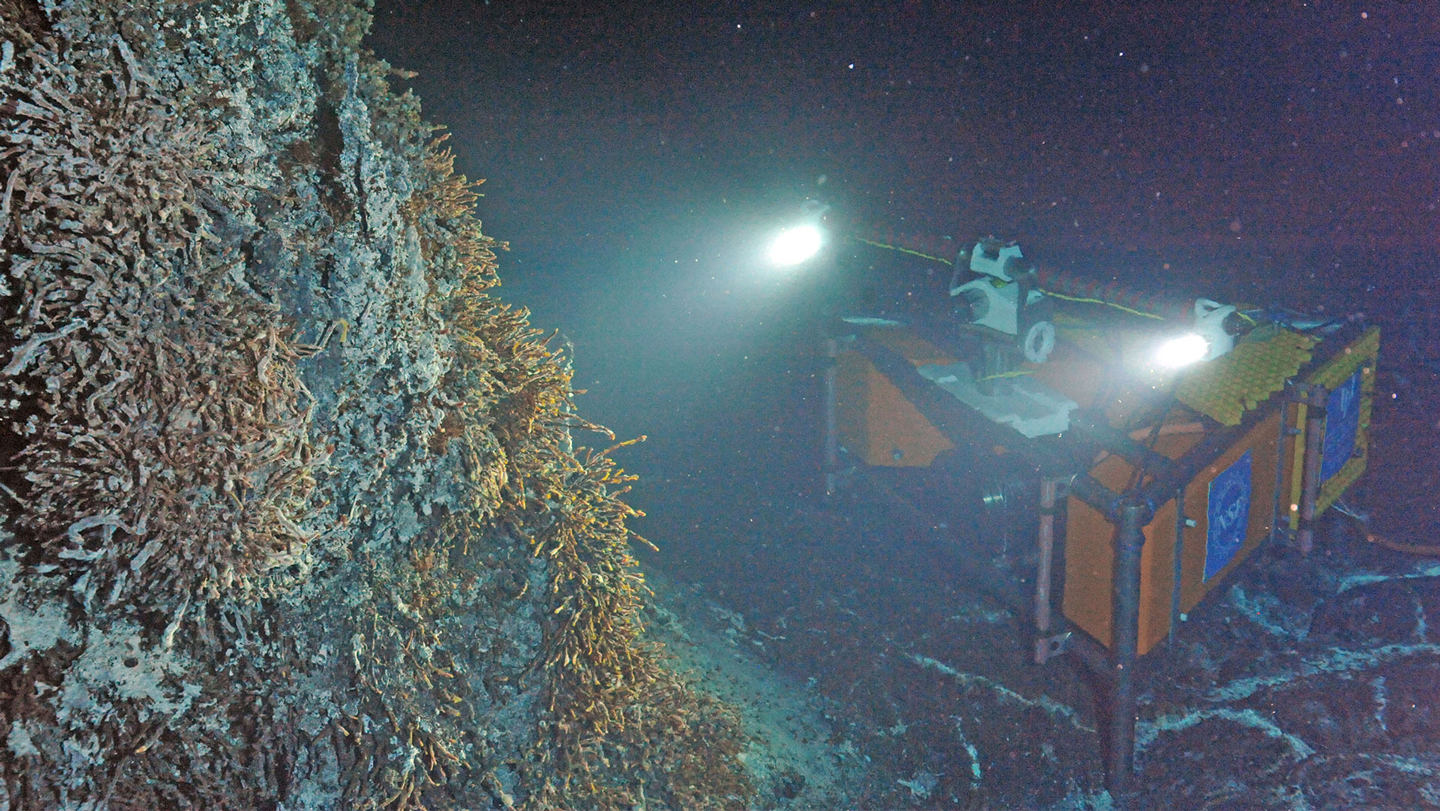
What makes Axial seamount particularly valuable to researchers is its unique combination of frequent eruptions, extensive instrumentation, and safety—it poses no danger to human populations. Since 1997, underwater sensors have monitored the volcano’s activity, with significant improvements coming in 2014 when the National Science Foundation’s Ocean Observatories Initiative (OOI) deployed a network of submarine fiber-optic cables connected to 150 instruments. This array delivers real-time data on ground movements and seafloor changes, providing unprecedented insights into the behavior of an active underwater volcano. Despite the mountain of data, scientists have discovered that there isn’t a clear threshold that triggers an eruption, and the pattern of inflation and deflation isn’t as regular as they initially thought.
Looking forward, researchers are exploring more sophisticated approaches to eruption forecasting. One promising direction involves analyzing seafloor deformation and seismic data simultaneously. Before the 2015 eruption, scientists observed about 10,000 earthquakes per centimeter of seafloor inflation, with the ground rising rapidly at about 70 centimeters per year. In contrast, 2024 saw only brief periods of intense earthquake activity, with much slower inflation rates of 15 to 25 centimeters per year. Based on this comparison, Chadwick hypothesizes that “we need to get to 500 earthquakes a day before the next eruption is triggered,” which could happen sometime in 2026 at current rates.
Other scientists are taking different approaches to eruption forecasting. Geophysicists Qinghua Lei of Uppsala University and Didier Sornette of ETH Zurich are developing physics-based computer models to predict geological failures, including volcanic eruptions. Their new project, launched in November, feeds real-time data from the OOI cables into their model to create monthly prototype eruption forecasts for Axial. As this work is still experimental, they plan to validate their methods by comparing predictions to actual events after the next eruption occurs.
The future of these prediction efforts depends heavily on the continued operation of the OOI array—which faces significant funding challenges. The Trump administration has proposed an 80% cut to the program, leaving its long-term fate uncertain through at least January. Despite these obstacles, OOI principal investigator James Edson reports that they’ve secured enough support to keep the array running through summer 2026, potentially covering the timeframe of Chadwick’s new prediction.
Public interest in Axial’s potential eruption has grown dramatically over the past year, sometimes accompanied by exaggerated concerns about safety risks. “I’ve been amazed, because we’ve been doing this for years, but the interest has really exploded this last year,” Chadwick notes. He occasionally receives worried emails from Oregon coast residents, despite the fact that the submerged volcano poses no threat to coastal communities. If the new 2026 prediction proves accurate, scientists may gain valuable insights into volcanic behavior while Chadwick prepares for another round of public interest—and perhaps a few more concerned emails from the Oregon coast.