

Potential Asteroid Impact on the Moon Raises Scientific Concern
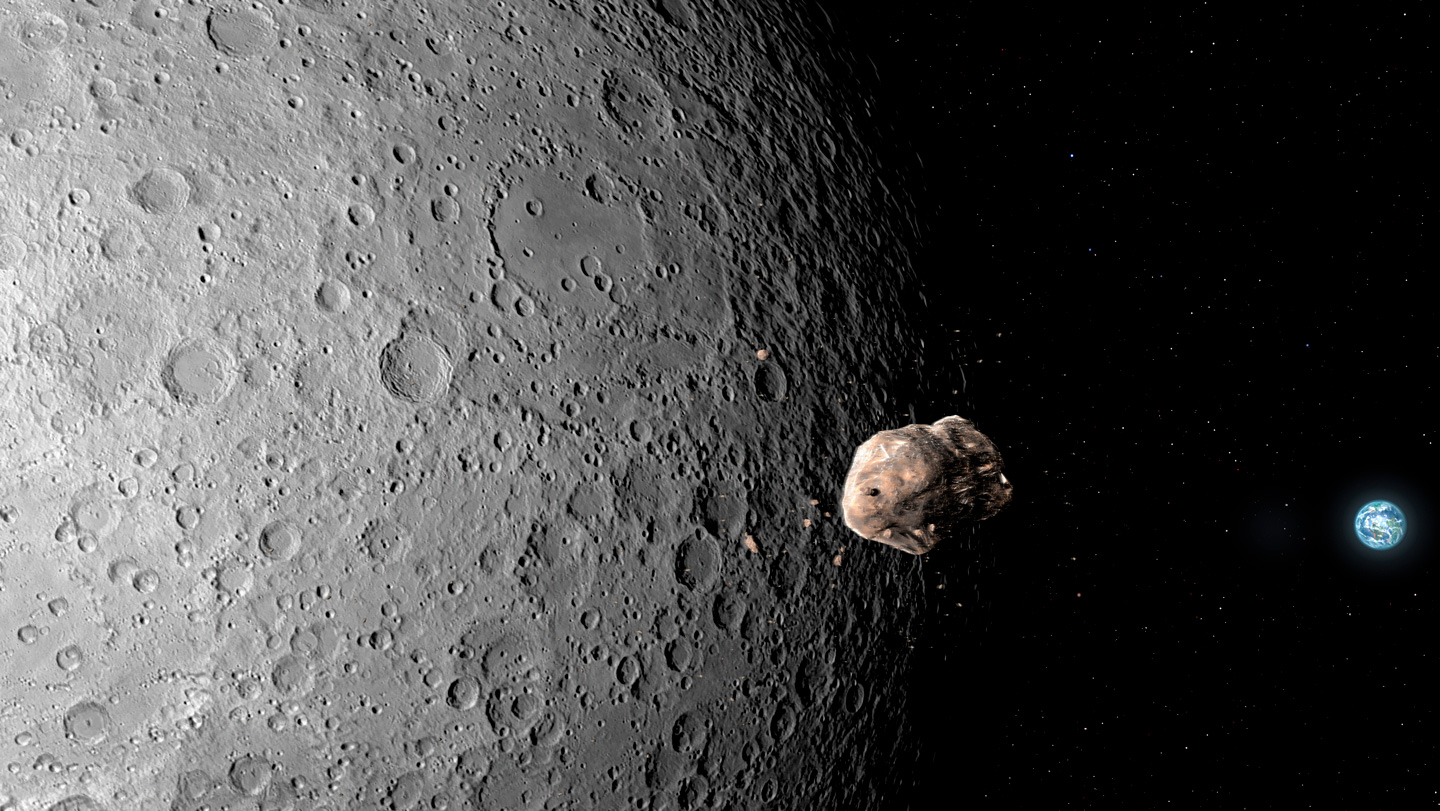
Scientists are closely monitoring asteroid 2024 YR4, which has approximately a 4 percent chance of colliding with the moon in December 2032. More concerning, there’s about a 1 percent chance that such an impact could scatter numerous tiny meteorites into near-Earth space, potentially endangering satellites and astronauts in orbit. “This could pose a lot of risks to Earth-orbiting assets,” warned NASA aerospace engineer Brent Barbee at the American Geophysical Union’s annual meeting last December.
The potential consequences of such an impact are significant. Should YR4 strike the lunar surface, the collision would release energy equivalent to approximately 6 million metric tons of TNT—roughly 400 times more powerful than the atomic bomb dropped on Hiroshima. The asteroid’s trajectory has been closely monitored since its discovery in December 2024, when scientists initially calculated it might hit Earth. While additional observations have ruled out an Earth impact, the likelihood of a lunar collision has gradually increased, though it remains relatively small.
Based on observations from the James Webb Space Telescope, scientists estimate that YR4 is approximately 60 meters wide. If the asteroid were to hit the moon, there’s an 86 percent probability it would strike the near side facing Earth. According to astronomer Patrick King from Johns Hopkins University Applied Physics Laboratory, who has simulated the impact, the resulting flash would likely be visible from Earth depending on viewing conditions. The estimated collision date of December 22, 2032, would provide excellent viewing opportunities from Hawaii and favorable visibility from the western United States.
The scientific community is now considering potential mitigation strategies. According to Barbee, scientists don’t yet know YR4’s size and mass precisely enough to safely deflect it from its path. However, intentionally breaking up the asteroid using a fast-moving impactor or a nuclear blast appears more practical. To minimize risk to Earth, such an intervention would need to occur at least three months before the potential lunar impact, allowing the resulting debris sufficient time to disperse away from Earth’s vicinity. Ideally, a reconnaissance mission would be launched within the next few years to gather more data.
Time is of the essence for any potential mission to YR4. “If there are any missions to YR4, they would essentially need to start their development very, very soon,” said Barbee, who works at NASA’s Goddard Space Flight Center in Greenbelt, Maryland. NASA’s James Webb Space Telescope may have an opportunity to observe the asteroid in February 2026, which could help provide more definitive information about its trajectory. Such observations might either rule out a lunar impact entirely or potentially raise the odds to as high as 30 percent.
However, there remains significant uncertainty in the scientific community’s ability to predict and respond to this potential threat. If the James Webb Space Telescope is unable to observe the asteroid for any reason, Barbee cautioned that “we may be confronted with the need to make some decisions about YR4 in the face of significant uncertainties.” This situation highlights the ongoing challenges in tracking and responding to potential near-Earth objects, even those that might not directly impact our planet but could still have meaningful consequences for our space infrastructure and future lunar missions.