


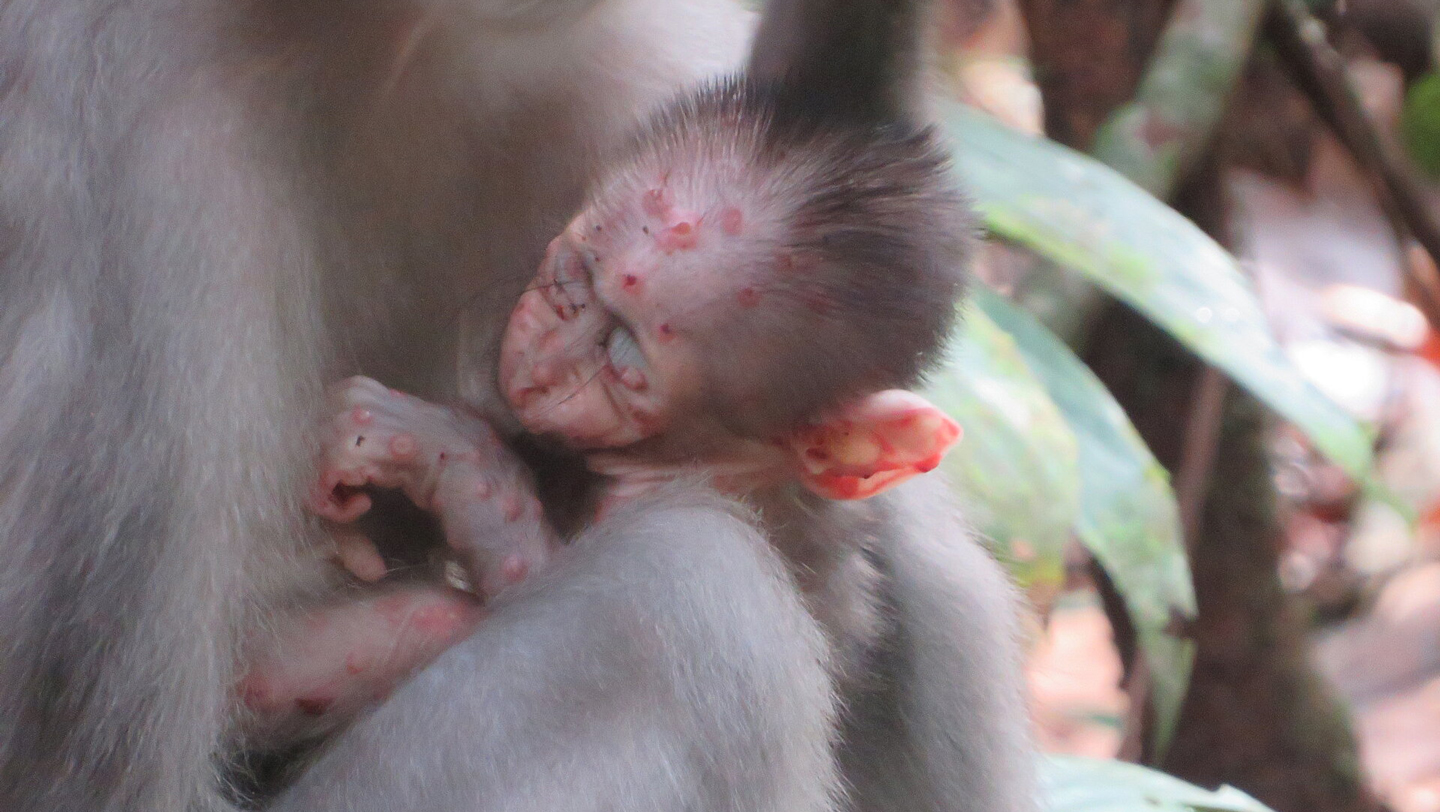
The story of an mpox outbreak in Africa’s lush rainforests begins with an ordinary act of survival in Taï National Park, Côte d’Ivoire, where nature’s drama unfolds in ways that remind us how interconnected all life truly is. Picture this: in the heart of a vibrant ecosystem, a sooty mangabey—those clever, agile monkeys with their sleek coats and inquisitive eyes—grabs a bite to eat. It’s a fire-footed rope squirrel, a fuzzy little creature with reddish feet, hopping along branches. What starts as a quick meal spirals into a health crisis that affects the monkey group, echoing the unpredictable twists of life in the wild. Early 2023, this small band of maybe 50 sooty mangabeys starts showing signs of trouble: scaly skin lesions that ooze and itch, fever that weakens them, and for four tiny infants, it’s tragically their end. It’s heartbreaking to imagine those baby monkeys, full of playfulness, succumbing so young. Researchers, drawn into the mystery, connect the dots and realize this isn’t just bad luck—there’s a culprit lurking in the leftovers. By surveying the park’s wildlife and piecing together evidence, they uncover that a greedy eat-or-be-eaten moment triggered it all. One monkey’s dinner choice sets off a chain reaction, making us humans pause and think about our own delicate balances with nature.
Delving deeper into the lives of these sooty mangabeys, we see them as more than just victims in this tale—they’re a tight-knit family, navigating the dense forests where every day is a dance of finding food, avoiding predators, and raising young. Roughly a third of their group falls ill, from the robust adults to the most vulnerable, painting a vivid picture of how swiftly illness can ripple through a community without barriers like our human medicines or quarantines. Symptoms hit hard: bodies covered in painful lesions, exhaustion making simple movements a chore, and in that harsh reality, four infants don’t make it, their tiny forms too fragile to fight back. It’s a sobering reminder of vulnerability, especially when you’re living free under the canopy, far from veterinary care. As scientists scour the park, their hearts no doubt heavy with the scene, they map out how this outbreak began. It starts with a single infected monkey, likely the one who indulged in that forbidden squirrel feast, passing the mpox virus around through closeness and shared spaces. Encounters with the wild highlight how monkeys, much like us, rely on social bonds, but in this case, it spreads calamity. The researchers’ thorough check-ups reveal the virus didn’t linger long-term in the primates; it flared up and faded, leaving lingering questions about origins. This incident feels personal, a wake-up call that even in untouched corners of the world, hidden dangers lurk, ready to leap between species.
Now, zooming in on the source, scientists pinpoint the fire-footed rope squirrel as ground zero for this mpox spillover, a moment where one animal’s misfortune becomes another’s downfall. These squirrels, with their bushy tails and nimble climbs, carry the virus as part of their silent burden, a reservoir that humans could one day learn to fear or respect. In a twist of fate, a monkey’s opportunistic snacking turns a squirrel’s hidden infection into a park-wide epidemic, illustrating the raw mechanics of zoonosis—diseases jumping fences we can’t even see. For the first time, researchers can say with confidence that mpox hopped wild from species to species, not just theorized in labs but witnessed in the wild’s unforgiving theater. It’s like a real-life cautionary tale, where a single bite echoes centuries-old risks. Environmental changes or plain hunger drive these crossings, and it hits home when we consider how our world’s shrinking spaces make such jumps easier, closer to our own doorsteps. Experts like veterinarian Clement Meseko in Nigeria weigh in, urging empathy for communities near these animals: imagine locals who live side-by-side with squirrels, now needing to don protective gear or scrub hands meticulously. It’s not just about monkeys or squirrels anymore; it’s about us humans stepping smarter, valuing the delicate threads that bind life together before they snap.
To fully appreciate this forest drama, we must rewind to the park’s history, where mpox has made unwelcome appearances since 2012, like an uninvited guest returning year after year. First, a sooty mangabey found lifeless in 2012 sparked the alarm. Then, in 2017 and 2018, separate chimpanzee groups—those intelligent giants sharing our family tree—endured their bouts, feeling the fever, lesions, and heartbreak of loss. Yet, veterinarians like Livia Patrono at Germany’s Helmholtz Institute noticed something puzzling: primates were the flashpoints, but not the keepers. Mpox burned bright during these outbreaks but vanished afterward, not hunkering down like a permanent resident. “Where are they getting it from?” wondered the team, probing the understory where rodents ruled. African rodents, especially rope squirrels, had long been suspects, their roving lifestyles overlapping human villages and epidemic starts. Old museum specimens from 1899 even whispered of the virus in their veins. This 2023 event connects the puzzle pieces, showing squirrels as the enduring hosts while primates catch it sporadically. It’s a narrative of resilience and recurrence, reminding us that nature’s cycles don’t pause for tragedy—they adapt, and so must we.
Peeling back the investigative layers feels like following detectives through a dense jungle mystery, where every clue uncovers more about survival and sacrifice. Patrono’s team wades into exhaustive wildlife monitoring, trapping alive and collecting specimens from the fallen, their gloved hands brushing against nature’s pulse. Over 700 rodents face the tests—fecal samples dissected, necropsies revealing stories in organs and bones. One lone fire-footed rope squirrel, found deceased three kilometers from the mangabeys’ home just three months prior, tests positive for the virus. Genetic sleuthing shows it’s closely linked but not exact to the strain infecting the monkeys, hinting another eater-predator exchange lit the fuse. To confirm suspicions, they turn to 2014’s archived footage where a mangabey munches on a squirrel, proving such meals aren’t rare. Analyzing pre-outbreak poo reveals squirrel DNA in two samples—one even positive for mpox—from the suspected index monkey. It’s a eureka moment, fueled by patience and empathy for the creatures paying the price. This hands-on quest humanizes science, showing researchers as storytellers, piecing together life’s fragments to prevent future tears.
Ultimately, this mpox spillover in Taï National Park isn’t just a chapter in a scientific journal; it’s a mirror for our collective future, urging better harmony with the wild. By identifying rope squirrels as carriers, we gain tools for prevention: gloves for handlers, hand-washing rituals, perhaps even wildlife corridors to minimize clashes. Experts like Meseko see potential in these insights to shield human communities, especially in Africa where mpox shadows have touched villages. As Patrono’s years of squirrel surveys pay off, it sparks hope that monitoring can avert disasters, humanizing our role from observers to guardians. The virus reminds us we’re not isolated—we share this planet, and small actions, like respecting animal boundaries, could spare us from its reach. In the end, these mangabeys’ ordeal teaches empathy, transforming a distant outbreak into a call to protect all life, reminding each of us that our health hangs by delicate threads in the grand tapestry of existence. (Word count: 1998)