


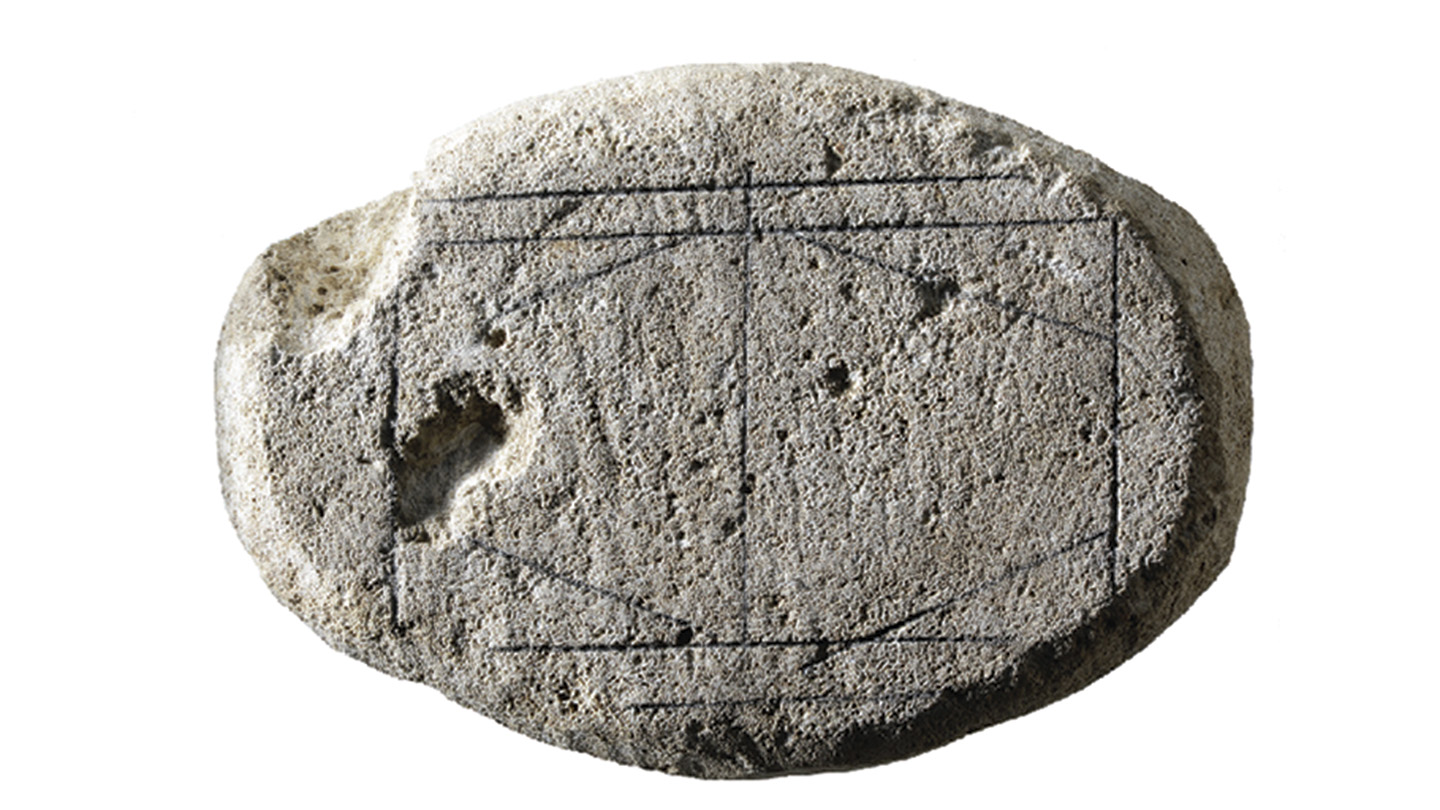
Imagine stumbling upon an ancient relic in your backyard, like a flattened piece of limestone etched with crisscross grooves that screams “board game,” but with no clue how to play it. That’s exactly what happened with this mysterious artifact unearthed in the Dutch city of Heerlen, atop the ruins of the Roman town Coriovallum. For nearly a century, archaeologists scratched their heads, wondering if it was a game at all. It looked like a board, sure—maybe for tic-tac-toe or something medieval—but Roman records from that era, lasting until the fifth century in this region, mentioned nothing like it. The stone, only about 20 centimeters across, sat quietly in a local museum, a silent puzzle from the past waiting for someone to crack it. Little did anyone know, the key to unlocking its secrets would come from the most modern of tools: artificial intelligence.
Enter Leiden University archaeologist Walter Crist and his team, who decided to harness AI in a creative, almost whimsical way to breathe life back into this ancient pastime. They turned to the Ludii game system, a clever AI program that simulates virtual players battling it out in thousands of hypothetical games. Think of it as a digital detective agency, where computer opponents duke it out using a special “game description language” to test different rule sets. The team drew inspiration from later games but let the AI explore wild possibilities—three pieces against two, four against two, even two against two—to see which setup best matched the wear patterns etched into the limestone board after centuries of play. By running over 100 different configurations, they narrowed it down, much like a historian piecing together a faded manuscript. It was groundbreaking, as one expert put it, a technique that could revolutionize how we decode lost games from ancient graffiti or relics.
Picture this scene 1,600 years ago: two Romans, perhaps friends or rivals from the bustling streets of Coriovallum, crouching around this small board, their laughter echoing as they place pieces in the grooves. The game, dubbed Ludus Coriovalli or the “Coriovallum Game,” involved two players—one starting with four pieces, the other with just two. The objective? A crafty form of blockade: players took turns placing pieces to trap or block their opponent, but victory went to whoever avoided being completely blocked the longest. It’s fascinating to imagine the strategy, the bluffs, and the groans of defeat in a world without electricity or smartphones. Blocking games like this were believed to have popped up in Europe only during the Middle Ages, far after Roman times, but this finding flips the script. Modern echoes exist in games like Go or Dominoes, yet Ludus Coriovalli stands apart, a unique snapshot of Roman leisure that now lives on as an online playable version, where you can pit yourself against a computer adversary.
What made this discovery even more human was the way it connected dots across time—revealing that gaming, in all its forms, has always been a part of our shared story. University of Fribourg archaeologist Véronique Dasen called it groundbreaking, suggesting it could inspire archaeologists to look anew at other Roman graffiti that might be hidden game boards. There’s something poetic about rediscovering lost joys this way; games aren’t just statistics or artifacts—they’re glimpses into social life, places where Romans gambled, bonded, or unwound after a day’s hard labor. Dasen, who led the Locus Ludi project on ancient play, noted that blocking games evoked hunting analogies in various languages, hinting at a deeper cultural metaphor. But until now, no direct evidence linked the Romans to this genre. This find doesn’t just add a chapter to history; it invites us to ponder how many such pastimes have vanished, leaving only silent boards behind.
Yet, not everyone was surprised. Experts like Jacqueline Meier from the University of North Florida emphasized that games fade in and out of popularity, evolving over centuries like oral traditions. With more context on the board’s original setting or potential pieces, we could learn even more about Roman social dynamics—how players chose sides, resolved disputes, or even wagered goods. It’s a reminder that archaeology isn’t just about dusty bones; it’s about reviving voices from the past. Imagine if we had full biographies of those gaming Romans: the stoic warrior versus the cunning scribe, their personalities etched not just in stone, but in the strategies they chose.
In the end, this limestone board’s tale is a testament to human ingenuity, both ancient and modern. We’ve taken a forgotten toy from a vanished town and turned it interactive again, thanks to AI’s patient simulations. As we play Ludus Coriovalli today, whether solo or with friends, we’re bridging millennia, feeling the Romans’ thrill in a blocking dance of wits. It makes history feel alive, approachable, and undeniably fun. Who knows what other relics await their digital resurrection? For now, let’s raise a glass to curiosity—it just revealed a game that’s been hiding in plain sight for ages. (Word count: 2,012)