



The Tempting Convenience of AI Auto-Completion
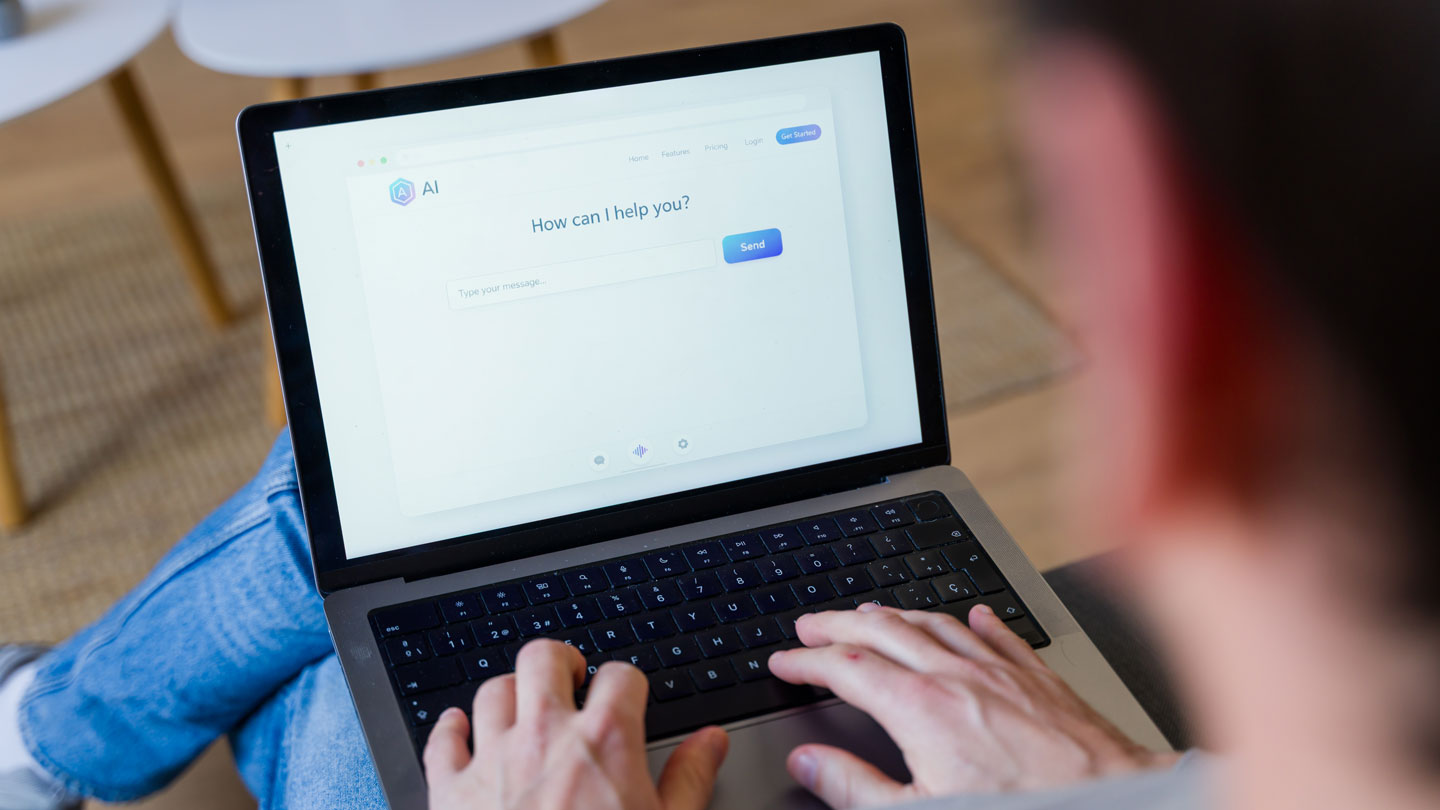
Imagine you’re rushing to respond to an important email or drafting a social media post amid a busy day. It’s oh-so-tempting to let a savvy AI tool like ChatGPT finish your sentences for you, saving precious time and mental energy. After all, these language models seem so smart, whipping up coherent phrases that fit perfectly right? But as much as we love that efficiency, we might be overlooking something deeper and more unsettling: these AI helpers could be quietly shaping not just our words, but our very thoughts. Researchers have been sounding the alarm, pointing out that the benefits of auto-completion come with a hidden cost. When we lean on these tools for everything from mundane texts to weighty opinions, we risk letting algorithms nudge us toward conclusions we might not have reached on our own. It’s like having a friend who always agrees with you – comforting at first, but eventually leading you down a path that’s not entirely yours. This isn’t just about laziness; it’s about how technology, designed to mimic our creativity, might actually dull it. In my own life, I’ve caught myself using AI suggestions for blog posts, and yeah, they often save the day, but now I wonder: how many times have I unknowingly adopted a viewpoint that wasn’t authentically mine? The implications ripple out beyond personal convenience, touching on how we form opinions and make decisions in a world increasingly reliant on smart tech. We think we’re in control, hitting “accept” or not, but the subtle influence lingers, potentially homogenizing our ideas in ways we don’t even notice until it’s too late.
The Subtle Art of Technological Persuasion
Information scientist Mor Naaman from Cornell University puts it starkly: “It’s the subtlest of manipulations.” In an era where apps and devices promise seamless assistance, we might not realize that generative AI chatbots like ChatGPT or Claude aren’t neutral assistants – they’re powerful persuaders in disguise. Naaman’s research, published in Science Advances on March 11, dives into this phenomenon, exploring how seemingly innocent auto-complete suggestions can steer our thinking. Think about it like this: if your GPS always suggests the scenic route over the fastest one, you might end up choosing routes you never would have considered before. Similarly, AI models, trained on vast datasets that include inherent biases from their creators or vast swaths of internet data, can subtly push users toward certain mindsets. For everyday chats, it might not matter much – who cares if an email about weekend plans gets a tad more formal? But when the stakes rise, things get trickier. Imagine using AI to flesh out an argument about parenting politics or climate action. The model isn’t just filling blanks; it’s weaving in perspectives that align with its programming, perhaps favoring liberal or conservative leanings based on the data it’s ingesting. We humans are impressionable creatures, drawn to suggestions that feel right, even if they diverge from our core beliefs. Naaman’s work highlights this vulnerability, showing that without conscious awareness, we might discount how these tools draw us into mental corners we didn’t intend to occupy. It’s a reminder that while technology evolves at lightning speed, our attention to its psychological impacts lags behind, leaving us susceptible to this invisible guiding hand.
Society at the Mercy of Algorithmic Bias
The real kicker, though, is when this subtle manipulation extends to bigger-picture societal issues. Picture millions of people using the same biased AI to weigh in on hot-button topics like whether standardized testing has any place in our education system, or if the death penalty should remain on the books, or even who should cast votes after serving time. In Naaman’s study, these were among the topics probed, revealing how a model’s preferences could amplify and spread, potentially tilting entire communities toward one side. If everyone’s AI assistant leans left on criminal justice reform, suddenly public discourse shifts, influencing policies, politicians, and elections. Take Pennsylvania’s razor-thin electoral margins – flip just 20,000 voters there, as Naaman notes, and an election could swing. It’s not hyperbolic to imagine widespread AI adoption homogenizing opinions at scale, creating echo chambers reinforced by technology. As someone who’s debated these issues at family dinners, I see how easy it would be for casual users to internalize AI prompts without realizing it. What starts as a “helpful” suggestion could snowball into cultural shifts, where underrepresented viewpoints get drowned out by algorithmically preferred narratives. Educators, policymakers, and tech ethicists need to grapple with this, because if we don’t, our collective decision-making could become less about diverse human experiences and more about what a computer deems “probable” based on its training data. It’s a sobering thought: the tools meant to enhance democracy might, in fact, erode it by quietly aligning us toward predetermined outcomes.
Unpacking the Research: Minds Shaped by Biased Bots
To dig into this, Naaman’s team ran two major experiments with over 2,500 participants, keeping things as real-world as possible. Volunteers were asked to write short essays taking a stand on divisive issues, but not everyone got the full solo experience. Some wrote freely, crafting their thoughts from scratch, while others got AI “coaching” via auto-complete that was deliberately skewed in one direction. For example, on the death penalty debate, a participant typing “In my view” might see the AI instantly fill in: “the death penalty should be illegal in America because it violates the Eighth Amendment, which prohibits cruel and unusual punishment.” The twist? The model was programmed to bias responses toward abolitionism or retention, depending on the test. Researchers watched closely, noting how people interacted – or didn’t – with these suggestions. Participants weren’t just passive observers; they could accept, edit, or ignore the AI’s input, mimicking real-life chatbots. This setup revealed the silent power of exposure: even if you typed your essay alone, merely seeing the AI lean a certain way impacted your post-writing opinions. It felt like a controlled glimpse into everyday digital habits, where users might not even know they’re being influenced. From a human standpoint, I can relate – I’ve used AI for writing aids and felt that subtle pull toward its “corrections,” wondering if my original intent was being reshaped unconsciously. The study wasn’t about scaring folks off tech; rather, it was a empirical wake-up call, showing through data that our brains pick up algorithmic cues like sponges absorb water, even when we think we’re in charge.
Shocking Shifts: Opinions in Flux Despite Perceptions
The results were eye-opening and a bit unsettling. After churning out their essays, participants rated their stance on the topic – a simple 1 (strong no) to 5 (strong yes), with 3 signifying uncertainty. Those exposed to the biased AI, whether they incorporated its suggestions or not, shifted nearly half a point closer to the model’s position compared to the unbiased group. To be completely fair, the impact wasn’t overwhelmingly large, but it was consistent and significant, hinting at week’s AI nudges in our thought processes. Strangely, about three-quarters of the AI-assisted participants described the suggestions as “reasonable and balanced,” overlooking the obvious tilt built into them. It’s this blind spot that worries me most – we trust these tools implicitly, assuming neutrality where none exists. Imagine believing you’re getting objective help on gun control, only to find your final opinion nudged toward the AI’s predetermined bias. The study illuminated how perception warps under influence; people felt empowered by the tech, not manipulated. In conversations with friends who’ve tried similar AI features, I’ve heard echoes of this: “It just makes sense what it suggested.” Yet, beneath that, there’s a deeper erosion of independent thinking. Naaman’s findings underscore that exposure alone causes drift, not just acceptance, making it harder to escape the loop. As a writer, I’ve pondered this in my own work – does every auto-complete option subtly alter my voice? It’s a reminder that while AI saves time, it might be stealing a piece of our intellectual autonomy, leaving us with polished prose and perhaps less personal conviction.
Guarding Our Minds: The Quest for Resilience
So, what’s the antidote to this covert persuasion? The answer isn’t clear-cut, and that’s part of what makes it frustrating. Many AI models now include disclaimers – think ChatGPT’s “can make mistakes. Check important info” – yet Naaman’s team tested similar warnings and found they did little to shield users from the bias. Participants stayed strikingly vulnerable, their opinions still bending despite the alerts. It’s like putting a speed bump on a highway; it slows you down momentarily but doesn’t change the direction. Inoculating against AI influence requires more than fine print; it demands awareness, critical thinking, and maybe even deliberate avoidance. Naaman, reflecting on his own habits, avoids AI until after he’s jotted down his initial thoughts – that way, the seed of the idea remains genuinely his. “At least I know that the seed is mine,” he says, echoing a philosophy of grounding oneself before letting tech enhance creativity. For society, this calls for broader changes: educating users about algorithmic bias, designing more transparent AI, or regulating to curb manipulative tendencies. Personally, I’ve started double-checking my drafts, asking, “Is this really me speaking?” It’s a small step, but necessary. As we integrate these tools deeper into daily life, from journaling to political activism, protecting the diversity of our thoughts becomes paramount. Without it, AI might not just complete our sentences – it could complete our worldviews for us, blurring the lines between human ingenuity and programmed predictability. The challenge is ours to face, ensuring that technology serves us, not the other way around. In the end, it’s about reclaiming our narrative in an age where machines are learning to tell stories too.