





Unveiling the Potential of Tensor Networks in Machine Learning
Artificial intelligence has revolutionized countless aspects of our lives, from the phones in our pockets to the medical diagnoses we receive. Yet for all their impressive capabilities, many AI models remain mysterious black boxes—even to the experts who design them. This opacity presents serious challenges as we increasingly rely on algorithms to make important decisions. A promising solution may lie in tensor networks, a mathematical framework borrowed from quantum physics that could transform how machine learning models process information. These elegant mathematical structures offer a path to more efficient and transparent AI systems by reimagining how data is represented and manipulated.
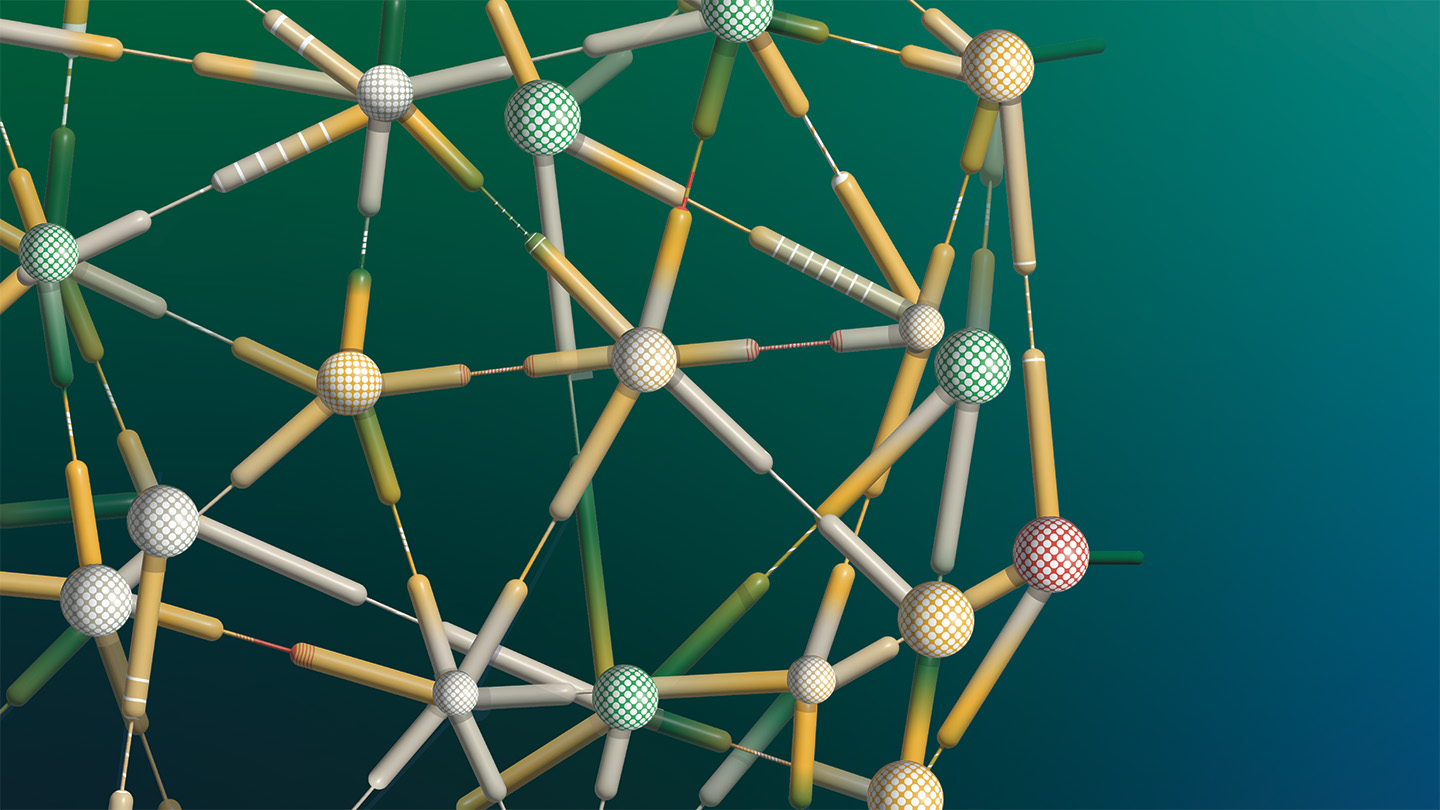
At their core, tensor networks provide a way to decompose complex multi-dimensional data into simpler, interconnected components. Imagine trying to understand a massive, tangled ball of yarn by carefully tracing each strand to see how it connects to others. Similarly, tensor networks break down high-dimensional data—like images, text, or scientific measurements—into networks of smaller tensors linked by specific connection patterns. This approach is particularly valuable because many real-world datasets contain hidden structures and correlations that traditional methods struggle to capture efficiently. By reorganizing data using tensor networks, researchers can dramatically reduce the computational resources needed for machine learning tasks while preserving the essential relationships within the information.
The efficiency gains from tensor networks aren’t just theoretical—they’re already showing practical benefits in several areas of machine learning. Traditional deep learning models often require enormous computing power because they must process and store millions or billions of parameters. Tensor network methods can dramatically compress these models without significant performance loss, making advanced AI more accessible on devices with limited resources, like smartphones or medical implants. Some tensor-based approaches have achieved compression rates of 10,000× while maintaining reasonable accuracy. Beyond compression, these techniques are proving valuable for tasks ranging from image classification to natural language processing, offering computational advantages while maintaining competitive performance with conventional approaches.
Perhaps even more significant than efficiency improvements is how tensor networks could help illuminate the inner workings of AI systems. Current neural networks make decisions through complex transformations across multiple layers, making it extremely difficult to trace exactly how they arrive at specific conclusions. This lack of interpretability raises serious concerns in high-stakes applications like healthcare, criminal justice, or financial services. Tensor networks, with their more structured mathematical foundations, offer greater potential for interpretability. Their hierarchical organization naturally captures how information flows and transforms through the system, potentially allowing researchers to identify precisely which features or patterns influenced a particular decision. This transparency could help address growing demands for algorithmic accountability and explainable AI.
The marriage of tensor networks and machine learning represents a true cross-disciplinary breakthrough. Originally developed by physicists to model quantum many-body systems—where particles interact in complex ways that defy simple mathematical description—tensor networks have found a second life in computer science. This unexpected connection highlights how abstract mathematical tools developed in one field can revolutionize another. Researchers from both disciplines are now collaborating to develop new tensor network architectures specifically designed for machine learning tasks. These collaborations are yielding novel approaches like tensor train networks, hierarchical Tucker decompositions, and tree tensor networks, each offering different trade-offs between computational efficiency, expressive power, and interpretability.
Despite their promise, tensor network methods in machine learning still face significant challenges. Developing algorithms that can efficiently learn optimal tensor network representations remains difficult, especially for very large datasets. There are also open questions about which network structures best capture the patterns in different types of data. However, as research accelerates, tensor networks are poised to become increasingly important tools in the machine learning toolkit. By making AI systems more efficient, interpretable, and accessible, they could help address some of the field’s most pressing limitations. As we continue to integrate artificial intelligence into critical aspects of society, approaches that combine powerful performance with greater transparency will be essential. Tensor networks may well provide the mathematical framework we need to build AI systems that we can not only trust but truly understand.