





The Terra Hunting Experiment: Searching for Earth’s Cosmic Twins
In the vast cosmic neighborhood surrounding our solar system, astronomers are embarking on what might be described as the ultimate astronomical stakeout. The Terra Hunting Experiment represents humanity’s most dedicated and methodical search yet for planets that truly resemble our home world. Unlike previous planet-hunting missions that have identified thousands of exoplanets, this ambitious project takes patience to a new level—watching selected stars night after night for years on end to detect the subtlest of movements that might reveal Earth-like worlds. These tiny stellar wobbles, caused by the gravitational tug of orbiting planets, tell a story that cannot be rushed. Just as our Earth takes a full year to orbit the Sun, discovering a true Earth twin requires watching distant stars through multiple orbits of their potential planets. The experiment embodies the blend of cutting-edge technology and old-fashioned perseverance that defines modern astronomy, promising to answer one of humanity’s most profound questions: are there other worlds like ours circling distant stars?
The search for Earth-like exoplanets presents a uniquely challenging astronomical puzzle. Most exoplanet discoveries to date have revealed worlds far different from our own—gas giants like Jupiter, scorching hot “super-Earths,” or planets orbiting red dwarf stars with harsh radiation environments. Finding a true Earth analog requires identifying a rocky planet of similar size to Earth, orbiting a Sun-like star at a distance where liquid water could exist on its surface—the so-called “habitable zone.” The difficulty lies in the physics: such a planet would create only the faintest of wobbles in its parent star, requiring detection technology to measure stellar movements as small as 10 centimeters per second, roughly walking pace. Previous surveys have typically observed target stars sporadically, perhaps once every few weeks, creating significant gaps in data that make detecting Earth-like orbital patterns extremely difficult. The Terra Hunting Experiment addresses this fundamental challenge through unprecedented observational persistence and precision, watching selected stars almost every night for a decade to build the continuous data sets needed to spot the signatures of truly Earth-like worlds.
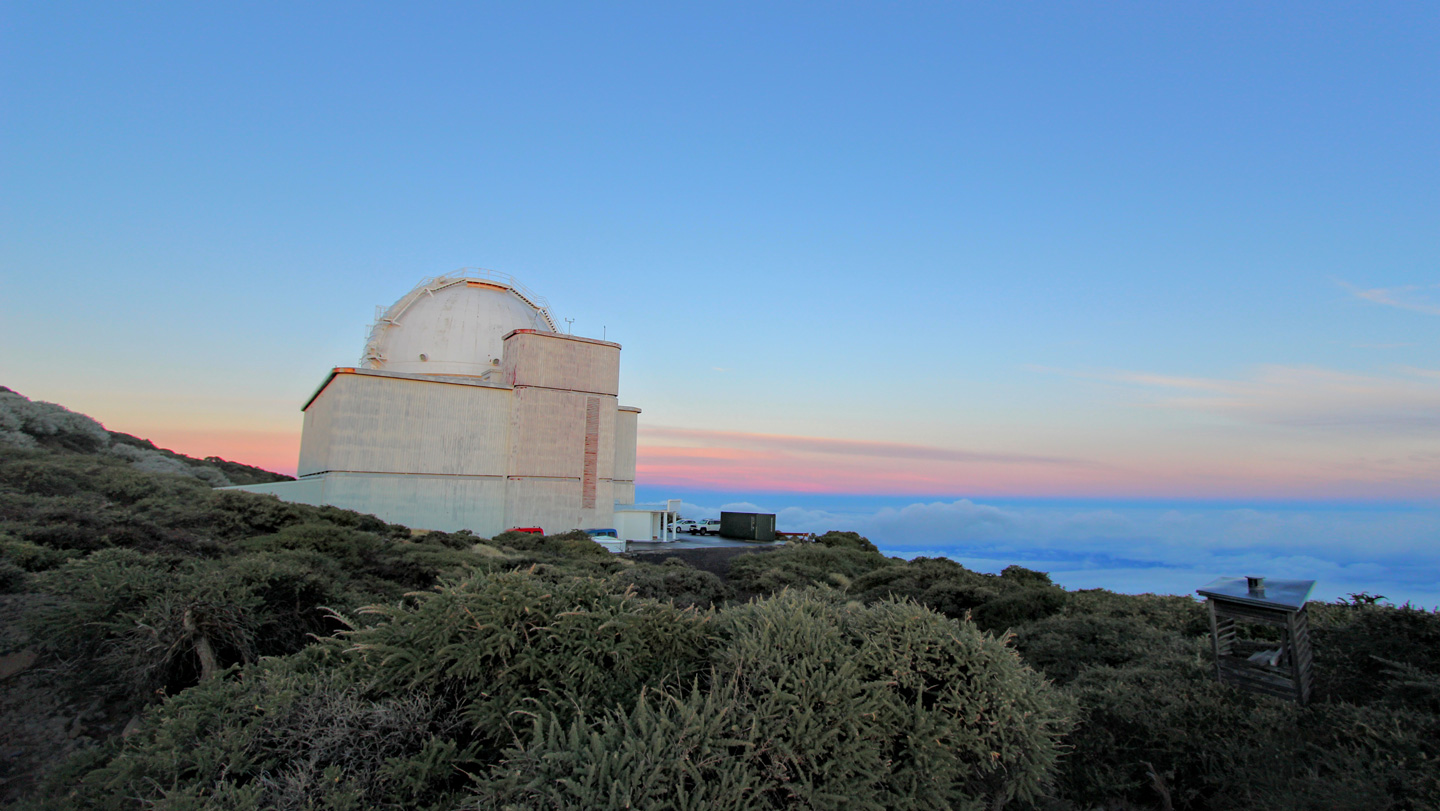
At the heart of the Terra Hunting Experiment lies HARPS3, a next-generation spectrograph being installed on the Isaac Newton Telescope in the Canary Islands. This remarkable instrument functions as a cosmic speed gun, measuring the minute changes in a star’s velocity as planets tug it back and forth. The technological precision required borders on the miraculous—HARPS3 must detect color shifts in starlight equivalent to the width of a human hair seen from ten miles away. The experiment will focus on approximately 40 carefully selected Sun-like stars, observing each one almost every night for a decade. This relentless observational cadence represents a profound shift in exoplanet hunting strategy. While previous surveys cast wider nets across hundreds of stars with less frequent observations, the Terra Hunting Experiment takes the opposite approach, trading breadth for unprecedented depth. The philosophy resembles the difference between taking occasional snapshots versus filming a continuous movie of each target star’s motion, revealing patterns that would otherwise remain hidden in the observational gaps. This concentrated approach requires extraordinary patience—a true Earth twin would take years to reveal itself—but promises discoveries that would be impossible with less persistent methods.
The scientific team behind the Terra Hunting Experiment represents a collaboration across multiple universities and research institutions, bringing together astronomers, engineers, and data scientists in pursuit of a shared vision. Their work builds upon the legacy of previous exoplanet missions like Kepler, TESS, and the original HARPS instrument, which together have discovered thousands of planets beyond our solar system. However, while these earlier missions excelled at finding certain types of exoplanets, true Earth twins have remained elusive. The challenge isn’t just technological but statistical—Earth-mass planets in Earth-like orbits create such subtle stellar wobbles that they can be easily masked by other factors, including the star’s own natural activity cycles, instrumental noise, and the gravitational influence of other planets in the same system. The Terra Hunting Experiment’s methodical approach directly addresses these complications through both its persistent observational strategy and sophisticated data analysis techniques. Machine learning algorithms will help separate the weak planetary signals from stellar noise, while the nightly observations will allow astronomers to better understand and account for each star’s unique activity patterns. This comprehensive approach maximizes the chance of finding those rare worlds that most closely resemble our own Earth.
The implications of discovering a true Earth twin extend far beyond adding another dot to astronomical catalogs. Such a finding would fundamentally transform our understanding of our cosmic context and the potential for life beyond Earth. If Earth-like planets prove common around Sun-like stars, it suggests that the conditions that gave rise to life on our planet may not be exceptional in the universe. Conversely, if the experiment finds that such worlds are rare despite its exhaustive search methods, it would suggest that our planetary home may be more special than we previously believed. Beyond these philosophical dimensions, the detailed data collected on each target star will advance our understanding of stellar physics, planetary formation, and system architecture. The experiment will likely discover many other types of planets as well, from hot Jupiters to mini-Neptunes, building a more complete picture of the diversity of worlds that populate our galactic neighborhood. Perhaps most importantly, any Earth-like planets identified would immediately become prime targets for future missions designed to characterize their atmospheres and search for potential biosignatures—chemical indicators that could suggest the presence of life.
Looking toward the horizon, the Terra Hunting Experiment represents not an endpoint but a crucial bridge to the next generation of astronomical exploration. The worlds it discovers will likely become the targets for upcoming observatories like the James Webb Space Telescope, the European Extremely Large Telescope, and proposed direct imaging missions specifically designed to study exoplanet atmospheres. In this way, tonight’s patient observations of stellar wobbles connect directly to tomorrow’s potential detection of life’s chemical signatures on distant worlds. The experiment embodies astronomy’s unique time perspective—the willingness to invest years of observation to answer questions that have intrigued humanity for centuries. As the nightly observations accumulate over the coming decade, each data point will add to our understanding of our place in the cosmos. Whether the experiment ultimately discovers many Earth twins or none at all, its comprehensive approach ensures that we will emerge with a deeper understanding of the types of planetary systems that exist around stars like our Sun. In either case, the Terra Hunting Experiment represents humanity at its most curious and methodical, patiently scanning the heavens night after night in search of places that might, in crucial ways, resemble the world we call home.