



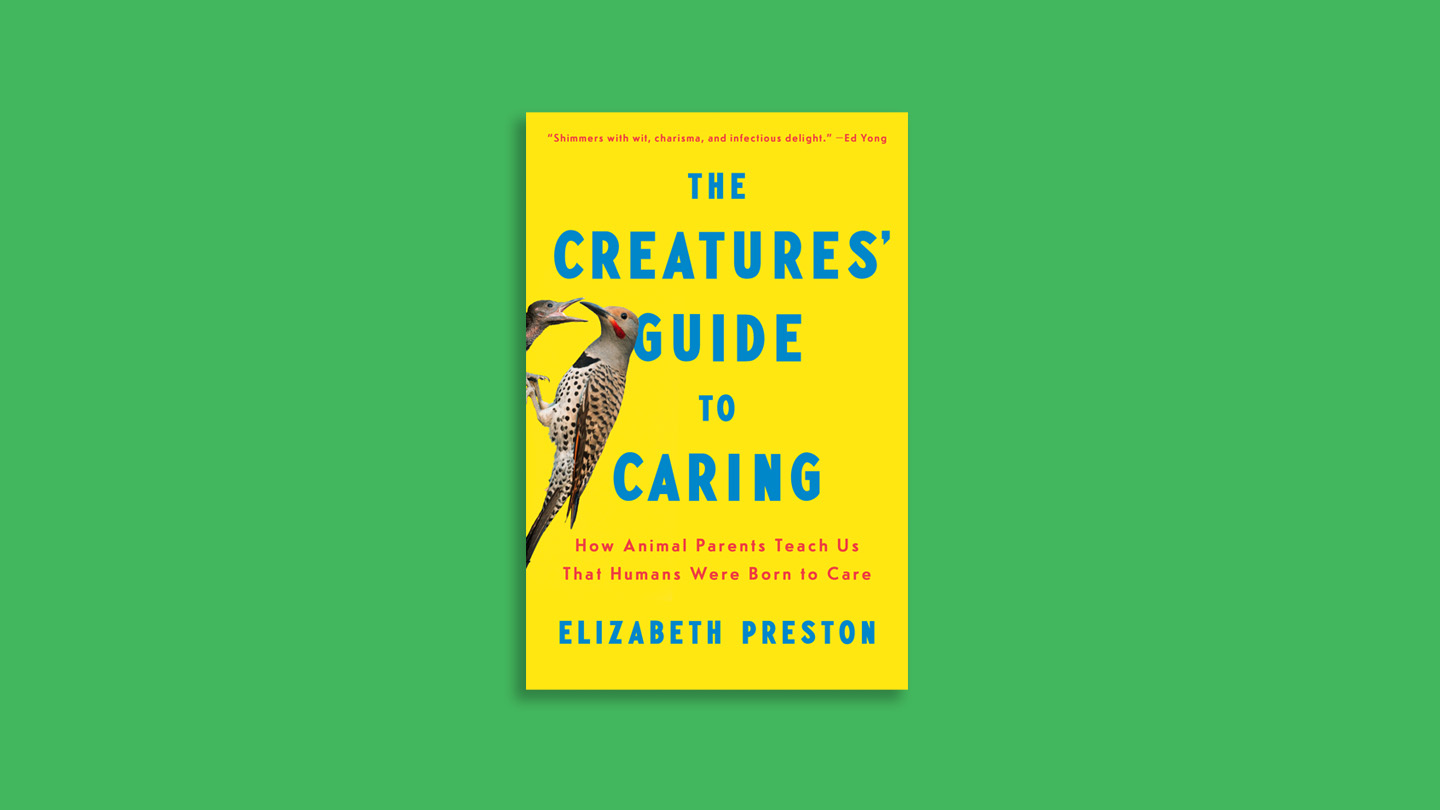
Imagine holding your newborn in the quiet stillness of night, feeling every ounce of exhaustion from those endless feedings and diaper changes, while the world spins on outside your dimly lit room. I remember it vividly—my early days as a new mom felt like being trapped in a never-ending cycle, a 24/7 service station for a tiny, insatiable customer whose cries echoed my own desperation for sleep. Depending on my grasp of time, I’d rush to their side, only to realize it was just another false alarm, and then back to wiping up spit-ups or dealing with surprises that came with parenthood. Breastfeeding was no walk in the park; it was hard, physical labor that left me drained, my body aching and my mind foggy. But then I picked up “The Creatures’ Guide to Caring” by Elizabeth Preston, and suddenly, the sheer complicity of human parenting didn’t feel quite so isolating. As a science journalist, Preston weaves a tale that’s not just informative but deeply humanizing, turning evolutionary biology into a mirror for our own messy, beautiful struggles. Priced at $30 through Viking, it’s the kind of book that makes you laugh, cry, and wonder why we ever thought we humans had cornered the market on parenting drama.
Shifting gears from my sleepless nights, Preston introduces us to creatures that might just make you grateful for your own baby’s relatively tame demands. Take the burying beetle, for instance—a scavenger that collects small dead animals and uses its mouth and rear secretions to mold them into neat, slimy spheres. It’s like nature’s version of a horror story: parents burying the unfortunate corpses to create a nursery for their eggs, all while feeding their wriggly larvae with regurgitated bits of rotting meat. In just six days, those beetle babies balloon to 200 times their original size, a growth spurt so radical that Preston quips if a human newborn duplicated it, they’d balloon into a beluga whale within a week. Reading that, I couldn’t help but cradle my own child tighter, thanking whatever cosmic force spared me from such grisly duties. It’s a stark reminder that parenting, across species, is fraught with unsightly tasks, but it’s also a testament to evolutionary ingenuity. These beetles don’t have childcare books or TED Talks on attachment parenting; they just get on with it, their instincts honed over millennia. It makes me ponder how, in my own human way, I’m juggling spit-ups and sleepless nights with a mixture of love and exasperation, much like those industrious insects burying their ‘meals’ for the future. Preston’s narrative humanizes this by showing that every parent’s got their own version of ‘cleanup on aisle whatever,’ whether it’s beetle excretions or baby vomit. It’s oddly comforting, knowing that even in the insect world, caretaking is about sacrifice and survival, not perfection.
The book itself sprang from Preston’s own plunge into motherhood, a journey that transformed her from a curious observer to someone grappling with the raw realities of raising a child. As a first-time mom, she confronted the same whirl of emotions I did: isolation in those midnight vigils, the nagging doubt that everyone else seemed to ‘get’ parenting while she fumbled through. “If so many people have done it before you, and are doing it right now—if so many animals are doing it without books or apps or advice to heed—why is it the hardest thing you’ve ever done?” she asks poignantly. Her fascination with parenting biology grew from these exhausted nights, leading her to explore how animals have evolved to parent long before we humans even entered the scene. Each chapter peels back layers of evolution, blending humor, hard science, and relatable anecdotes to reveal that parenting’s ‘hardest thing’ feels universal because it is. Preston dissects the pros and cons with a light touch, pointing out kinship with creatures that juggle brood-rearing in ways that mirror our own villager-supported, community-driven approach. For me, reading about her mix-ups—like mistaking herself for a wasp and regurgitating food—was a hilarious reality check. “Sometimes I get mixed up because I still don’t get enough sleep. What can I say? I have kids,” she deadpans, capturing that sleep-deprived haze where logic flees and instincts take over. It’s humanizing because it reminds us that even experts like Preston face the same fog, turning science into shared stories of trial and error.
One of the most captivating sections dives into fish dads, painting them as pioneering parents in Earth’s long history of child-rearing. Humans and fish are worlds apart evolutionarily, yet Preston highlights how these scaly caregivers tap into similar hormonal pathways—think oxytocin, progesterone, and estrogen—that shape our own nurturing instincts. Picture the three-spined stickleback male, diligently guarding his eggs against predators while his brains buzz with bonding hormones. It’s not so different from a dad pacing in the nursery stalls, swinging lights to soothe a fussy baby. Humans, thankfully, don’t lay eggs or endure the birthing pains of female spotted hyenas, who push pups through pseudopenises in a process that involves, as one scientist tactfully describes, “a lot of tearing.” Preston wisely hits pause on that, but it’s a sharp contrast to human labor halls of fame. What strikes me is how hyena moms fiercely advocate for their cubs at mealtimes, bulldozing adults aside—just like I’d elbow my way through a child’s birthday party chaos to grab extra cupcakes for my picky eater. Parenting, whether fish or feline, revolves around protection and provision, making our own battles feel less unique and more part of a grand, evolutionary continuum. Preston’s exploration extends this kinship, showing that from prehistoric ponds to modern homes, the core drive is the same: nurturing the next generation against all odds.
Nature’s parenting playbook isn’t all heartwarming vignettes; Preston doesn’t shy away from the darker undercurrents that echo human realities. Take the long-tailed skink female who, when push comes to shove with too many predators, might simply eat her eggs—a grim calculus of starting over rather than wasting energy on doomed offspring. It’s a sobering parallel to human dilemmas, like those tough calls in unplanned pregnancies or situations where care isn’t feasible. Similarly, marmoset and tamarin mothers, reliant on communal help, reject their young if support systems crumble, highlighting how loneliness amplifies rejection. For humans, parenting’s burden is heavy because evolution wired us for villages: extended families, friends, even nannies sharing the load. Alone, it feels overwhelming, and that’s why so many of us struggle—missing that ancestral network. Reading this, I reflected on my own postpartum isolation, how a simple phone call from a neighbor could shift the scale from despair to doable. Preston embraces these shadows without judgment, illustrating that nature’s harshness teaches resilience, much like our own imperfections forge character. It’s a gentle nudge that every parent’s path includes forks in the road, and we’re not failures for choosing differently.
Ultimately, what “The Creatures’ Guide to Caring” offers is solace in the shared tapestry of struggle, reminding us that across millions of years and countless species, we’ve all been winging it. From insects to whales, fish to primates, the animal kingdom has experimented with infinite strategies for rearing young, proving there’s no one “right” way to parent—only the one that works for you and your brood. As someone in the thick of it, with kids in varying stages of dependence and independence, I find immense comfort here. It’s like discovering a vast support group of evolutionary predecessors who’ve faced the same fears and triumphs. Preston’s book isn’t a manual; it’s a conversation, blending science with empathy to normalize our chaos. In a world where parenting achievement is paraded on social media, this feels like a quiet rebellion against perfectionism. If you’re pregnant, a first-timer, or even an empty-nester reflecting back, pick this up—it’s $30 well spent. Through Bookshop.org, supporting indie bookstores, you can snag a copy and help Science News earn a small commission. In the end, Preston leaves us with a tender truth: we’re not alone in this wild ride, and that’s the biggest gift of all. So, next time your kid wakes you at 2 a.m., think of those beetle parents kneading their ‘nursery meals,’ and smile—evol earned us a better gig.