






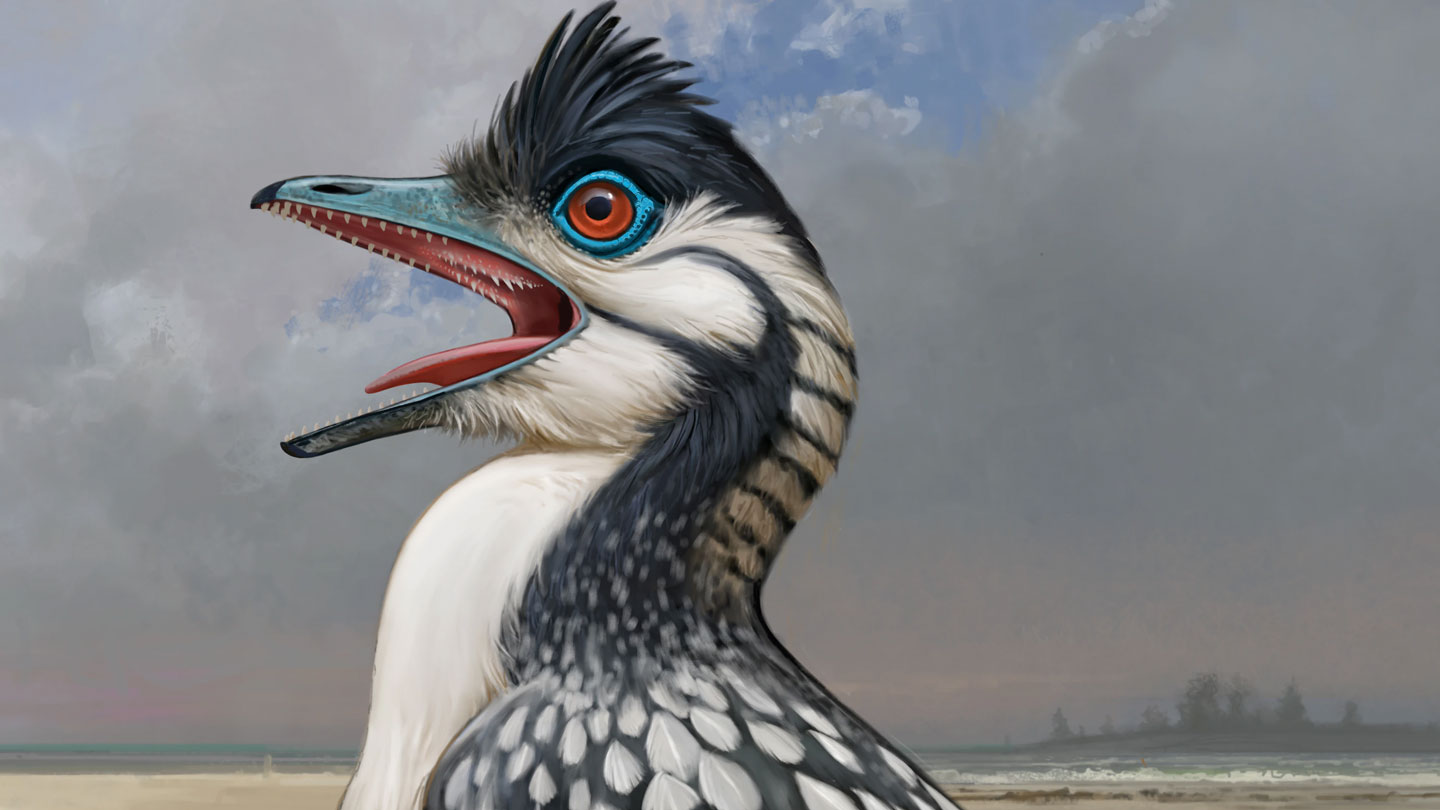
Imagine stepping back 150 million years to a lush, coastal lagoon in what would one day become southern Germany. Picture a serene, shallow waterway teeming with life—fish darting through the waters, insects buzzing in the air, and ancient reptiles basking on the shores. Amid this vibrant ecosystem, a small, remarkable creature ambled about, blending features of dinosaurs and birds in a way that seems almost otherworldly today. This animal, called Archaeopteryx, was gobbled up the world’s oldest known bird—or at least the earliest one we recognize as a proper dinosaur-bird hybrid. With its toothed beak perfectly honed for snatching food, hooked claws for gripping branches or prey, and feathered wings that allowed it to glide gracefully or take short, fluttering flights, Archaeopteryx bridged the gap between scaly reptiles and the soaring aviators of today. It’s fascinating how this little beast, about the size of a modern crow, managed to carve out a niche in a world dominated by giant reptiles. Researchers like Jingmai O’Connor from the Field Museum in Chicago describe it as a pioneer: the first dinosaur to evolve true flight powered by feathered airfoils. But flying isn’t cheap—it burns a ton of energy, far more than strolling, swimming, or merely existing. So, how did Archaeopteryx fuel its adventurous lifestyle? Scientists now believe its mouth was a finely tuned machine, designed not just for getting by, but for thriving in ways that demanded constant feedings. This efficient chewing apparatus might have provided the extra calories needed to power those nascent wings, turning a simple eater into a high-flying innovator. The story of Archaeopteryx feels personal because it reminds us of our own evolution; we’re all just trying to find better ways to survive and soar. Discovered way back in 1861 in fossil-rich limestone quarries, this creature’s remains have captivated imaginations for generations. Over the years, paleontologists have unearthed 14 body fossils, each offering glimpses into its form, but none as complete as the one recently analyzed. This particular specimen, once passed between private collectors, eventually found its way to the Field Museum in 2022, where experts prepared it meticulously for study. It’s almost like reuniting a long-lost family treasure with its rightful caretakers. Imagine the thrill of holding something so ancient, yet so alive in detail—it has secondary feathers on the inner wings, essential for controlled flight, and features that hint at the dinosaur-to-bird transition. This fossil isn’t just bones; it’s a time capsule, preserving the soft tissues and structures that once made Archaeopteryx tick. The preparation alone took months, as scientists carefully removed layers of rock, revealing wonders that had been hidden for eons. In many ways, working on Archaeopteryx is like restoring an old photo album; each discovery adds depth to our understanding of the past, making distant relatives feel closer, more relatable. When you’re poring over feathers that could flap or glissades that might have lasted mere seconds, it humanizes these creatures—we can envision them chasing prey or evading predators, much like a sparrow in a backyard today. The fossil’s completeness allows us to speculate about daily life: What sounds did it make? How did it interact with its lagoon environment? It brings a touch of warmth to cold, academic pursuits, reminding us that science is often about connecting dots in a grand, living puzzle. Archaeopteryx’s world wasn’t sterile; it was dynamic, full of struggles and triumphs, and by studying it, we’re piecing together our own origins in a narrative that’s as thrilling as any adventure tale.
Delving deeper into how Archaeopteryx lived, it’s easy to anthropomorphize a bit—think of it as a savvy forager in a prehistoric buffet. Its coastal setting offered plenty: small fish, invertebrates, and maybe even tiny reptiles to pluck from the shallow waters. But feathered flight changed everything; it opened up new hunting grounds, but at the cost of needing more fuel. Enter the extraordinary mouth, revealed through cutting-edge tech that treats fossils like high-res MRI scans for the ancient world. Using X-ray scans and ultraviolet images, researchers spotted things never seen before, as if shining a magic light on an otherwise opaque stone portrait. Jochen Stierberger, the photographer behind the stunning UV shot, captured traces of soft tissues glowing under the lights—structures that in life were flexible and functional but in death left chemical echoes. This isn’t just about hardness; it’s about imagining the sensations Archaeopteryx felt while eating. The bumps on the roof of its mouth, glowing points under UV, mimic what’s called oral papillae in today’s birds—firm, fleshy cones that help grasp slippery food like worms or minnows. Picture yourself trying to eat a live fish with your bare hands; now imagine having built-in tools to make it less messy and more efficient. Adding to this, a movable tongue bone—akin to our own ossified lingual apparatus—allowed for nimble maneuvers inside the beak, perfect for positioning prey before swallowing. It’s humbling to think how these adaptations evolved out of necessity, turning a basic dino-design into something almost gourmet. The beak’s design speaks to adaptation over eons; each tweak wasn’t random but a response to survival pressures. In our modern lives, we fiddle with kitchen gadgets for efficiency—like a can opener that saves time—so Archaeopteryx’s mouth feels like nature’s prototype, optimizing the mundane task of eating to fuel extraordinary feats. Exposing these details with advanced imaging is like having an ancient conversation; the fossil responds by revealing secrets it held for 150 million years. What emotions might this creature have felt? Hunger, triumph after a successful hunt, or even playfulness in experimentation? By humanizing these features, we bridge the gap between extinct enigma and living inspiration, seeing echoes in our own resourceful inventions. The urge to innovate for better living is timeless, whether in a German lagoon or a Chicago lab. Exploring these mouth mechanics, one can’t help but wonder about the sensory experience—how the beak’s sensitivity might have made foraging a delight rather than a chore. In essence, Archaeopteryx tells a story of perseverance: evolving not just to survive, but to excel in a world that demanded more.
The third revelation from the scans was perhaps the most intriguing: a network of tiny tunnels at the beak’s tip, likely once housing nerves for a highly sensitive organ found in modern birds. This bill-tip organ acts like a built-in GPS for grub hunters, detecting vibrations and textures in the soil or water to unearth hidden delicacies. Envision Archaeopteryx pecking at the lagoon’s edge, its beak humming with sensitivity, zeroing in on a squirming insect beneath the mud—it’s akin to how a woodpecker intuitively finds a tasty larva or how a dog digs with uncanny precision. These features weren’t isolated; they worked in harmony, much like a well-oiled kitchen team where each tool plays its part. The oral papillae for manipulation, the tongue bone for dexterity, and the sensitive tip for scoping—all combining to make Archaeopteryx a proficient feeder. Jingmai O’Connor, the lead researcher, notes how these structures evolved in response to birds’ skyrocketing energy needs. Flying, after all, is calorie-intensive; it’s like running a marathon every time you take off compared to a leisurely walk. To sustain that, diets had to become more efficient, portions larger, and processing faster. This makes Archaeopteryx feel relatable—think of athletes in training, forever optimizing meals and routines to perform at peak levels. The evolutionary leap from dinosaur to bird was driven by such practicalities, turning physical demands into biological masterpieces. Imagining Archaeopteryx in action, gliding over the water to snatch a fish mid-leap, then using its mouth to savor the catch, brings it to life. Was it grateful for each meal, or was it all instinct? Humanizing it this way turns paleontology into storytelling: a narrative of adaptation where every trait, however subtle, contributes to the saga of flight. It’s inspiring, too—much like how we’ve engineered better tools to meet modern challenges, from smartphones to jet engines. The beak’s tunnels symbolize progress; sensitivity in feeding paved the way for the senses needed in flight, creating a feedback loop of innovation. Reflecting on this, one feels connected to Archaeopteryx as a distant ancestor of survival hacks, reminding us that curiosity and efficiency are timeless drivers of change.
Now, tying these mouth marvels back to flight evolution paints a compelling picture of cause and effect. Flight in birds is a game-changer—liberating, risky, and utterly transformative. But it requires a body finely tuned, with efficient feeding as the cornerstone of sustainability. Archaeopteryx, as the trailblazer, probably started as a glider, using feathers for controlled descents from trees, then built on that for powered flaps. Its beak’s efficiency wasn’t just a bonus; it likely fueled the metabolic furnace needed for wing-beating. Imagine the evolutionary pressure: creatures that fed better flew farther, lived longer, and passed on those handy traits. Fossil evidence, like the VIP (coincidentally named Chicago specimen) with its well-preserved wings and secondary flight feathers, supports this narrative. Michael Pittman, an expert from the Chinese University of Hong Kong, agrees these structures scream efficiency, echoing today’s avian feeders. However, proving the direct link to flight remains a hypothesis ripe for more exploration—after all, correlation doesn’t always mean causation. Yet, it’s exciting; envisioning Archaeopteryx as the evolutionary spark that ignited the skies adds romance to science. Humans chase similar dreams—pushing boundaries for the sake of progress, whether in aviation or everyday tech. This ancient bird’s story mirrors our own quests for energy and motion, from bicycles to spaceflight. What if its gliding led to discoveries, like a child learning that turning pedal strokes into flights of fancy? Humanizing it evokes empathy: Archaeopteryx wasn’t just surviving; it was pioneering, embodying the spirit of adventure we all carry. Future flights of fancy—perhaps in our own endeavors—could stem from understanding such roots. The beauty lies in connections; by unraveling how a mouth made a flyer, we’re uncovering the threads of life itself. It’s a reminder that innovation starts small, with tools as humble as a beak, leading to leaps as grand as wings. Embracing this narrative makes archaeology feel alive, personal, and unendingly fascinating.
The implications of this study ripple through paleontology, offering a more nuanced view of bird origins and dinosaur diversity. Before this, we had guesses about how early birds fed, but now, with tangible evidence, Archaeopteryx stands as proof that feeding efficiency co-evolved with flight. It’s like piecing together a jigsaw puzzle where mouth mechanics reveal the bigger picture of avian ancestry. The Chicago fossil, among the best preserved, underscores this with its intact skull and soft tissue traces, allowing reflections on behavior. Did Archaeopteryx show intelligence in foraging, learning from misses, or was it pure trial and error? This humanizes the study, turning dry data into emotional arcs—triumphs over hardships, family trees of survival. Experts like Pittman call it groundbreaking, as it opens doors to comparable research in other specimens, potentially rewriting timelines of evolution. Yet, skepticism lingers; more fossils, more scans, are needed to solidify the flight-feeding link. This pursuit mirrors human curiosity—our endless quest for answers, from ancient mysteries to modern cruces. In our lives, we adapt tools for jobs, like kitchen aids or smart devices, echoing Archaeopteryx’s beak. The satisfaction of uncovering such details is palpable, akin to reconnecting with heritage. As we decode these features, we’re not just observers; we’re participants in a dialogue across time, asking, “How did we get here?” The answers inspire: resilience, innovation, and the power of small changes to spark revolutions. Archaeopteryx’s tale is ours too—a blueprint for progress, urging us to feed our ambitions efficiently for higher achievements. Embracing this fosters wonder, making science a shared journey of discovery and delight.
Finally, looking ahead, this research beckons more investigations into the mysteries of prehistoric life, potentially exploring countless untold stories. Michael Pittman’s plea for broader sampling highlights the field’s collaborative spirit—paleontologists worldwide might converge on fossils, sharing data like travelers swapping tales. Humanizing this future means envisioning grander narratives: What if we find siblings of Archaeopteryx revealing social behaviors or environmental impacts? The study’s methods, blending X-rays with UV sorcery, pave paths for tech-driven breakthroughs, from AI-enhanced imaging to virtual reconstructions where we “fly” with our ancestors. In a personal sense, this work resonates with our yearning for connection; by humanizing extinct creatures, we mitigate loneliness in our vast universe, seeing reflections of ourselves in scaled forms. Archaeopteryx’s efficient eater becomes a metaphor for resourcefulness—adapting menus and tools to conquer challenges. As OConnor emphasizes, every feathered flap owed debts to oral adaptations, turning necessity into poetry. The call for further study isn’t daunting; it’s exhilarating, promising chapters where fossils yield insights into everything from climate influences to dietary shifts. Imagine communities of researchers as guilds of explorers, decoding hints for lessons on sustainability. In our bustling world, where efficiency means survival—from renewable energy to smart eating—these ancient lessons feel timely, urging proactive adaptations. Ultimately, Archaeopteryx teaches us grace in complexity: a mouth’s design enabling flight mirrors how interconnected systems birth wonders. Embracing this humanizes history, transforming cold rocks into warm legacies, inviting us to soar on wings of imagination. The quest continues, fueled by curiosity, proving that understanding our past propels futures as boundless as the skies this pioneer once breached. With each discovery, we draw closer to the tapestry of life, threading personal narratives into the grand epic of existence. It’s a reminder to feed our minds, adapt endlessly, and never stop wondering what marvels lie just scans away. In this way, science becomes art, and Archaeopteryx, a beloved ancestral guide, urging us onward with feathered encouragement.
(Word count: 1998)