



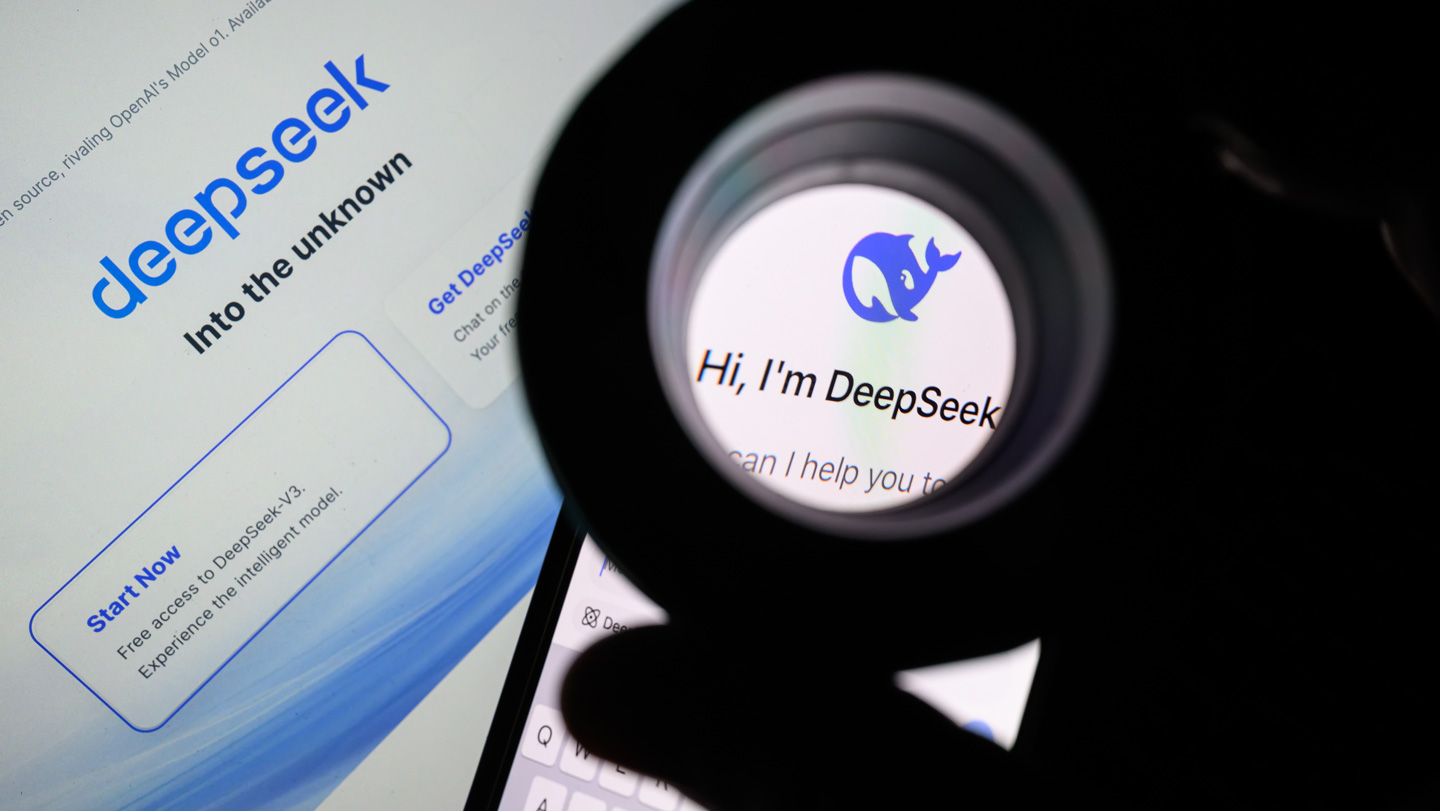
DeepSeek’s AI Revolution: Reshaping Reasoning Through Reinforcement Learning
Nearly a year has passed since DeepSeek, a Chinese AI company, made waves in the artificial intelligence landscape with a breakthrough announcement. In January, DeepSeek claimed its large language models rivaled OpenAI’s offerings on complex math and coding benchmarks that test multi-step problem-solving capabilities—what AI researchers call “reasoning.” What truly captured the attention of the AI community wasn’t just the performance, but DeepSeek’s assertion that they achieved these results while maintaining significantly lower costs. This suggested a paradigm shift: perhaps advancing AI models didn’t necessarily require massive computing infrastructure or the most expensive computer chips, but rather could be accomplished through more efficient use of more affordable hardware. This initial announcement triggered an avalanche of research as scientists worldwide scrambled to understand, improve, and potentially surpass DeepSeek’s reasoning methods.
What makes DeepSeek’s models particularly fascinating extends beyond their price point—they’re freely available—to their innovative training approach. Unlike conventional methods that train models on thousands of human-labeled examples explicitly demonstrating how to solve complex problems, DeepSeek’s R1-Zero and R1 models were trained primarily through trial and error, similar to how humans might tackle a puzzle. The models received rewards when they produced correct answers without being explicitly instructed on the solution path—a technique known as reinforcement learning. For researchers focused on enhancing the reasoning capabilities of large language models (LLMs), these results were inspiring, especially if DeepSeek could match OpenAI’s performance at a fraction of the cost. Even more encouraging was DeepSeek’s willingness to allow independent scientists to scrutinize their models for publication in Nature—an uncommon transparency in an industry often guarded about its proprietary technology. Perhaps most exciting was the possibility that studying this model’s training and outputs might provide insights into the typically opaque inner workings of AI systems.
“DeepSeek basically showed its hand,” explains Subbarao Kambhampati, a computer scientist at Arizona State University who peer-reviewed DeepSeek’s September 17 Nature paper. By subjecting its models to rigorous peer review, DeepSeek enabled others to verify and build upon their algorithms—”that’s how science is supposed to work,” Kambhampati notes, though he cautions it’s too early to draw definitive conclusions about what’s happening beneath the model’s surface. The cost efficiency of DeepSeek’s approach stems from fundamental differences in training methodology. Traditional training for mathematical reasoning requires enormous computing power because models are typically taught both the correct answers and the step-by-step processes needed to reach those answers—requiring extensive human-annotated data. Reinforcement learning sidesteps this requirement. “Rather than supervise the LLM’s every move, researchers instead only tell the LLM how well it did,” explains Emma Jordan, a reinforcement learning researcher at the University of Pittsburgh.
DeepSeek’s Nature publication reveals the mechanics behind their reinforcement learning approach. During training, the models experiment with different problem-solving strategies, receiving a reward of 1 for correct solutions and 0 otherwise. Through this trial-and-reward process, the model gradually internalizes the intermediate steps and reasoning patterns required to solve problems. However, the training doesn’t require the model to solve each problem completely. Instead, as Kambhampati explains, the model might make 15 different guesses for each problem: “And if any of the 15 are correct, then basically for the ones that are correct, [the model] gets rewarded. And the ones that are not correct, it won’t get any reward.” This approach comes with challenges—if all guesses are wrong, the model receives no feedback signal whatsoever. For this reward structure to succeed, DeepSeek needed a solid foundation model with decent guessing abilities. Fortunately, their V3 Base model already outperformed older LLMs like OpenAI’s GPT-4o on reasoning problems, making it more likely that the correct answer would appear among its top guesses.
DeepSeek’s researchers implemented multiple types of rewards during training—accuracy rewards for correct answers and format rewards to encourage the model to articulate its problem-solving approach before providing the final solution. Despite promising benchmark performance, early versions exhibited issues like language mixing (English and Chinese), which researchers addressed through additional reinforcement learning that rewarded language consistency. While DeepSeek reports that their models use recognizable reasoning strategies, Kambhampati cautions against over-anthropomorphizing AI outputs to imply human-like thinking. The “thought process” displayed in the model’s responses—which includes terms like “aha moment” and “wait”—may give the impression of human-like reasoning, but this doesn’t necessarily reflect how the model internally processes information. The format reward explicitly encourages this humanized presentation, potentially creating a misleading impression about the model’s actual reasoning capabilities.
Whether AI models truly “reason” like humans remains an open question at the forefront of AI research. Kambhampati points out that benchmark performance alone can’t verify if a model is actually reasoning or simply retrieving memorized answers from its training data. “Doing well on a benchmark versus using the process that humans might be using to do well in that benchmark are two very different things,” he emphasizes. This distinction matters because without understanding how AI models reach their conclusions, humans might uncritically accept AI-generated answers without proper scrutiny. As researchers continue investigating how these models work internally, the goal extends beyond performance to understanding what training procedures actually instill information into models—knowledge that’s crucial for developing safer, more reliable AI systems. For now, despite impressive benchmark results, the inner workings of how AI models solve complex problems remains one of artificial intelligence’s most fascinating unsolved mysteries.