





The devastating war in Ukraine has shattered more than just buildings and lives—it’s crippled the healthcare system, leaving deadly diseases like HIV to fester unchecked in the shadow of conflict. For millions, the Russian invasion, starting small in 2014 with Crimea’s annexation and exploding into a full-scale war in 2022, has meant chaos: hospitals abandoned, clinics bombed, and basic access to testing, treatment, and prevention programs like needle exchanges vanishing overnight. Imagine waking up each day unsure if a missile will strike while you’re trying to get life-saving medicine or learning whether you’re infected. This isn’t just statistics; it’s the tearful pleas of families torn apart, parents fearing for their children’s futures, and communities where every day without care feels like a gamble with death. HIV, which has lingered in Ukraine since the 1990s—spread primarily through intravenous drug use and risky sexual behaviors—has surged in this turmoil, turning a manageable public health issue into a silent epidemic. People living with HIV find themselves without support, their symptoms hidden amid the greater nightmares of war, while newcomers fleeing the front lines carry the virus into new areas, blending old strains with emerging threats. The human cost is immeasurable: lives shortened, children orphaned, and a sense of isolation that turns routine health checks into distant dreams.
Into this grim reality steps virologist Ganna Kovalenko, or Anna as she’s known in scientific circles, a tireless researcher from the University of California, Irvine, whose own Ukrainian roots fuel her mission. She’s not a detached observer in a lab coat; she’s a daughter of war-torn lands, drawing from the ARTIC network’s pioneering work on portable sequencing during crises like the 2014 Ebola outbreaks in West Africa. Kovalenko saw parallels in Ukraine: isolated hotspots where the virus thrives, cut off from advanced labs that usually handle genome sequencing. In places ravaged by conflict, sequencing HIV genomes to spot dangerous mutations—like those causing drug resistance—isn’t routine because the tools are tethered to distant facilities. But Kovalenko dreamed bigger, wondering if the same emergency tech could unravel HIV’s secrets in Ukraine’s war zones. Her drive comes from empathy—a deep, personal pull to help her countrymen, colleagues who’ve fled, and displaced families starting over in temporary sanctuaries. She speaks of the emotional toll: endless Zoom calls with collaborators who dodge sirens, emails sent from basements, and the constant adrenaline of pushing boundaries when everything else crumbles. This isn’t just science; it’s a rebellion against despair, transforming cold genetic data into stories of resilience and hope for those affected.
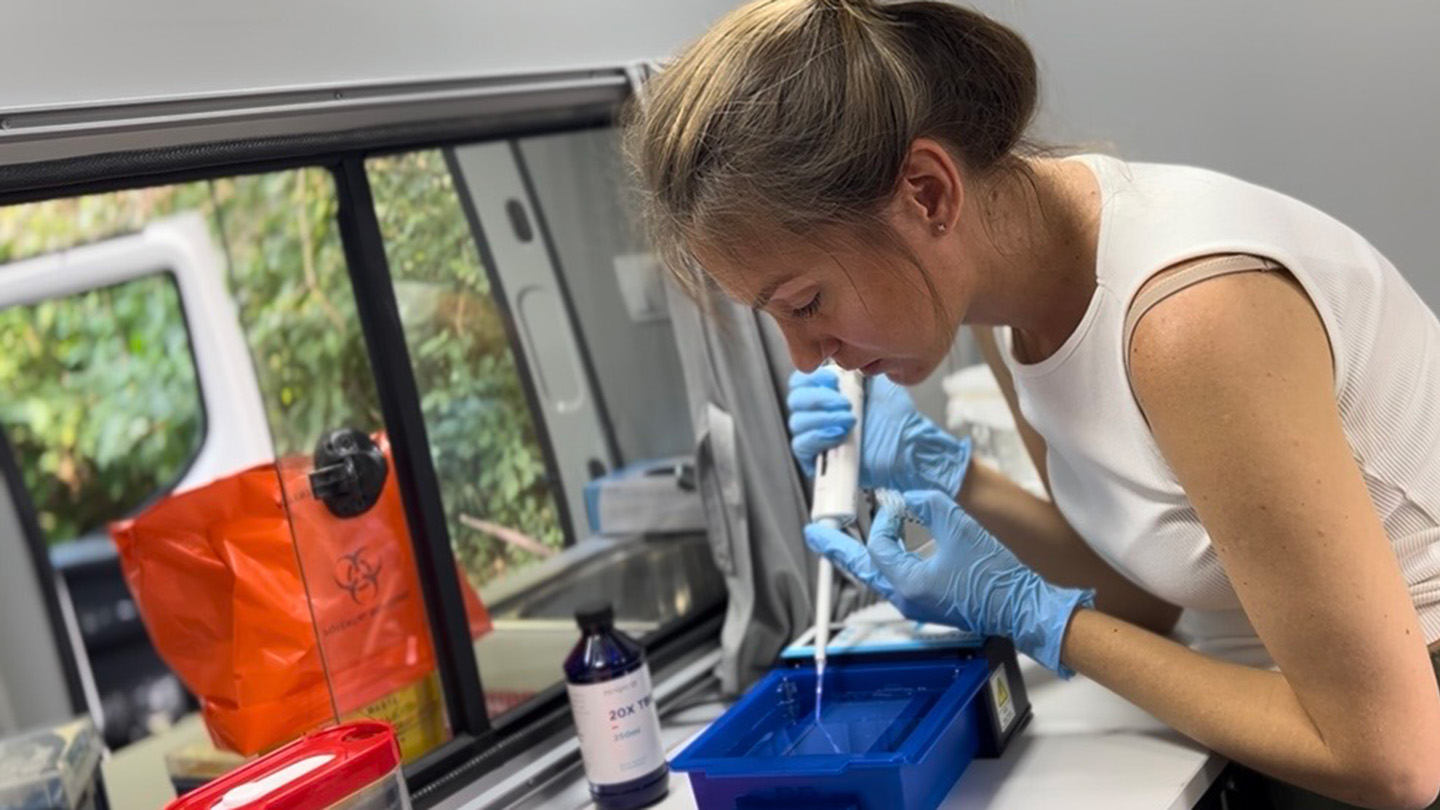
The heart of her innovation? A mobile lab engineered into a humble van, packed with state-of-the-art, portable research gear that can operate anywhere—even under the rumble of distant artillery. It began as a bold experiment: Could this rolling powerhouse bring cutting-edge diagnostics to Ukraine’s remote or embattled areas, where traditional labs are inaccessible? In August 2024, Kovalenko and her team tested it in Lviv, a western Ukrainian city that’s become a makeshift haven for those escaping the deadly crossfire of the front lines. Displaced men and women, often leaving behind everything to flee bombs and occupation, arrive here seeking refuge, but they bring their health burdens too. The van’s warmth was a stark contrast to the fear outside; as locals shared stories of abandoned clinics and lost loved ones, Kovalenko listened, her own heart heavy with shared pain. Working daylight hours to dodge the nightly missile barrages, the team set up amidst the city’s green parks and bustling yet wary crowds. Healthcare workers poured out their frustrations—missile strikes interrupting patient care, forcing them to flee at a moment’s notice, equipment left behind in the panic. For Kovalenko, it was a poignant reminder: this wasn’t about data points; it was about real people, their scars both physical and emotional, their fights against an invisible enemy compounded by a visible war.
Over those three intense days, the team sampled blood from 20 HIV-positive individuals, blending medical precision with human connection in conversations that healed as much as they diagnosed. Kovalenko hadn’t expected much from this small pilot—maybe just proof of concept in a conflict zone. But what unfolded was a revelation: a new HIV strain, born from the war’s displacements, circulating among Lviv’s newcomers. By sequencing genomes and comparing them to samples from 2020, the researchers traced its emergence to after the 2022 invasion’s escalation, when millions fled, mixing populations and viruses. It painted a heartbreaking picture of migration as a double-edged sword—safety sought, but health risks multiplied in crowded shelters and uncertain journeys. Kovalenko felt a mix of vindication and sorrow; it wasn’t just numbers on a screen; it was the lived reality of families separated, partners lost, children facing futures with inherited burdens. One participant shared how testing brought both relief and terror—laughter at survival juxtaposed with tears over partners left behind. The team saw the strain as evidence of how conflict reshuffles human lives and viral paths, turning routine movements into unintended epidemics.
Even more alarming was the discovery of a mutation in the virus’s genome making it resistant to a crucial backup antiretroviral drug, ringing alarms like sirens in the night. This wasn’t a freak finding—it echoed global trends, like rising resistance in South Africa’s HIV programs, where similar mutations cripple treatment. Kovalenko worried aloud: How many more displaced souls carried such ticking time bombs? If expanded to more people, future sequencing could uncover resistances to frontline drugs, potentially rendering current treatments obsolete for whole communities. Medical experts like Dr. Casper Rokx, an HIV specialist from Erasmus MC in the Netherlands who’ve run stationary clinics in Lviv since 2023, echoed her concerns. His own efforts had faltered in reaching the most vulnerable—the nomadic, the hidden—leaving gaps where the van could fill in. “It’s human,” Rokx explained over late-night calls, his voice weary from pandemic tales mirrored in this war. “We provide care, but the war steals the last shreds of normalcy.” For the team, this mutation symbolized the raw gamble: HIV mutating faster than aid could arrive, leaving patients in limbo, their trust in medicine eroded by explosions and exile.
Looking ahead, Kovalenko envisions the van as Ukraine’s versatile ally against war’s health fallout, turning portable sequencing into a beacon for neglected diseases. Antimicrobial resistance looms on the frontlines, where soldiers nurse infected wounds without proper antibiotics, bacteria evolving to resist every cure. Sequencing bacterial genomes onsite could save limbs and lives, sparing the amputations that haunt veteran stories. Then there’s tuberculosis, surging in Ukraine’s stressed populations, its bacteria armored against multiple drugs—a deadly duo with HIV in the displaced masses. Kovalenko dreams of driving deeper into danger, collecting stories alongside samples, humanizing data with empathy. Rokx admires the approach: “They’ve bridged advanced tech to desperate need.” War hides HIV’s spread behind a smokescreen of chaos, but this mobile lab pierces the fog, offering not just diagnoses, but dignity. For Ukrainians, it’s a glimmer: amid rubble, science fights back, stitch by stitch, sequence by sequence. In a country where every sunrise is uncertain, the van symbolizes unbroken hope—one journey, one genome at a time.