



The Supreme Court’s Pivotal Moment in Women’s Sports
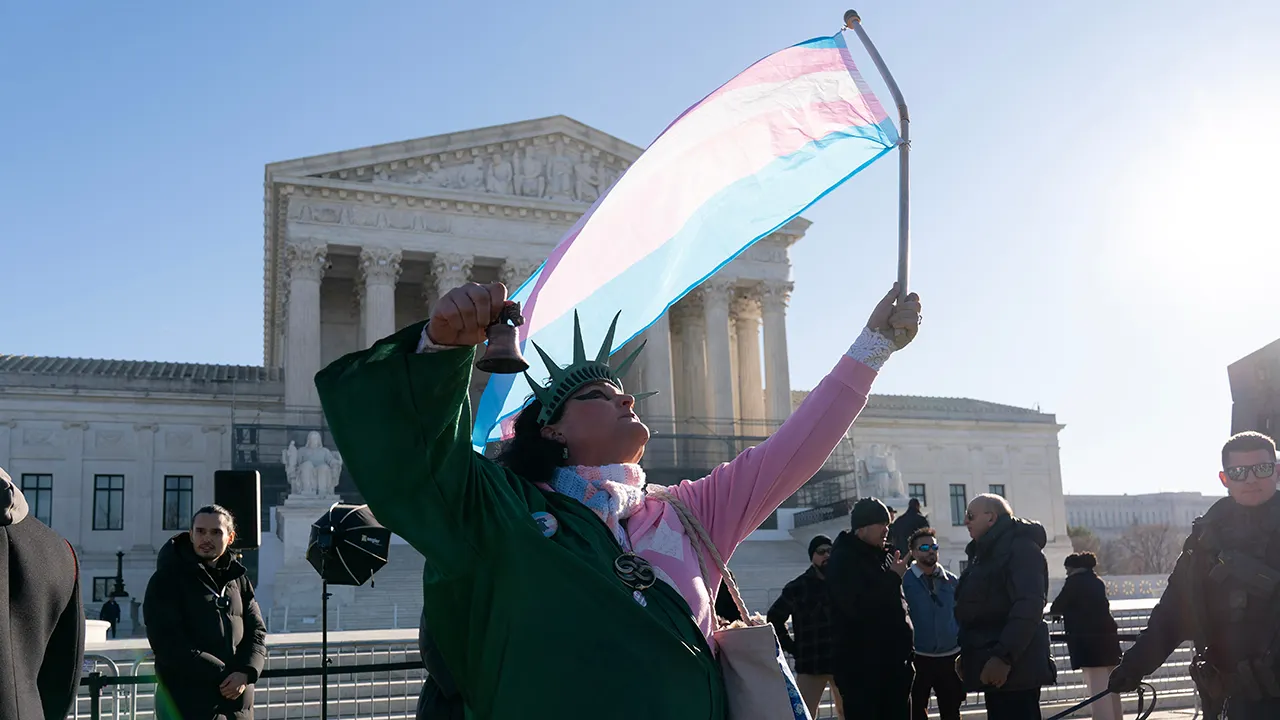
The Supreme Court recently heard arguments in two landmark cases that could shape the future of women’s sports in America. The cases, Little v. Hecox from Idaho and West Virginia v. B.P.J., fundamentally ask whether states can limit participation in women’s sports to biological females. While the legal arguments were technically complex, stretching over three unusual hours of questioning, the core issue resonates with everyday Americans: should transgender girls who were born male be allowed to compete in girls’ sports? This question has real-world consequences, as girls across the country have lost competitions, scholarship opportunities, and sometimes suffered injuries when competing against biologically stronger opponents. According to a recent UN report, “over 600 female athletes in more than 400 competitions worldwide have lost more than 890 medals in 29 different sports” to “males who identify as women.” This reality has prompted more than half of U.S. states to pass laws protecting women’s sports by maintaining sex-based separation.
Idaho made history in 2020 as the first state to pass such legislation with its “Fairness in Women’s Sports” law, preserving sex-segregated teams in public schools from elementary through college levels. Lindsay Hecox, a transgender woman who wanted to join Boise State University’s women’s track team, sued, claiming the law was unconstitutional. The Ninth Circuit initially blocked Idaho from enforcing the law, and interestingly, Hecox later attempted to have the case dismissed entirely, though this request was rejected. Similarly, West Virginia passed its “Save Women’s Sports” law in 2023, which was challenged by B.P.J., an 11-year-old transgender girl who wanted to compete in female sports. West Virginia contends that B.P.J. went on to defeat female competitors in track events, causing five female athletes to refuse to compete altogether. Former college soccer player Lainey Armistead intervened to help defend West Virginia’s law, but the Fourth Circuit ultimately blocked its enforcement as litigation proceeded.
During arguments, the Court wrestled with whether these laws classify on the basis of sex or status – a technical distinction with major implications. Idaho argued its law treats boys and girls equally by separating them in sports for fairness and safety, while the opposing side claimed the laws unfairly exclude transgender girls for discriminatory reasons. This prompted Justice Samuel Alito to ask pointedly: “If a state law treats all biological males the same — meaning no biological male can play on the girls’ team — and it treats all biological females the same, how is that a status-based classification?” Justice Ketanji Brown Jackson, who famously declined to define “woman” during her confirmation hearings, advocated for case-by-case analysis where schools could create exceptions for transgender athletes who could medically prove they had no unfair advantage. The attorneys for the transgender athletes noted their clients had taken hormones or puberty blockers, but the states countered that such treatments don’t eliminate the inherent physical advantages of male biology.
The second round of arguments in the West Virginia case centered on Title IX, the 1972 law prohibiting sex discrimination in educational settings that revolutionized opportunities for female athletes. West Virginia contended that its law aligned with Title IX’s purpose by treating biological boys and girls equally, while B.P.J.’s lawyers argued the law discriminated based on gender identity. Chief Justice John Roberts took a firm position, stating, “You are asking us to find discrimination, but you are also urging us not to define the very word — ‘sex’ — that the statute is built upon. I don’t see how we can do that.” He emphasized that for Title IX to be administered fairly across thousands of schools, “‘sex’ must mean something specific and objective.” Justice Alito reinforced this view: “I think the purpose of the teams is to control for the variable of sex-based advantages, so that talented women athletes have all the same opportunities as talented male athletes. If we move away from biological sex, do we not undermine the very protection for women that Title IX was created to ensure?”
Justice Brett Kavanaugh highlighted the broader context of the case, noting: “One of the great successes in America over the last 50 years has been the growth of women and girls’ sports. And it’s inspiring. [Many groups] think that allowing transgender women and girls to participate will undermine or reverse that amazing success and will create unfairness.” This observation captures why this issue has transcended local school board debates to reach the nation’s highest court. Throughout the arguments, the Court seemed to struggle with a fundamental question posed by Justice Alito: “How can a court determine whether there is discrimination on the basis of sex without knowing what ‘sex’ means for equal protection purposes?” While attorneys for the transgender athletes emphasized the harm their clients would suffer by exclusion from teams matching their gender identity, many justices appeared concerned about the potential consequences for women’s sports as a whole.
The Supreme Court typically releases decisions on high-profile cases at the end of its term in June. While observers expect the Court may ultimately side with female athletes, the specific reasoning and scope of the ruling will determine its impact on women’s sports protection nationwide. The justices must decide whether to take on the challenging task of legally defining what constitutes a “woman” – a question with implications far beyond sports. Whatever the outcome, these cases represent a pivotal moment in the ongoing national conversation about balancing transgender rights with the original intent of Title IX protections for women and girls. As these difficult questions move from state legislatures to the highest court in the land, Americans on all sides of the debate are watching closely to see how the Court will navigate these sensitive issues that touch on both individual identities and collective opportunities for female athletes.