


From Captivity to Hope: An American’s Fight for Reunion with His Venezuelan Wife
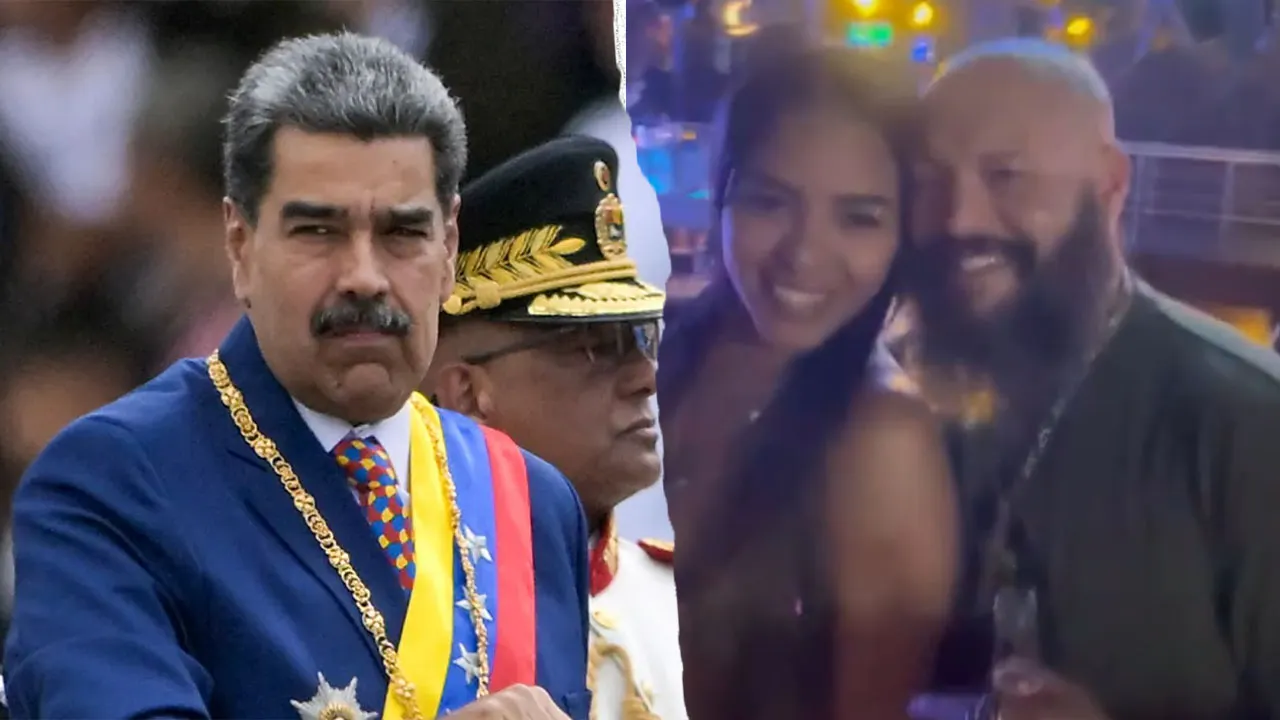
In a remarkable story of resilience and love across borders, Renzo Humanchumo Castillo, a Peruvian-American citizen, is celebrating the recent release of his Venezuelan wife, Rosa Carolina Chirino Zambrano, after she spent more than a year imprisoned in Venezuela on fabricated espionage charges. Their ordeal began in December 2024 during what was meant to be a joyful journey to meet Castillo’s in-laws for the first time. Instead, it turned into a nightmare of false accusations, imprisonment, and separation that tested their bond in ways they never imagined. When Castillo, a private security professional from Southern California, finally heard his wife’s voice after her release, she tearfully told him, “Hey baby, I’m out.” This simple phrase marked the end of an unimaginable ordeal, though their journey to reunification continues as Castillo now works desperately to bring her to the United States.
The couple’s story began innocently enough. They met in Peru during Castillo’s visit to reconnect with old classmates, striking up a friendship at a local bar that blossomed into love and eventually marriage. Their fateful decision to travel by road from Colombia to Venezuela to meet Zambrano’s family led to their detention at the border. Venezuelan authorities, under Nicolas Maduro’s regime, accused Castillo of being a CIA operative sent to assassinate Maduro and Diosdado Cabello, a powerful figure in Venezuela’s security apparatus. These absurd allegations were partially based on photos from Castillo’s phone showing him in protective gear that he used for his legitimate work in executive protection. Castillo was never in the military, making the accusations particularly unfounded. Diosdado Cabello, known as the “octopus” for his far-reaching control of Venezuela’s security forces, even presented Castillo on national television as part of a supposed American plot to overthrow the government.
The horrors Castillo endured at Venezuela’s notorious “El Rodeo” prison are difficult to comprehend. He recounts being hung like a piñata with his feet barely touching the floor while guards beat him for hours on end, not even asking questions anymore but simply reveling in inflicting pain. The psychological torture was equally severe, as he had no information about his wife’s condition or whereabouts. Desperate for any connection to Zambrano, Castillo resorted to a hunger strike just to earn the right to write her a letter. While Castillo was eventually freed in July 2025 as part of a prisoner swap, Zambrano remained detained because of her Venezuelan citizenship. The separation continued to weigh heavily on Castillo as he returned to California alone, uncertain if he would ever see his wife again.
Everything changed when Nicolas Maduro was captured by U.S. forces earlier this month in what Castillo describes as a moment of renewed hope. “It was that moment when, inside of me, I felt I was going to be able to see my wife again,” he reflects, adding that his chances of reunion jumped “from nothing to like a hundred.” The dramatic developments in Venezuela have indeed opened the door for positive change, with the interim government releasing at least four imprisoned Americans just this week. A State Department official called these releases “an important step in the right direction by the interim authorities.” While Zambrano is now free, she remains under surveillance by the Venezuelan government, adding urgency to Castillo’s efforts to bring her to California.
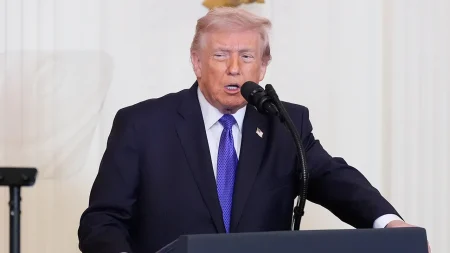
The geopolitical landscape surrounding Venezuela is rapidly transforming. Acting Venezuelan President Delcy Rodriguez recently had what she described as a “long and courteous” phone conversation with President Donald Trump, discussing oil, minerals, trade, and national security. Trump expressed optimism about the future relationship between the two nations, writing, “This partnership between the United States of America and Venezuela will be a spectacular one FOR ALL. Venezuela will soon be great and prosperous again, perhaps more so than ever before!” These diplomatic developments offer tangible hope for families like Castillo and Zambrano who have been caught in the crossfire of international tensions. Castillo plans to reach out to the State Department to navigate the complex process of bringing his wife to the United States, a journey that now seems possible for the first time in over a year.
Reflecting on the broader significance of his experience, Castillo observes, “It took Americans and it took foreigners to be kidnapped for the world to put eyes on Venezuela.” His ordeal has become part of a larger narrative about human rights, diplomatic relations, and the personal costs of authoritarian regimes. Despite everything he endured, Castillo expresses deep gratitude toward the Trump administration for taking decisive action in Venezuela. “I feel like the current administration is doing the hard work that hasn’t been done,” he says. “Those things that sometimes people don’t want to see and are afraid to say, well, they’re doing it now.” For Castillo and Zambrano, the political shifts represent more than abstract policy changes—they represent the concrete possibility of rebuilding their life together after a traumatic separation that tested the limits of their love and endurance.