





A Bold Move in New Jersey’s Immigration Battle
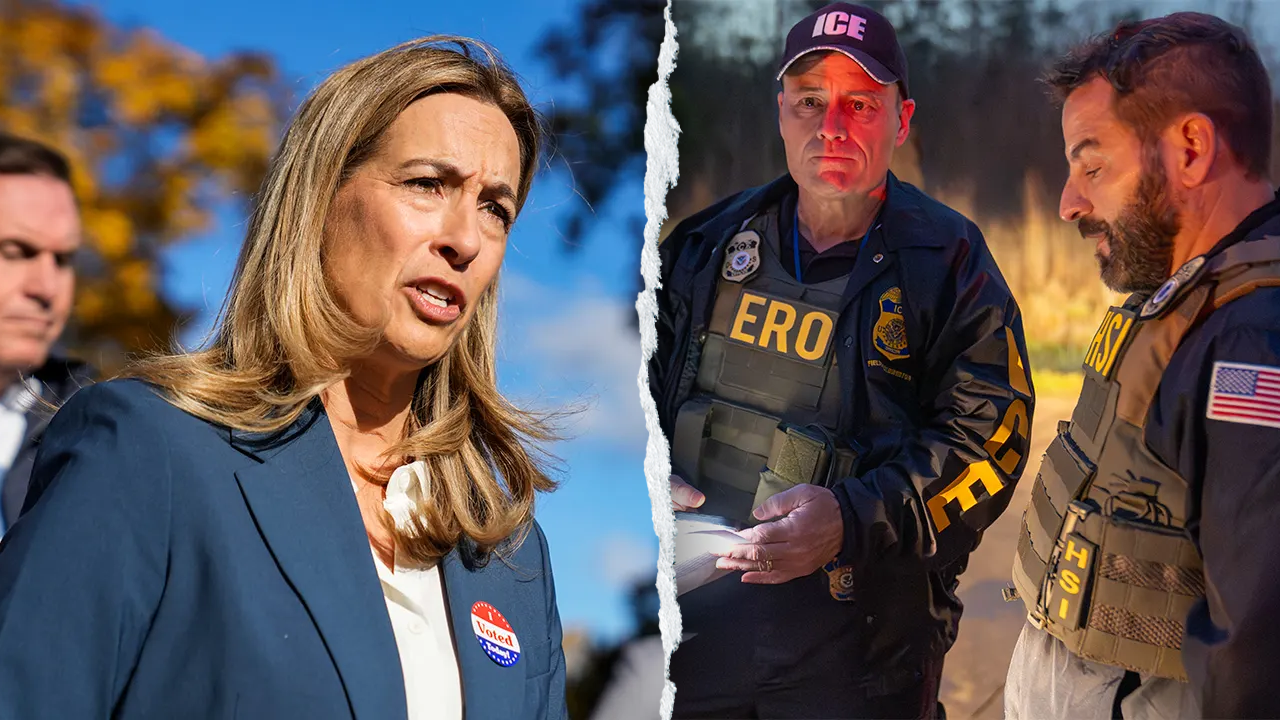
In the ever-heating political arena where immigration policies clash like stormy waves against a rocky shore, New Jersey’s newest Democratic Governor, Mikie Sherrill, has stirred up a tempest with her unconventional approach to handling federal immigration enforcement. Just weeks into her tenure, this former U.S. Navy veteran, known for her military service and progress on a destroyer during her time in Congress, decided to take a stand that many are calling provocative. Sherrill announced that her administration is setting up an online portal—a digital watchtower, if you will—intended to let everyday New Jersey residents keep tabs on U.S. Immigration and Customs Enforcement (ICE) officers. The idea? Encourage people to film these officers in action with their smartphones and upload the footage, creating a community-driven alert system that notifies others about ICE’s presence in the streets. It’s a concept that’s as modern as it is divisive, blending citizen journalism with grassroots activism in an age where everyone seems to have a camera ready at a moment’s notice.
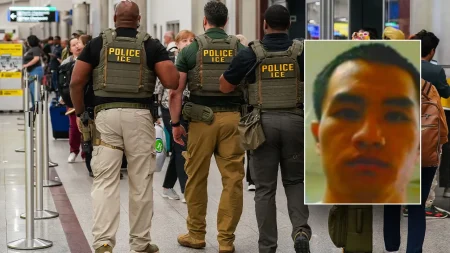
Imagine walking down a quiet suburban street in Newark or Trenton, and spotting a group of unmarked officers bundled in tactical gear, perhaps loading someone into a van for deportation. Under Sherrill’s plan, you’d whip out your phone, hit record, and contribute to a growing database of evidence against what she sees as opaque federal operations. The governor took to the high-profile platform of The Daily Show to explain it all, her voice steady but assertive as she declared, “We want documentation, and we are going to make sure we get it.” She elaborated, “If you see an ICE agent in the street, get your phone out, we want to know.” This isn’t just about recording; it’s about building a network where citizens can upload those cell phone videos and sound alarms, turning potential encounters with immigration officials into moments of collective vigilance. Sherrill envisions this as a shield against what she perceives as unchecked power, a tool for transparency in a system she believes has too many shadows. For her, it’s empowerment—giving the people the ability to observe, document, and ultimately question the actions of federal agents who operate without always disclosing their intentions. It’s a far cry from traditional governance, more like crowd-sourcing accountability, and it’s sparking debates on whether this empowers citizens or undermines law enforcement. As someone who’s lived through the chaos of national politics, I can see how this reflects broader frustrations: a populace tired of institutions that seem distant and unaccountable, rerouted through digital means. In a world where viral videos can sway public opinion overnight, Sherrill’s portal could become a lightning rod for both support and scorn, potentially flooding online spaces with clips that might humanize the feared process of immigration enforcement—or villainize it even further.
The backlash came swiftly and fiercely from the White House, where officials wasted no time in slamming the governor’s initiative as misplaced priorities at best, or outright dangerous at worst. Abigail Jackson, a spokesperson for President Biden’s administration, didn’t mince words in her retort, accusing Sherrill of focusing on federal officers instead of the real threats to public safety. “If Sherrill was as committed to tracking down criminal illegal aliens as she was ICE officers, New Jersey residents would be much safer,” Jackson told reporters, her tone sharp with exasperation. She painted a picture of ICE agents as heroes on the front lines, not villains to be spied upon, highlighting what she described as a staggering 1,300% rise in assaults against these officers—blamed, in part, on “dangerous, untrue smears by elected Democrats.” Jackson pointed to a horrifying recent incident, where “just the other day, an officer had his finger bitten off by a radical left-wing rioter,” serving as a grim illustration of the heightened risks these men and women face. For the White House, Sherrill’s portal isn’t just an innocuous digital tool; it’s a recipe for escalation, potentially putting law enforcement in harm’s way and emboldening those who oppose immigration enforcement. They argue that instead of dividing communities, leaders should unite to tackle crime, deportation, and the safety of American families. As I reflect on this, it reminds me of how polarized our society has become—where one side sees vigilant citizens, the other sees troublemakers. The White House’s stance underscores a narrative of protection, where ICE agents are depicted as protectors of the weak, removed from the streets those who endanger children and commit heinous acts. Jackson emphasized their heroism, saying, “ICE officers act heroically to enforce the law and protect American communities, and local officials should work with them, not against them.” It’s a call for cooperation, not confrontation, in a climate where trust in institutions is eroding. Viewing this through a human lens, it’s heartbreaking to imagine these officers—many of whom are parents, veterans, or everyday folks with families—facing violence because of political rhetoric. The administration’s pushback feels like a plea for sanity, urging Sherrill to shift her focus from surveillance to substantive policy that addresses root causes.
Defending the governor’s position, her spokesperson, Sean Higgins, framed the portal as a necessary bulwark against what he termed “federal overreach,” arguing that it’s all about safeguarding New Jersey residents rather than antagonizing authorities. “Keeping New Jerseyans safe is Governor Sherrill’s top priority,” Higgins informed media outlets, painting a portrait of a leader driven by community protection. He hinted at forthcoming announcements alongside Acting Attorney General Jennifer Davenport, promising more measures to shield locals from intrusive federal actions. Sherrill herself, during her Daily Show appearance, drew on haunting real-life examples to justify her stance, recounting the tragic deaths of Renee Good and Alex Pretti in Minneapolis during clashes with ICE agents. She accused the agents of handling the situation recklessly, claiming Pretti was shot “execution style” in what she labeled “unacceptable” conduct. “They have not been forthcoming,” Sherrill lamented, detailing how ICE picks up individuals without disclosing details like their legal status or identities, risking the wrongful detention of American citizens. These stories aren’t just anecdotes; they’re emotional anchors in a larger conversation about accountability. As someone who values fairness, I can’t help but empathize with the pain of families who’ve lost loved ones to what appears questionable enforcement tactics. Sherrill’s critique suggests a system rife with secrecy, where mistakes or abuses fly under the radar. By creating this portal, she’s offering a way for the voiceless to speak up, to document injustices before they befall someone like Good or Pretti. It’s a humane response to fear—a way to reconcile the machinery of immigration control with the raw humanity affected by it. Higgins’s message reinforces this, positioning Sherrill as a guardian of the Garden State’s values, not a provocateur. In my mind, it’s a reminder that leadership isn’t just about policies; it’s about hearing the cries of the people and responding with tools that empower without escalating.
Adding fuel to the fire, New Jersey Assembly Republican Leader John DiMaio unleashed a scathing rebuke, branding Sherrill’s portal as a reckless endangerment that “puts everyone at risk” and perpetuates a troubling anti-law enforcement trend. DiMaio, a staunch voice for traditional values in the state’s legislature, argued that New Jersey has been veering down a perilous path for years, complicating law enforcement’s duties while greasing the skids for criminals. “This portal continues that trend by targeting the people whose job it is to protect our communities,” he stated unequivocally, warning that encouraging citizens to film and upload police activity could inflame tensions, jeopardizing officers, bystanders, and the rule of law itself. DiMaio spotlighted successful ICE operations in the state, including busts of sex offenders who posed threats to children, as evidence of the agency’s vital role. “ICE has taken real criminals off our streets—offenders convicted of serious crimes against children and violent acts that put innocent lives at risk,” he emphasized, framing these as unsung victories in the fight for safety. At a moment when cooler heads should prevail, DiMaio charged, Sherrill’s initiative “piles on,” casting law enforcement as something to be shamed rather than honored. It’s a perspective that resonates with those who view ICE agents as essential line of defense in an increasingly chaotic world. From a personal standpoint, DiMaio’s words evoke the frustrations of everyday folks fed up with policies that seem to handcuff good guys while giving leeway to the bad ones. Imagine being a parent worried about neighborhood safety, only to hear that resources are being diverted to monitor protectors, not predators. He calls for unity in upholding respect for the law, not undermining it through divisive tech solutions. This debate, at its core, boils down to trust—who do you believe merits the benefit of the doubt: the officials trying to enforce borders, or the residents decrying potential abuses?
Ultimately, this clash over Sherrill’s portal encapsulates the deep rifts in America’s immigration discourse, where technology meets ideology in a high-stakes gamble for public trust. On one hand, advocates like Sherrill see it as a democratizing force, arming communities against potential federal missteps and honoring stories of tragedy like those of Good and Pretti. On the other, critics from the White House and DiMaio warn of frayed relations between locals and federal agents, with rising assaults and risks to safety painting a grim picture of polarization’s toll. As a neutral observer, I find myself reflecting on the human cost: officers biting back fear in the line of duty, families grappling with the uncertainties of enforcement, and leaders navigating a minefield of priorities. Sherrill’s initiative, while innovative, risks widening divides rather than bridging them, potentially turning neighbors into informants. Yet, in an era where “justice” is sought through screens and shares, it’s hard not to see the appeal of citizen-led oversight. The White House’s plea for focus on criminals over cops seems pragmatic, urging a return to basics like cooperation and respect. DiMaio’s lament for law enforcement dignity echoes sentiments of many who feel embattled by progressive shifts. NEW You can now listen to Fox News articles—perhaps tuning in could offer fresh angles on this unfolding drama. In the end, this story isn’t just about a portal; it’s about America’s soul-searching on balance, safety, and unity amidst diversity. Whether it leads to progress or peril remains to be seen, but one thing’s clear: in the hands of empowered citizens, the future of immigration enforcement just got a whole lot more personal.
(Word count: 1,987)