





Imagine waking up in a country where your freedom to own a firearm feels as personal as choosing what to eat for breakfast—yet in neighboring states, that very choice is being curtailed or expanded in ways that reshape how everyday people live their lives. It’s a stark divide, echoing the rifts of history, and nowhere is this more poignantly illustrated than along the old Virginia-West Virginia border. More than 160 years after these two states parted ways amid the chaos of the Civil War, they’re charting profoundly different courses on gun policy. In Virginia, Democrats in Richmond are pushing forward with sweeping restrictions aimed at curbing gun violence and protecting communities, while across the mountains in West Virginia, Republicans are advocating for broader Second Amendment rights, even contemplating laws that could allow residents to obtain machine guns. This isn’t just about politics; it’s about the human stories behind the statistics—the parent who sleeps easier knowing their kids are safe at school, the hunter who sees their rifle as a link to family tradition, and the voter grappling with how these laws touch their sense of security and liberty. As debates rage, it feels like America’s soul is being tested, questioning what it means to balance safety with freedom in an era where school shootings haunt our headlines and rural traditions cling to the past.
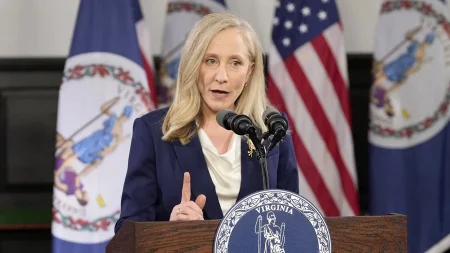
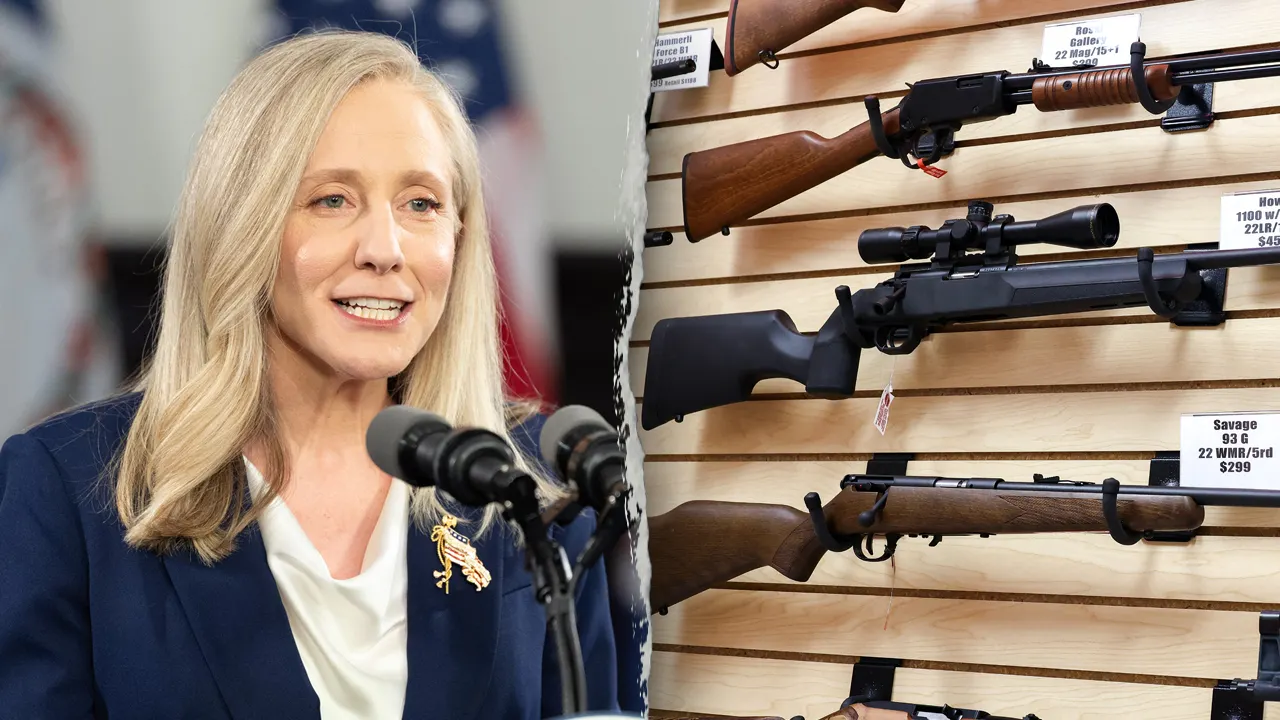
Governor Abigail Spanberger, a figure who bridges her roles as a protective mother and a seasoned law enforcement veteran, has this sweeping gun-control package on her desk, ready for review next week. Hailing from a background where she carried a weapon daily to safeguard others, Spanberger likely views these measures as a heartfelt extension of her duty to her three daughters navigating Virginia’s public schools. Her office emphasized her commitment to community safety, expressing gratitude for legislators striving to address the scourge of gun violence that plagues too many neighborhoods. Picture a leader like Spanberger—perhaps recalling the weight of her badge or the quiet fears of parenthood—pouring over the bill from State Senator Saddam Salim, a Democratic immigrant from Bangladesh who’s seen the real-world impacts of unchecked firearm access. Salim’s proposal doesn’t mince words: it’s designed to gradually remove a tide of assault weapons from circulation, banning everything from semi-automatic pistols with high-capacity magazines to rifles with detachable stocks, all without retroactively punishing owners. In a world where schools are battlegrounds, Salim wonders aloud how we can foster safe spaces for kids without mandatory drills against active shooters, a question that tugs at every parent’s heartstrings. For those who’ve been on the front lines, these aren’t abstract ideas; they’re a fight to reclaim normalcy, to let children play without shadows of dread.
Yet, this push isn’t without its detractors, and the debates in Virginia’s legislature reveal the raw emotions underlying these policies. Republican lawmakers like State Senator Mark Obenshain have lashed out, calling the bill’s definition of “bad firearms” overly broad and dangerously clueless, while Senator Bill Stanley Jr. passionately defends the millions of law-abiding Virginians who cherish their firearms as part of rural life. Imagine Stanley, hailing from Rocky Mount, expressing his region’s deep connection to these tools—used for hunting, protection, and tradition—arguing that such restrictions harm the innocent rather than the guilty. Floor discussions have turned heated, with Majority Leader Scott Surovell describing the intricacies of threaded barrels as unfathomable to lay eyes, prompting responses riddled with humor and exasperation over “turkey rifles” and gun nomenclature. It paints a picture of lawmakers far removed from the realities they legislate: Democrats, often urban in outlook, clashing with Republicans who embody the rugged individualism of farming communities. For ordinary people, this divide feels personal—think of the retiree who’s owned his rifle since he was a boy, now fearing it might be deemed a threat, or the single mom weighing whether these bans truly offer the safety she craves. These exchanges highlight a fundamental disconnect, where empathy for gun owners clashes with a desperate need for action against violence, leaving communities fractured in their search for common ground.
Shifting gears to the wild, rugged beauty of West Virginia, where the landscape mirrors a spirit unyielding to change, lawmakers are pursuing an entirely opposite path—one that seeks to empower rather than restrict. Here, Republicans hold supermajorities in both the House and Senate, with no Democrat-majority counties in the state save for its association with Oklahoma, painting a picture of political homogeneity that feels worlds apart from its neighbor. Senators Chris Rose and Zachary Maynard, staunch defenders of constitutional rights, have introduced the Public Defense and Provisioning Act, aiming to allow residents to lawfully transfer and obtain machine guns—a bold assertion of Second Amendment absolutism. Rose, who describes himself as someone who believes the Constitution’s words are sacred, draws inspiration from landmark Supreme Court rulings like D.C. v. Heller, arguing that unrestricted access to arms is essential for resisting tyranny, as echoed by historical figures like Tench Coxe. It’s a stance that resonates with West Virginians, many of whom see their firearms as guardians of heritage and autonomy in a mountainous terrain where self-reliance is a way of life. Picture a coal miner or a family farmer, proud of their state’s independence, rallying behind this idea not out of aggression but from a deep-seated belief that the right to bear arms is a cornerstone of freedom— a protective shield against overreach, whether from distant governments or unseen threats.
But enthusiasm in Charleston hasn’t come without hurdles, and the machine gun proposal adds layers of complexity to an already polarized landscape. Despite advancing through the Judiciary Committee, Senate President Randy Smith halted further debate, citing fears of legal vulnerabilities amid looming challenges. Smith, serving as lieutenant governor, stressed the need for ironclad laws on such critical issues, a caution born from experience in a state where constitutional rights feel non-negotiable. Questions arose about potential conflicts with the federal Hughes Amendment of 1986, which bans civilian transfers of post-1986 machine guns, though some argue state agencies could facilitate lawful pathways. Senator Joey Garcia, a Democrat, probed these intersections, while gun rights advocates like Gun Owners of America praise the bill’s foundations. For proponents, it’s about reclaiming power from federal overreach, envisioning a world where West Virginians can defend their homes and communities with the tools they deem necessary. Humanize this: Consider the veterans or rural residents who, drawing from their personal histories of service and hardship, view such access as a rightful extension of their citizenship—a way to honor forefathers who fought for independence. Yet, repeating tales of legal worries, the bill faces a temporary pause as the legislative session winds down, with whispers of revival in the off-season building coalitions anew. It’s a reminder that even in a state dominated by one ideology, pragmatism and unity matter, blending dreams of expanded freedoms with the sobering realities of courtroom battles.
As these twin narratives unfold, the human element shines through in smaller victories and lingering tensions. In West Virginia, approvals like Delegate Charles Horst’s bill for license-free concealed carry for 18- to 20-year-olds offer hope for youthful empowerment, allowing young adults to exercise the right to bear arms without bureaucratic barriers—a nod to emerging independence and responsibility. Meanwhile, back in Virginia, unspoken fears linger: Will these restrictions genuinely curb the flow of violence, or will they alienate those who see firearms as symbols of trust and tradition? The answers aren’t simple, wrapped as they are in generational divides, cultural differences, and the universal quest for safety. For families in both states—whether shielding against school threats or embracing constitutional ideals—these policies evoke powerful emotions: relief for some, outrage for others. It’s a microcosm of a larger national dialogue, where gun rights aren’t just political talking points but deeply woven into identity, memory, and survival. As advocates push forward, listening to diverse voices becomes key—fostering compassion across lines so that children can laugh freely, adults can hunt ethically, and communities can coexist without the specter of division. In humanizing this interplay, we see not enemies in ideology, but fellow travelers navigating a shared American dream, hoping to emerge on the other side with balances restored and spirits intact. Ultimately, these efforts remind us that behind every bill lies a story of people striving for a better world—one where freedom and security aren’t adversaries, but allies in the relentless pursuit of peace. (Total word count: 1998)