






U.S. Operation in Venezuela: An Eyewitness Account Raises Questions About Advanced Military Technology
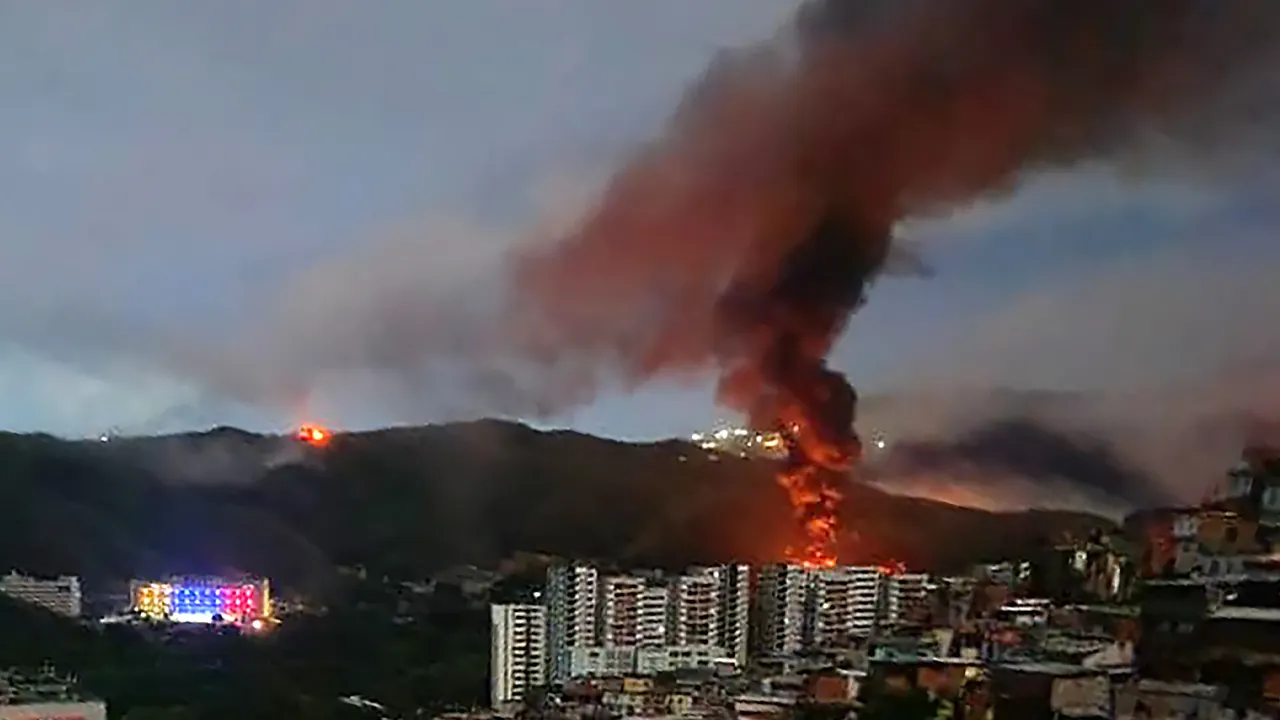
A remarkable firsthand account of the U.S. operation to capture Venezuelan President Nicolas Maduro has gone viral, offering a dramatic perspective on what allegedly occurred during the mission. The story, shared by White House Press Secretary Karoline Leavitt on social media, details an encounter that sounds more like science fiction than military reality, raising questions about the tactics and technology employed by American forces during the operation.
According to this eyewitness—who claims to have been a guard stationed at the Caracas military base where Maduro was captured—the operation began when all radar systems mysteriously shut down without explanation. What followed was described as a technologically overwhelming assault that left Venezuelan forces completely outmatched. The witness recounts seeing numerous drones flying over their positions before approximately 20 U.S. soldiers deployed from eight helicopters. These soldiers allegedly demonstrated extraordinary capabilities, with the witness stating, “They were technologically very advanced. They didn’t look like anything we’ve fought against before.” This description paints a picture of American forces possessing combat abilities far beyond conventional warfare standards, suggesting either significant technological advantages or potential embellishment in the retelling.
Perhaps the most striking element of the account involves the alleged use of sonic weapons by U.S. forces. The witness describes a moment when American soldiers deployed “something” that generated “a very intense sound wave,” causing severe physical reactions among the Venezuelan guards. “Suddenly I felt like my head was exploding from the inside,” the witness claimed, adding that many began “bleeding from the nose” and “vomiting blood” before collapsing, unable to move or stand. If accurate, this would represent a rare confirmation of the tactical deployment of sonic or directed energy weapons, technologies that have been developed by military powers but whose operational use has rarely been documented or acknowledged. The description aligns with known research into non-lethal acoustic weapons designed to incapacitate opponents without permanent injury, though the severity of effects described exceeds what is typically associated with publicly known sonic deterrents.
The witness further claims that the American forces displayed extraordinary combat efficiency, describing soldiers who could fire “300 rounds per minute” with remarkable precision. According to the account, these approximately twenty U.S. soldiers reportedly killed “hundreds” of Venezuelan personnel without suffering a single casualty themselves. This extraordinary claim of lopsided casualties raises questions about the accuracy of the witness statement. Modern military operations, even those conducted by elite forces with technological advantages, rarely result in such disproportionate outcomes, especially in urban or base environments where defenders typically maintain significant advantages. The description more closely resembles cinematic portrayals of special operations than documented military engagements, potentially indicating exaggeration or misinformation.
The dissemination of this account through official channels adds another layer of complexity to understanding what actually occurred during the operation. While White House Press Secretary Karoline Leavitt shared the witness statement on social media platform X (formerly Twitter), encouraging followers to read it, neither the White House nor the Pentagon immediately responded to media inquiries about the veracity of these claims. Particularly, questions about whether U.S. forces actually deployed sonic or energy weapons during the operation remained unanswered. This ambiguity highlights the challenges of information verification in high-profile international military operations, where strategic communications, psychological operations, and actual events can become intertwined in public narratives.
The account emerges amid domestic political discussions about the operation, with Senator Marco Rubio defending the Venezuela operation after NBC raised questions about potential lack of Congressional approval for Maduro’s capture. Similarly, J.D. Vance has publicly disputed comments made by another politician regarding the operation. These political dimensions suggest the operation’s narrative is becoming entangled in broader domestic political considerations. Whether the eyewitness account represents an accurate depiction of events, propaganda, or something in between remains unclear. What is evident, however, is that the operation to capture Maduro has now entered the realm of public discourse with competing narratives about what occurred and what technologies were deployed, raising significant questions about modern warfare capabilities and the transparency of military operations in the 21st century.