






UN Chief Criticizes US Approach to International Relations
In a recent BBC interview, United Nations Secretary-General António Guterres delivered a pointed critique of United States foreign policy, suggesting that America has increasingly substituted “the power of law” with “the law of power.” This assessment comes amid growing tensions between the UN and the Trump administration, which has consistently questioned the value and effectiveness of international institutions. Guterres expressed concern that the US appears to be moving away from multilateral solutions, instead relying on its own influence and power to achieve its objectives on the global stage, sometimes at the expense of international norms and regulations. This criticism emerges against a backdrop of controversial US actions, including intervention in Venezuela and President Trump’s public interest in acquiring Greenland, moves that have raised eyebrows in diplomatic circles worldwide.
The timing of Guterres’ comments is particularly noteworthy as parts of the United Nations are scaling back their presence in the United States. The UN Development Program recently announced plans to relocate nearly 400 positions from New York to European locations, primarily Germany and Spain. This shift occurs as President Trump continues to express skepticism about the UN’s value and effectiveness. During the 2025 General Assembly, Trump directly criticized the organization, claiming it “did not even try” to resolve conflicts that his administration addressed independently. While Guterres defended the UN as “extremely engaged” in conflict resolution efforts, he acknowledged the organization’s limitations, conceding that major powers wield “stronger leverage” and that enforcing compliance with the UN Charter remains challenging.
Critics of the United Nations have long argued that the organization suffers from ineffectiveness, political bias, and an unfair funding structure that places a disproportionate burden on the United States. They point to the Security Council’s structure as particularly problematic, allowing rivals such as China and Russia to exercise veto power, often paralyzing potential actions. Guterres himself acknowledged these shortcomings, calling for reform of the Security Council, which he described as outdated and no longer reflective of contemporary global power dynamics. He specifically criticized the Council’s gridlock caused by nations using their veto power to advance national interests rather than global stability, pointing to examples including both US and Russian actions regarding conflicts in Ukraine and Gaza.
The Secretary-General also questioned the current composition of the permanent Security Council members, noting that “three European countries” hold permanent positions, which he argues fails to “give voice to the whole world.” This imbalance has long been a source of frustration for developing nations and emerging powers who feel underrepresented in global governance structures. The criticism highlights the growing disconnect between the post-World War II international order, which shaped the UN’s founding structure, and today’s multipolar world where economic and political influence is more widely distributed. Guterres’ call for reform reflects broader international sentiment that the organization must evolve to remain relevant and effective in addressing contemporary global challenges.
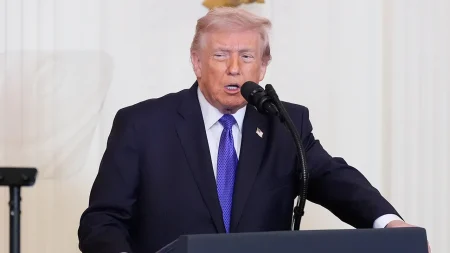
President Trump has not hesitated to voice his own criticisms directly to the United Nations. Speaking before the Security Council in September 2025, he bluntly stated, “Not only is the UN not solving the problems it should, too often, it is actually creating new problems for us to solve.” Trump further criticized the organization’s approach to global issues, suggesting that the UN limits itself to “empty words” and “strongly worded letters” without meaningful follow-through or actions. This characterization reflects the administration’s frustration with what it perceives as bureaucratic inefficiency and a lack of tangible results from international diplomatic efforts, reinforcing Trump’s preference for bilateral approaches and direct American action on the world stage.
The exchange between the UN Chief and the US administration highlights a fundamental tension in contemporary international relations: the struggle between multilateralism and national sovereignty. While Guterres champions a world order based on shared rules and collaborative problem-solving, the Trump administration has consistently prioritized American interests and freedom of action. This philosophical divide extends beyond mere policy disagreements to touch on core questions about how international affairs should be conducted in the 21st century. As global challenges like climate change, pandemics, and regional conflicts continue to demand coordinated responses, the relationship between the United States and international institutions like the UN will remain crucial to determining whether effective solutions can be implemented. The White House has not yet responded to Guterres’ statements, leaving open questions about how this ideological divide might evolve in the coming years.