



President Donald Trump’s recent warnings about the U.K. and Canada’s dealings with China add a personal, almost protective undertone to the intricacies of international diplomacy, where old friendships clash with hard-headed strategy. Just hours after British Prime Minister Keir Starmer landed in Beijing for a tête-à-tête with Chinese President Xi Jinping, Trump sat down with Fox News during a Florida-bound flight for the premiere of his wife Melania’s documentary. In that interview, he raised eyebrows by cautioning the UK against cozying up to China, painting a picture not just of economic risk but of geopolitical treachery. Trump stressed that such ties were “very dangerous,” extending his concern to Canada as well—though he couldn’t resist a lighthearted jab, hinting that China might ban Canada’s beloved ice hockey, a move that would sting the nation’s national pride. This wasn’t mere off-the-cuff wisdom; it echoed Trump’s own experiences deal-making with Xi during his presidency, when he navigated tariff wars and trade talk shows. Back then, he described Xi as a friend—a dynamic that softened his rhetoric but didn’t blind him to the potential pitfalls. He stressed that personal rapport shouldn’t overshadow the big picture, where countries like the UK risked being outmaneuvered by a powerhouse looking to dominate global trade. Starmer, fresh from his Beijing reset, highlighted a “renewed strategic partnership,” but Trump’s words served as a timely wake-up call for Western allies amid escalating global instability. It’s a reminder of how individual leaders’ perspectives shape alliances, blending camaraderie with caution, as the world watches Western nations grapple with balancing engagement and self-preservation against an assertive China.
Delving deeper into Trump’s mindset, his Fox News chat felt like a candid exchange between an insider and the public, revealing the man behind the policies rather than just the politician. He admitted knowing China—and Xi—”very well,” from years of high-stakes negotiations that reshaped U.S. trade policies. Yet, he bluntly labeled China’s ambitions a “big hurdle,” warning that relying on Beijing as an economic savior wasn’t just unwise but potentially devastating for allies. Trump shared a light-hearted anecdote about Canada, imagining China might retaliate by banning ice hockey— a sport that’s practically a cultural religion in Canada—to underscore how seemingly petty moves could escalate into real confrontations. This humanized Trump’s approach, showing a leader who mixes tough talk with humor to illustrate risks. He reflected on past deals, like the 2017-2018 trade war where he imposed tariffs to counter China’s intellectual property theft, only to pivot to Phase One agreements that boosted American soybean exports. Trump’s advice stemmed from those lessons: don’t underestimate Beijing’s leverage. He expressed confusion over why the UK would prioritize China amid its own economic woes post-Brexit, where the island nation is still recalibrating trade ties with Europe and the U.S. Trump’s commentary wasn’t just geopolitical; it was personal, a seasoned deal-maker advising friends not to get burned in a volatile market. Analysts suggest this reflects Trump’s “America First” ethos, prioritizing U.S. interests while nudging allies like the UK to think long-term rather than chase short-term gains.
To fully appreciate Trump’s stance, one must rewind to his prior critiques, which paint a broader canvas of his China skepticism. Earlier this year, he targeted Canadian Prime Minister Justin Trudeau and former Bank of England Governor Mark Carney—now Trinity College Dublin President—after their China visits, warning that “China will eat Canada alive.” This outright remark shocked some, but for Trump, it underscored his belief that Canada’s vast resources and close U.S. proximity make it a ripe target for exploitation. Carney’s trip in July, aimed at securing investments in clean energy, drew fire for potentially compromising NATO allies in an era of tech rivalry. Trump saw it as naive appeasement, much like Chamberlain’s Munich Agreement—a historical analogy he loves invoking to warn against over-optimism with authoritarian regimes. In Trump’s view, Canada’s vulnerability stems from its dependence on exports to the U.S., a relationship that’s symbiotic yet precarious, as China has pushed into sectors like mining and rare earths. This critique extends to broader Western alliances, where Trump has urged Europe to bolster defenses against China’s Belt and Road Initiative, which could funnel billions into infrastructure deals with hidden strings attached. His words humanize the stakes, treating nations like Canada not as faceless entities but as friends who might unwittingly empower a competitor that shares little of our values. It’s a paternal warning, born from Trump’s own confrontations with Xi over trade imbalances that cost American jobs and intellectual property.
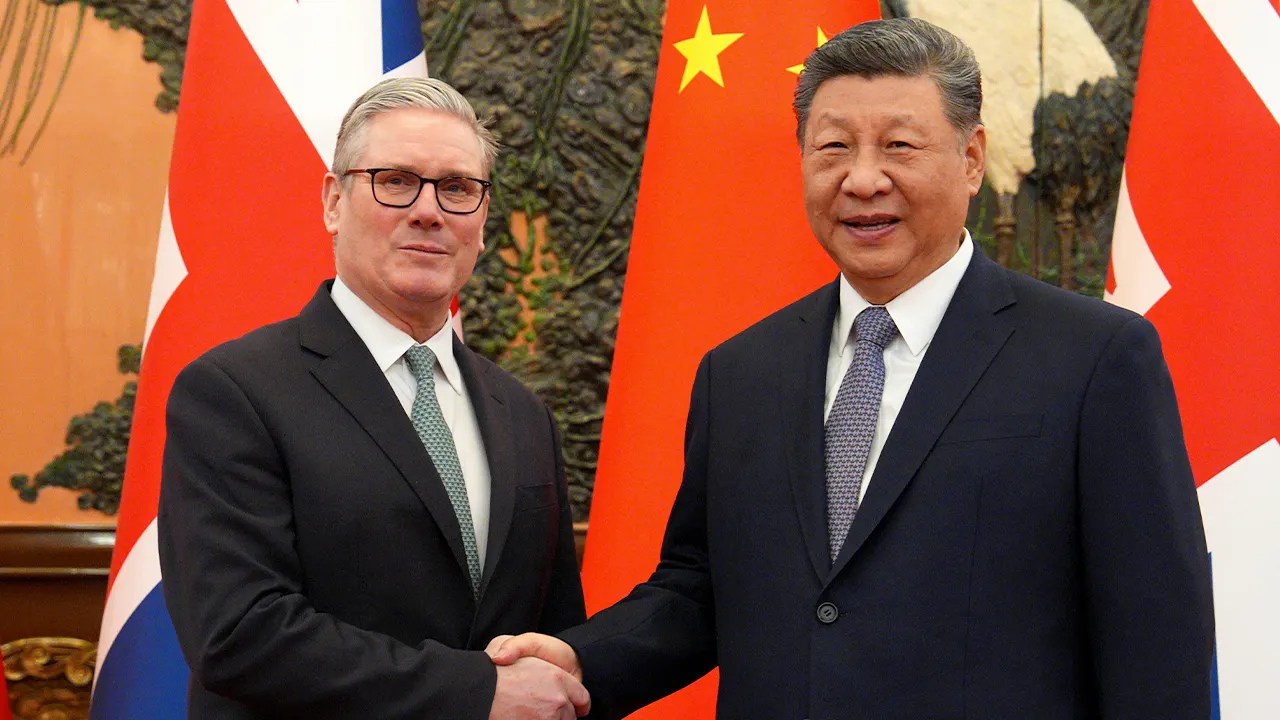
Shifting focus to the heart of the story, the 80-minute summit in Beijing between Starmer and Xi marked a diplomatic thaw after years of frost, epitomized by China’s harsh sanctions on UK officials over Xinjiang accusations. Starmer, the first British PM to visit China in eight years, entered a grand room at the Great Hall of the People, where Xi hosted with tea and talk shows of mutual respect. Xi emphasized that “in the current turbulent and ever-changing international situation, China and the United Kingdom need to strengthen dialogue and cooperation to maintain world peace and stability,” warning against a “jungle” world if major powers ignore international law. This resonated with Starmer, who spoke of “precisely what we should be doing” on climate change and global stability. The meeting felt like a reset button on strained ties, sparked by Hong Kong crackdowns and Britain’s pivot to Indo-Pacific partnerships. Starmer’s visit wasn’t isolated; he’s the fourth U.S.-aligned leader this month to court Xi, following Japanese and Australian counterparts, signaling Beijing’s charm offensive post-COVID isolation. Yet, beneath the polite exchanges, the UK navigates tricky waters: defending its sovereignty over the Chagos Islands against Diego Garcia’s U.S. military base, while aligning trade with the U.S. amid Brexit recovery. Trump’s warnings, aired hours later, injected urgency into this courtship, questioning if short-term deals outweigh long-term geo-strategic risks.
Diving into specifics, Starmer used the meeting to address pressing issues, blending diplomacy with advocacy for human decency. He reportedly sought Xi’s help to curb the supply of China-made small boat engines fueling migrant smuggling across the English Channel—a humanitarian crisis that’s overwhelmed Britain and strained European borders. This pragmatic plea humanized Starmer’s mission, showing a leader tackling real-world challenges like irregular migration. He also raised human rights concerns, delicately navigating China’s sensitivity over Xinjiang and Tibet, where abuse allegations persist despite Xi’s denials. On Iran, Starmer pushed for cooperation against nuclear proliferation, tying it to broader global stability. Progress was noted in trade: easing whisky tariffs to boost Scottish exports, introducing visa-free travel for British citizens to China (up to 75 days), and pledges for migration control. These breakthroughs painted the meeting as “very productive,” a step toward post-Brexit partnerships. However, China’s state media, CCTV, spun it as a mutual embrace, omitting direct mentions of Trump—a telling omission highlighting transatlantic tensions. Starmer’s balancing act reflects the UK’s history: from the Opium Wars’ imperial ghosts to modern mega-deals, Britain has long wrestled with China’s rise, now under Starmer’s Labor government aiming to diversify exports beyond the EU and U.S. The human element here lies in individual stories—families reunited via visa waivers, or smugglers thwarted—making abstract politics feel deeply personal.
Wrapping the narrative, Trump’s intervention underscores the tangled web of alliances in a multipolar world, where personal friendships don’t erase power imbalances. The summit came amid broader trends: China’s re-engagement with the West, exemplified by November’s U.S.-China deal that slashed tariffs on semiconductors and exporters, curbed fentanyl precursors, and boosted American farming. This deal, involving Treasury Secretary Janet Yellen and Commerce Secretary Gina Raimondo, showcased pragmatic coexistence despite friction. For the UK, aligning with Taiwan as a NATO Global Partner complicates ties, yet Starmer’s gestures suggest prioritizing stability over confrontation. Analysts worry this could embolden China, as seen in Xi’s “jungle” warning echoing Hobbesian realism. Trump’s polemic, delivered with characteristic flair, serves as a cultural touchstone for debate: is momentum toward China a lifeline or a entanglement? From Wall Street boardrooms to Beijing courthouses, these shifts affect everyday lives—farmers fearing subsidies, traders eyeing tariffs. Ultimately, humanizing this tale reveals leaders as relatable figures, weighing friendships against futures, navigating a globe where instability demands tough choices, perhaps none tougher than partnership with a superpower that could rewrite the rules. Fox News Digital sought White House comment, but the silence amplifies Trump’s voice in the conversation. In the end, it’s a story of nations recalibrating, reminding us that in geopolitics, as in life, true alliances demand vigilance.