


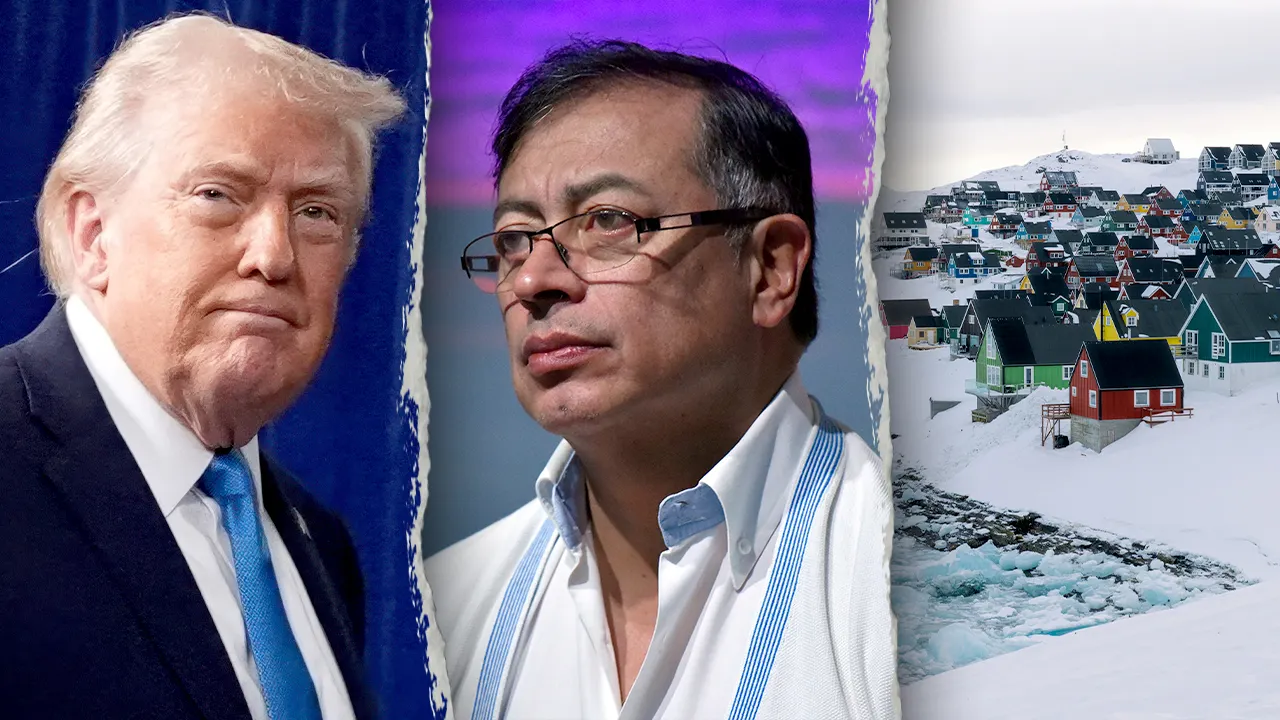
Trump’s International Rhetoric Sparks Diplomatic Tensions
In a wide-ranging exchange with reporters aboard Air Force One, President Donald Trump made controversial statements about Colombia’s leadership and renewed his interest in acquiring Greenland, creating immediate diplomatic ripples across multiple nations. What began as a discussion about a U.S. military operation in Venezuela quickly veered into territory that left international allies concerned and defensive. These remarks represent the latest in Trump’s unconventional approach to international relations, where direct, unfiltered commentary has become a hallmark of his foreign policy style.
Trump’s comments about Colombian President Gustavo Petro were particularly pointed, calling him “sick” and accusing him of producing and selling cocaine to the United States. “Columbia’s very sick too, run by a sick man who likes making cocaine and selling it to the United States. And he’s not going to be doing it very long,” Trump declared. When pressed by reporters on these accusations, Trump doubled down, claiming Petro has “cocaine mills and cocaine factories.” Most alarmingly to international observers, when a reporter asked if this meant the U.S. would conduct an operation in Colombia, Trump responded, “It sounds good to me.” This exchange has raised concerns about potential military intervention in a country that has been a key U.S. ally in the region, despite ongoing challenges with narcotics production.
The conversation then shifted to Greenland, a territory Trump has previously expressed interest in purchasing from Denmark. “We need Greenland from the standpoint of national security, and Denmark is not going to be able to do it,” Trump stated, adding, “We need Greenland from a national security situation. It’s so strategic.” This renewed interest comes after a 2019 episode where Trump’s suggestion about buying Greenland was firmly rejected by Danish leadership. The revival of this topic, especially framed as a security necessity rather than a potential purchase, signals a more assertive approach that has alarmed Danish officials and their allies throughout Scandinavia and Europe.
The international response to Trump’s comments was swift and unified, particularly from Nordic nations. Danish Prime Minister Mette Frederiksen issued a strong rebuke, urging Trump to “stop the threats against a historically close ally and against another country and people who have said very clearly that they are not for sale.” Frederiksen emphasized that Denmark and Greenland are part of NATO and thus covered by the alliance’s security guarantees, noting the existing defense agreements that already give the U.S. “wide access to Greenland.” The solidarity extended beyond Denmark, with Finnish President Alexander Stubb, Norwegian Prime Minister Jonas Gahr Støre, and Denmark’s Ambassador to the United States all voicing support for Denmark’s sovereignty over Greenland and the principle that Greenland’s future should be determined solely by Greenland and Denmark.
Perhaps the most pointed response came from Greenland itself, where Prime Minister Jens-Frederik Nielsen condemned Trump’s remarks as deeply “disrespectful” in a Facebook statement. “Our country is not an object of superpower rhetoric. We are a people. A land. And democracy. This has to be respected. Especially by close and loyal friends,” Nielsen wrote, adding, “Threats, pressure and talk of annexation do not belong anywhere between friends. That’s not how you talk to a people who have repeatedly shown responsibility, stability and loyalty. This is enough.” His words reflect the frustration of a small nation finding itself unexpectedly thrust into geopolitical conversations without consideration for its autonomy or identity.
These exchanges highlight the tensions that can arise when diplomatic norms are bypassed in favor of direct, transactional approaches to international relations. Trump’s comments about both Colombia and Greenland reflect his tendency to view foreign policy through the lens of American interests alone, often without consideration for the complex historical relationships and sovereignty concerns of other nations. As world leaders respond with increasingly firm language, the incident underscores the delicate balance of international diplomacy and the potential consequences when that balance is disrupted by unilateral statements. Whether these comments signal actual policy intentions or represent rhetorical posturing remains unclear, but the immediate diplomatic fallout demonstrates how quickly such remarks can strain even longstanding alliances.