






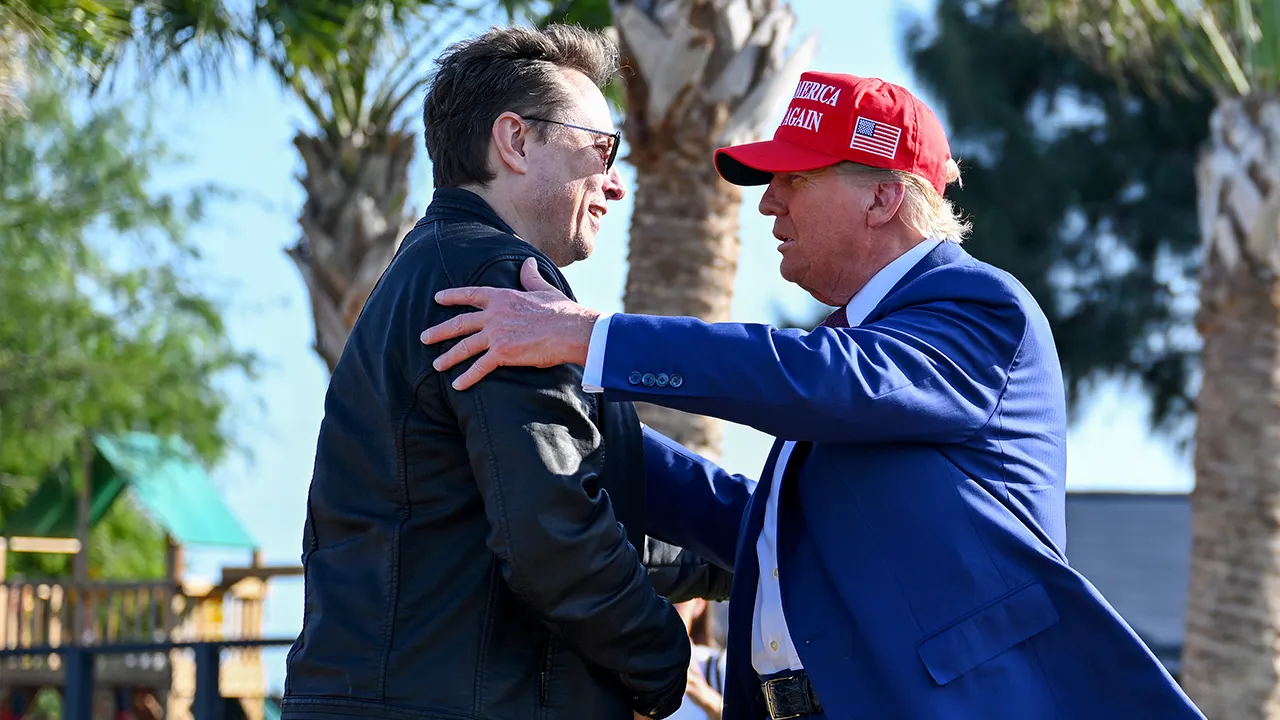
The Evolution of Trump and Musk’s Relationship: From Allies to Adversaries and Back Again
The once-frosty relationship between President Donald Trump and tech billionaire Elon Musk appears to be warming once again, showcasing the dynamic and sometimes unpredictable alliance between two of America’s most influential figures. The latest sign of their rekindled friendship came during a media interaction on Sunday, when President Trump mentioned potentially enlisting Musk’s help to provide internet access to Iranian citizens amid widespread protests against Ayatollah Ali Khamenei’s regime. “We may get the internet going if that’s possible,” Trump told reporters aboard Air Force One. “We may speak to Elon. Because as you know, he’s very good at that kind of thing. He’s got a very good company.” The president even added that he planned to call Musk immediately after speaking with the press, highlighting the renewed communication between the two powerful figures who had previously experienced a significant public falling out.
This warming relationship marks a significant shift from the tension that developed between Trump and Musk in mid-2025. Earlier in the administration, their partnership had been so close that Musk was often described as Trump’s “first buddy,” with the tech entrepreneur serving as a special employee of the federal government leading the Department of Government Efficiency (DOGE). During this period, Musk was deeply embedded in the administration’s inner workings—sleeping at the White House on late work nights, attending Cabinet meetings, and becoming a familiar presence on the White House campus. President Trump had praised Musk effusively, calling him “one of the greatest business leaders and innovators the world has ever produced” and thanking him for putting “his very great talents into the service of our nation” when Musk’s 130-day tenure as a special government employee concluded in May 2025.
The relationship took a dramatic turn when Musk began publicly criticizing what Trump had termed his “big, beautiful bill”—a comprehensive tax and spending package addressing taxes, immigration, energy, defense, and the national debt. Musk denounced the legislation as a “disgusting abomination” on his social media platform X, warning it would lead to the “BIGGEST DEBT ceiling increase in HISTORY.” He escalated the conflict with a personal jab suggesting Trump was connected to the Jeffrey Epstein scandal. This public criticism clearly stung the president, who expressed disappointment in Musk’s comments. For his part, Musk eventually acknowledged that he sometimes “went too far” in his criticism. Trump later revealed that their relationship had changed when he began discussing plans to eliminate electric vehicle mandates—a policy shift that would directly affect Tesla, Musk’s electric vehicle company. The deterioration culminated in June 2025 when the two abruptly parted ways, just before Trump signed the controversial bill into law on July 4th.
Signs of reconciliation between the two influential figures began appearing in September 2025, when they were seen sitting together and conversing at the memorial service for Turning Point USA founder Charlie Kirk following his assassination. The thawing continued as Musk attended a White House dinner for Saudi Crown Prince Mohammed bin Salman in November 2025. By January 2026, their relationship had progressed to the point where they shared what Musk described as a “lovely dinner” at Trump’s Mar-a-Lago estate in Florida. The president’s recent comments about Musk have grown increasingly positive, with Trump stating on January 4th, “Elon’s great. I say about Elon, he’s 80% super genius, and 20%, he makes mistakes. But he’s a good guy. He’s a well-meaning person.” This characterization represents a marked improvement from the tense period following their June 2025 falling out, when Trump was notably uncertain about whether Musk remained in his circle of friends.
What makes this relationship particularly fascinating is its oscillation between close collaboration and public disagreement. When asked whether the president’s recent comments about potentially working with Musk on providing internet access to Iran reflected the urgency of the situation there or a genuine rekindling of friendship, the White House pointed to Trump’s January 4th praise of Musk as evidence of their improved relations. This calculated response suggests that while the administration is comfortable acknowledging the restored communication between the two men, they remain cautious about overemphasizing the personal dimension of their relationship. The practical benefits of cooperation—particularly in areas where Musk’s technological capabilities align with Trump’s foreign policy objectives—seem to have outweighed past disagreements.
The Trump-Musk relationship offers a compelling window into how personal dynamics and policy interests intersect in high-stakes environments. Despite their public fallout over domestic spending and tax policy, both men appear to have recognized the mutual advantages of maintaining at least a working relationship. For Trump, Musk represents technological innovation and private sector efficiency that can be leveraged for governmental aims, particularly in areas like communications technology for foreign policy purposes. For Musk, maintaining access to the administration provides opportunities to influence policy in ways that may benefit his various business ventures. Their evolving relationship demonstrates how even intense public disagreements can sometimes be set aside when practical considerations and shared objectives create incentives for renewed cooperation. As the situation in Iran continues to develop, and as the administration faces other challenges that might benefit from Musk’s technological expertise, the trajectory of this complex relationship between two of America’s most powerful and unpredictable figures will remain worthy of close attention.