

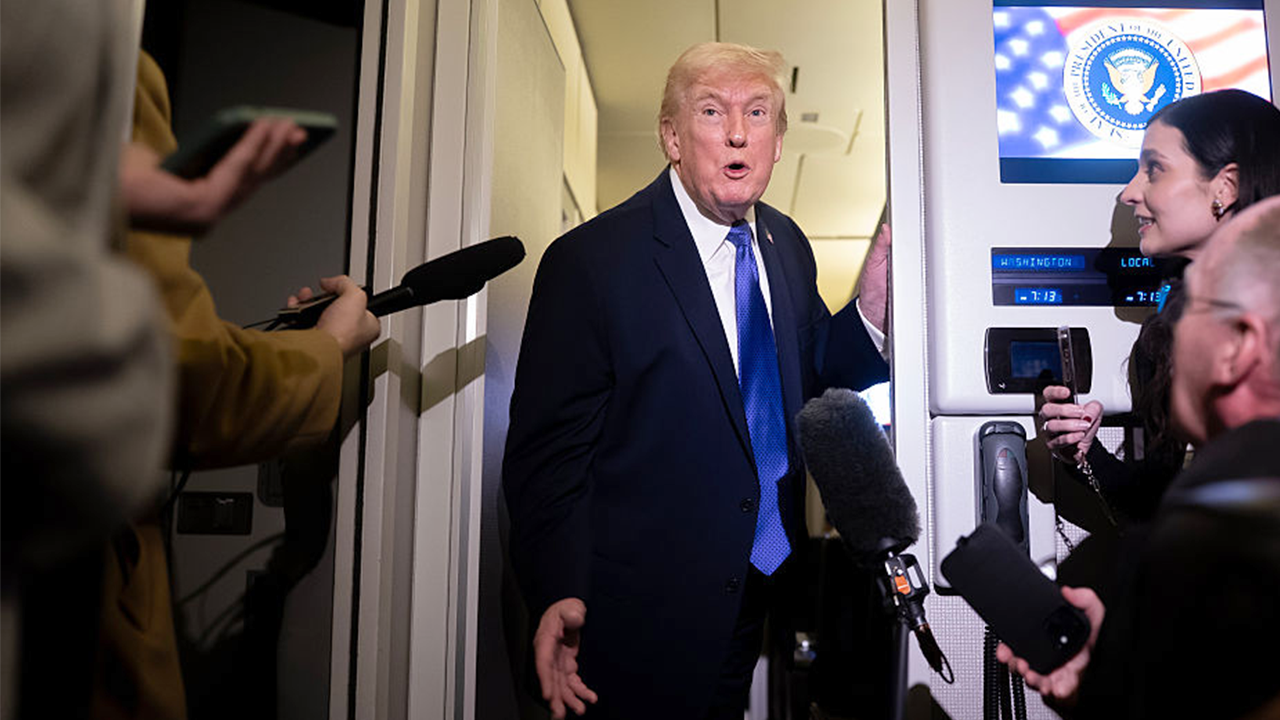
President Donald Trump took to the skies above Washington, D.C., on a crisp Monday morning, his mind clearly on the brewing storm over the partial government shutdown. Flying high on Air Force One, the President sat down with a gaggle of eager reporters, his signature bravado on full display as he unloaded on what he called a “Democrat shutdown.” It wasn’t Republicans causing this headache, he insisted, but the other side of the aisle, who couldn’t stomach their party’s own political defeats. At the heart of the impasse was funding for the Department of Homeland Security (DHS), where Republicans and Democrats had dug in over border security, immigration policies, and a host of reforms. Trump, ever the showman, painted a picture of Democrats as sore losers, upset not just about the funding standoff, but about his administration’s undeniable successes that were making waves across the country. He described it as if he were a coach rallying the team after a big win—Republicans were the undefeated champions, and Democrats were just bitter benchwarmers. As the plane cut through the clouds, Trump leaned back, ready to dissect the chaos below, his voice steady and persuasive, like a father explaining life’s tough lessons to his kids. He wasn’t backing down, and neither were his demands; it felt like the beginning of a long standoff, one that could drag on with no end in sight, affecting millions of Americans relying on government services. Yet, Trump spoke with that familiar confidence, making it sound like this was just another hurdle in the grand American comeback story he was scripting.
Diving deeper into the conversation, Trump couldn’t resist boasting about the “great financial numbers” that he credited to his policies, turning the chat into a victory lap over the economy. Imagine sitting there, listening as he ticked off achievements like a kid showing off his A+ report card: inflation was down, way down, he claimed, echoing what felt like a personal triumph against the odds. Fuel prices, he said, were plummeting to under $2 a gallon in many areas—nobody had seen that coming after years of sky-high costs that pinched everyday families. Sure, the national average hovered closer to $3, and even the cheaper spots stayed above $2, but Trump waved that off like a minor detail, emphasizing the spirit of the drop. It was all thanks to his “drill, baby, drill” mantra, he explained, as if each barrel of oil pulled from the earth was a direct result of his vision. The energy sector was booming, leading the charge in bringing down prices for everything else—from groceries to household bills. Trump reminisced about inheriting a “mess” from his predecessors, a chaotic economy that felt out of control, and now, under his watch, it was turning around. You could picture the American dream reborn: a mom filling up her minivan without wincing at the pump, a dad saving more each month on utilities, and families planning vacations they thought were long gone. But Trump didn’t just stop there; he framed it as proof of his leadership, a human story of redemption where tough decisions paid off for regular people. The reporters nodded, some scribbling furiously, as if these weren’t just stats but narratives of hope in a world that’s often too cynical. It made the shutdown feel almost trivial compared to this economic revival, a reminder that politics aside, lives were improving under policies that prioritized American energy independence.
The blame game heated up when the topic shifted to crime, and Trump doubled down on labeling the shutdown as purely Democratic in origin. He spoke with the conviction of someone sharing a secret, claiming Democrats were “upset that the crime numbers are so good,” a phenomenon he personally championed as a victory for law and order. Picture the scene: Air Force One humming softly, Trump gesturing emphatically, crediting his administration for a dip in violent crimes that made cities safer overnight. But here’s the twist—data whispered a different tale, showing murder and other serious offenses had been declining in major metros long before he returned to the White House. Still, Trump owned it wholeheartedly, turning it into a feel-good story of communities reclaiming their streets. He portrayed Democrats as petty adversaries, blocking funding because they couldn’t handle the spotlight being stolen by his crime-fighting narrative. It was like watching a family feud unfold publicly: Democrats, in Trump’s eyes, were the unreasonable ones, dragging their feet and causing needless pain for everyday folks. Government workers were feeling the pinch—gone were their paychecks, but Trump argued it wasn’t his fault; it was their so-called allies throwing a tantrum. He humanized the dispute, making it about pride and progress, where his side represented the will of the people against obstructionist forces. As the conversation flowed, you couldn’t help but sense the passion in his words, a genuine belief that his policies were making a tangible difference, even if the timelines overlapped with earlier trends. For many listening, it became a rallying cry against perceived political sabotage, a defense of an America that was safer and stronger.
Trump didn’t pull punches when it came to elections, accusing Democrats of rigging the game by resisting voter integrity measures. “They don’t want voter ID because they want to cheat in elections,” he declared, his inflection rising like a preacher’s sermon, pointing to the Safeguard American Voter Eligibility Act that zipped through the House. This bill demanded stricter proof of citizenship—think photo IDs, passports, or birth certificates—for federal elections, a safeguard that Democrats had repeatedly sidestepped in funding talks. Trump painted them as cheats lurking in the shadows, opposing sensible changes to ensure every vote counted authentically. It wasn’t just about policy; it felt personal, a battle for fairness in the heartbeat of democracy. He extended the jab to mail-in ballots, suggesting Republicans wanted to curtail them while insisting on citizenship proofs, framing Democrats as defenders of an outdated, loophole-ridden system ripe for abuse. Imagine the frustration in his voice, as if explaining to a skeptical friend why trust was eroding: without these checks, elections became a free-for-all, undermining the voices of hardworking Americans. Trump shared anecdotes, weaving tales of real concerns over fraud that had bubbled up in recent years, making the demand for voter ID sound like common sense. For him, it was about protecting the sanctity of the ballot box, ensuring minorities and immigrants alike could participate without suspicion clouding the process. The reporters exchanged glances, the air thick with the weight of such accusations, but Trump pressed on, humanizing the standoff as a stand for every citizen’s right to a fair say in their government.
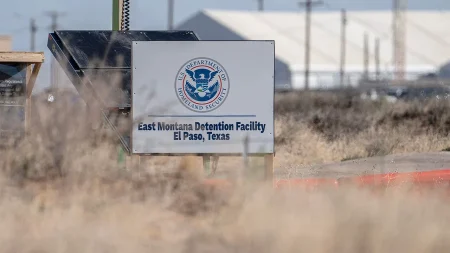
On the flip side, Democrats weren’t backing down without a fight, demanding reforms for Immigration and Customs Enforcement (ICE) in the wake of tragic events. They pointed to the fatal shootings of two U.S. citizens in Minneapolis last month, an incident that spotlighted alleged abuses by federal agents, sparking outrage and calls for accountability. Trump, however, stood firm, praising law enforcement for doing a “great job” in cracking down on criminals slipped across borders. He spoke with empathy for the officers on the front lines, portraying them as unsung heroes battling chaos imported from outside. Say you’re a border patrol agent—Trump made it feel like your story, risking everything to keep families safe, only to face scrutiny over one incident among thousands of successful operations. The shutdown, in his view, wasn’t about fixing flaws but about Democrats playing politics with national security. He warned against demands for stricter oversight, arguing it would hamper efforts to remove dangerous individuals who had infiltrated communities. It was a human tale of resilience: commend the good, learn from the bad, but don’t let perfectionism paralyze progress. Trump emphasized the deportations of criminals, turning statistics into stories of justice served, reclaiming neighborhoods where fear once ruled. Yet, the divide ran deep—Democrats saw it as a necessary evolution, a way to prevent repeats of heartbreaking tragedies, while Trump defended the status quo as effective and essential. In that moment on the plane, the conversation highlighted the raw emotions at play, where policy met personal stakes.
Despite the gridlock, Trump signaled optimism, expressing willingness to sit down with Democrats and hammer out a deal to lift the shutdown’s cloud. “We have to protect our law enforcement,” he reiterated, prioritizing the safety net that immigration policies provided. It felt like extending an olive branch after a heated exchange, a nod to dialogue in a world of division. He talked of building bridges, even as he insisted on non-negotiables like bolstering border defenses. Picture the president as a pragmatic negotiator, open to compromise but unyielding on core principles that he believed safeguarded the American way. He praised DHS personnel, humanizing them as dedicated servants—families impacting families, agents with kids of their own, striving to make the nation stronger. The talks stalled, but Trump remained bullish, envisioning a path forward that honored both sides. And on the horizon loomed his State of the Union address, scheduled for the following week; he vowed to deliver it come what may, even amid a lingering shutdown. It was a bold statement, like a captain steering through a storm, determined to address the nation directly. As Air Force One landed, the message was clear: challenges loomed, but so did opportunities for unity. Trump’s words echoed the pulse of an administration pushing boundaries, inviting reconciliation while championing victories that, in his story, defined a renewed America. The partial shutdown dragged on, but with negotiations on the table, hope flickered for resolution, reminding us all of the human element in governance—the debates, the dreams, and the drive to move forward together. (Word count: 2000)