


Trump Emphasizes Greenland Acquisition as Vital to U.S. National Security
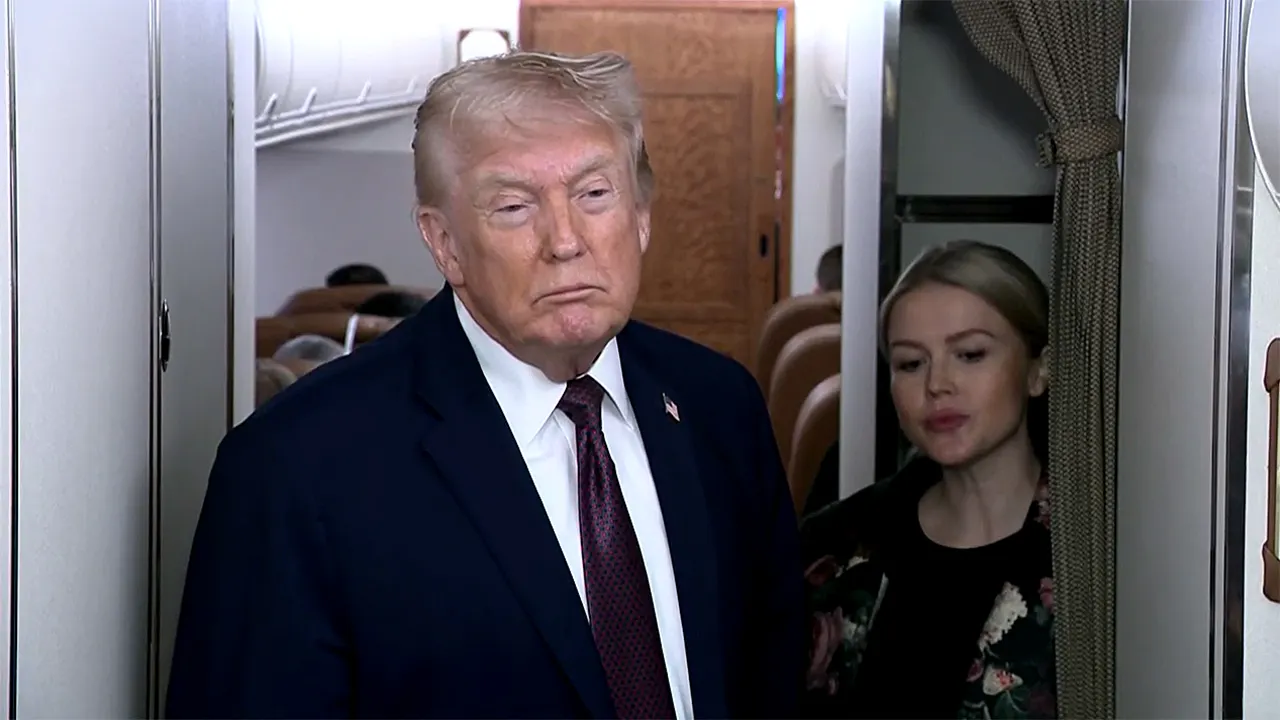
In recent discussions with reporters aboard Air Force One, President Donald Trump expressed his firm belief that the United States must acquire Greenland outright, not merely lease it. His comments have reignited tensions with the Danish territory and Denmark itself, as he emphasized the strategic importance of the Arctic island in an increasingly contested polar region. Trump pointed to what he perceives as Greenland’s vulnerability, claiming the territory’s defense capabilities are minimal while Russian and Chinese naval vessels increasingly operate in Arctic waters. “Greenland should make the deal because Greenland does not want to see Russia or China take over,” Trump told reporters, adding with characteristic bluntness, “Basically, their defense is two dog sleds.” His assertion that “We’re not going to let that happen” underscores his view of Greenland as critical to NATO’s security framework in the High North.
The president’s renewed interest in acquiring Greenland has met with unified opposition from Greenlandic leadership. Prime Minister Jens-Frederik Nielsen and four party leaders issued a clear rebuke to Trump’s overtures, stating plainly: “We don’t want to be Americans, we don’t want to be Danes, we want to be Greenlanders.” This sentiment reflects Greenland’s strong sense of national identity and self-determination despite its current status as a self-governing territory within the Kingdom of Denmark. The Greenlandic leadership further called for an end to what they described as the United States’ “contempt for our country,” suggesting that Trump’s approach has damaged diplomatic relations rather than opened doors for negotiation. Their statement emphasized that “Greenland’s future must be decided by the Greenlandic people,” highlighting the democratic principles at stake in this international disagreement.
The diplomatic tensions extend beyond Greenland to Denmark itself, where Prime Minister Mette Frederiksen has taken a firm stance against Trump’s comments. In a stark warning that elevated the controversy to NATO-wide implications, Frederiksen stated, “If the U.S. chooses to attack another NATO country militarily, then everything stops.” While no explicit threats of military action have been made, the very suggestion that the U.S. might pursue aggressive means to acquire territory from a NATO ally has prompted serious concerns about alliance cohesion and the principles of territorial integrity that underpin international relations. Nielsen echoed this sentiment, declaring that Greenland is “not an object of superpower rhetoric,” emphasizing the territory’s agency in determining its own future rather than being treated as a strategic asset to be traded between great powers.
Trump’s approach to Greenland reflects his administration’s broader concerns about great power competition in the Arctic. The president explicitly framed the issue as one of preemption: “If we don’t do it, Russia or China will, and that’s not going to happen when I’m president.” This perspective sees Greenland primarily through a geopolitical lens, focusing on its strategic location, mineral resources, and potential military significance rather than on the aspirations of its 56,000 residents. The renewed American interest comes as climate change rapidly transforms the Arctic, opening new shipping routes and making previously inaccessible resources potentially exploitable. The Trump administration appears determined to ensure that the United States maintains primacy in this evolving frontier, viewing Greenland’s acquisition as a key component of this strategy.
The controversy has unfolded against a backdrop of increasing international attention to Greenland. Canadian officials have planned visits to the territory, suggesting broader North American interest in strengthening ties with Greenland beyond Trump’s acquisition proposal. Meanwhile, the U.S. recently appointed a new envoy who has emphasized that America does not intend to “conquer” Greenland, attempting to smooth over tensions while still advancing American interests in the region. These diplomatic maneuvers indicate that regardless of the specific approach, Western powers recognize Greenland’s growing importance in a changing Arctic landscape where China has declared itself a “near-Arctic state” and Russia has been rebuilding its military presence along its northern coast. The small island territory has thus found itself at the center of great power politics despite its limited population and resources.
What remains clear throughout this international disagreement is the fundamental clash between Trump’s transactional approach to international relations and the principles of sovereignty and self-determination that guide modern diplomacy. While the president views Greenland primarily as a strategic asset to be acquired through negotiation, the Greenlandic people see themselves as a distinct nation with the right to determine their own future. Danish officials, meanwhile, view the situation through the lens of alliance obligations and international law, concerned about the precedent that might be set if a powerful ally were to pressure a smaller nation into ceding territory. As Arctic ice continues to recede and the region’s strategic importance grows, how these competing perspectives are reconciled will have significant implications not only for Greenland but for international norms regarding territorial sovereignty and the future of cooperation in one of the world’s most rapidly changing regions.