






President Donald Trump has always had a knack for turning any gathering into a spectacle, and the inaugural meeting of his newly formed Board of Peace was no exception. Held in the heart of Washington, D.C., on a crisp Thursday morning, this international forum wasn’t just a bureaucratic rendezvous; it was a bold vision for America’s return to global prominence under the MAGA banner. The goal? To rally nations for funding Gaza’s reconstruction and coordinating a stabilization force post-conflict—a nod to Trump’s promise to foster peace through strength. Over 40 delegations poured in from around the world, from diplomats in sharp suits to leaders with weathered faces etched by decades of international wrangling. As Trump took the stage, the room buzzed with anticipation. Here was a president who, even in his second term, thrived on the spotlight, weaving personal anecdotes and sharp wit into what could have been a dry policy discussion. He kicked things off by heaping praise on his top foreign policy duo: Vice President JD Vance and Secretary of State Marco Rubio. “Extraordinary statesmen,” he called them, marveling at how their differing styles produced the same stellar results. It felt like watching a master storyteller captaining a ship, steering the conversation away from tensions and toward triumphs. The event wasn’t just political theater; it was a reminder of Trump’s unfiltered charm, where he turned compliments into memorable yarns. Sitting among the attendees, you could sense the weight of history—the echoes of past summits and the hope for new alliances. Rubio, with his measured eloquence, and Vance, with his youthful vigor, stood as proof that this administration wasn’t afraid to mix brains with boldness. As Trump spoke, the atmosphere lightened; laughs rippled through the crowd when he shared personal tidbits, making global diplomacy feel almost like a family reunion. The Board of Peace, he explained, was more than a forum—it was a lifeline for fractured regions, a testament to American leadership that refused to shy away from hard problems. By bringing together such a diverse array of nations, Trump signaled that the U.S. was back, not as a lecturing giant, but as a collaborative force ready to rebuild and stabilize. The meeting capped a week of high-profile activities, including Rubio’s fiery speech in Munich just days prior, setting the stage for what felt like a new chapter in international relations where personality and policy intertwined seamlessly.
Shifting to JD Vance, Trump’s praise flowed like a river, full of that endearing, impromptu warmth that makes you think of him as everyone’s favorite uncle who’s always got a story ready. Describing Vance as “brilliant” and “a great guy,” Trump reminisced about Vance’s rapid academic feats—completing college at Ohio State in just two years, then conquering Yale at the top of his class. It was the kind of biography that resonates in America, where hard work and smarts are celebrated as the ultimate rags-to-riches tale. Trump even joked about Vance’s personal victory in love, saying he married Usha, the classmate who edged him out marginally, proving that brilliance runs in the family. As second lady, Usha brings her own intellectual firepower to the mix, making their partnership a modern fairy tale. Trump admitted Vance could be “a little bit tough on occasion,” a candid acknowledgment that humanized the Vice President, painting him not as a robotic policy wonk, but as a passionate advocate whose mind races ahead of the rest. “We gotta slow him down just a little bit,” Trump quipped, eliciting chuckles from the audience. It was this blend of admiration and light-hearted mischief that made the speech so engaging. Vance’s speech at the Munich Security Conference in 2025 had already marked him as a force to be reckoned with, where he warned of Europe’s drift toward censorship, policies that police speech and stifle religious expression. In that 2025 address, Vance didn’t mince words, calling out institutions that pressure online platforms—a defiant stand that echoed Trump’s own battles against perceived overreach. At the Board of Peace meeting, Trump’s anecdotes about Vance’s education and service made him feel like the kid who hustled his way to the top, embodying the American dream. Yet, tucked behind the praise was a subtext of mentorship; Trump saw Vance as a friend and protégé, someone whose intensity mirrored his own. The audience leaned in, perhaps doodling mental notes on how to emulate that ambition. In a world of polished diplomats, Vance’s realness was refreshing, a reminder that leaders can be relatable without losing edge.
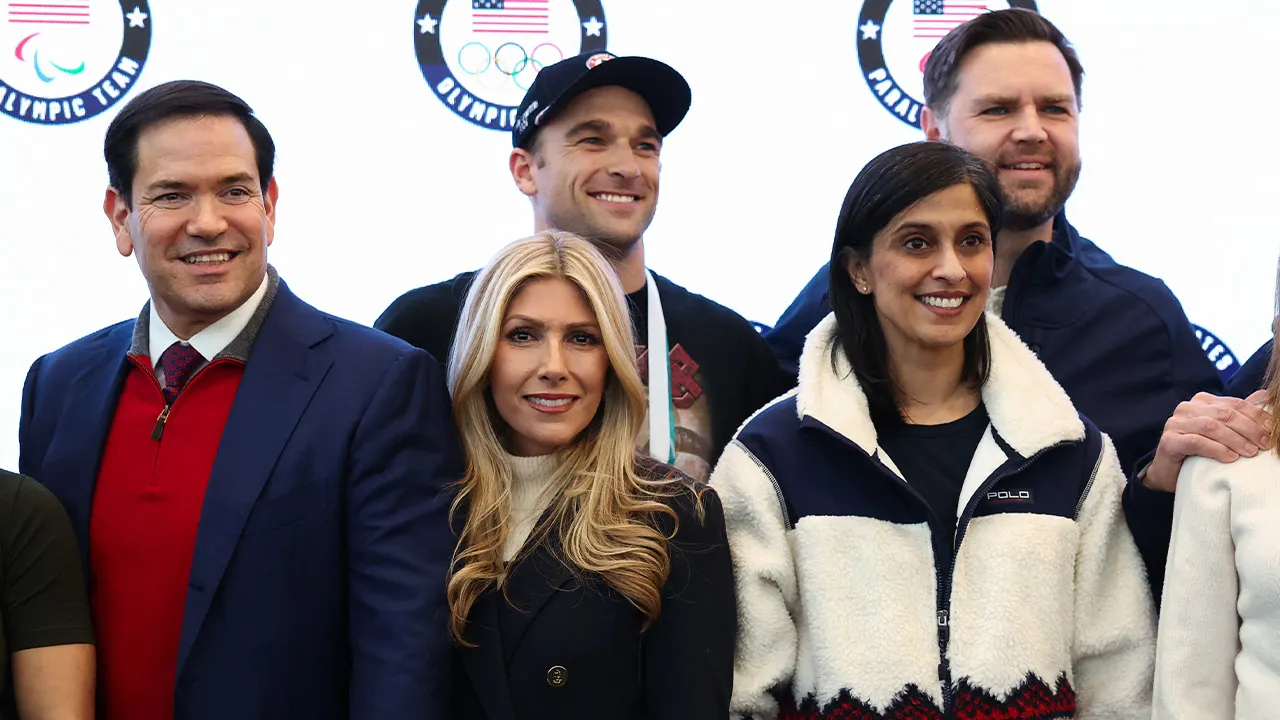
Then came the reverence for Marco Rubio, whom Trump hailed as “the opposite extreme” to Vance, a silk-gloved maestro versus Vance’s steel-fisted approach. Sitting there in the background at the event, Rubio has become Trump’s go-to for velvet diplomacy, handling international relations with a finesse that disarms rather than dominates. Trump’s storytelling hit peak humor when he recalled Rubio’s Munich speech just a week earlier, delivered at the prestigious Security Conference in Germany. Rubio had railed against unchecked mass migration, framing it as a destabilizing force for Western civilization—a bold stance that drew conservative applause back home, where phrases like “borders matter” resonate deeply. Trump joked that Rubio’s performance was so impeccable, he almost wanted to fire him, saying, “They were saying, why can’t Trump do this? I do, but I say it differently.” It captured the playful jealousy of a leader who appreciates his team’s shine, turning potential rivalry into a celebration. Rubio, with his warm demeanor and strategic mind, exemplifies the compromises and coaxing that build alliances. Vance has publicly dubbed him his “closest friend in the administration,” a bond forged in shared battles like bilateral meetings with Italian Prime Minister Giorgia Meloni in February and joint appearances at Milan’s Olympics opening. This friendship isn’t scripted; it’s evident in their collaborations, where sharp contrasts yield unified results. Trump’s accolade highlighted Rubio’s ability to achieve through charm what others might demand through force—a diplomatic ballet that keeps adversaries guessing. In the grand theater of global affairs, Rubio represents the softer power that complements Vance’s toughness, ensuring the administration’s message lands with precision. Attendees at the meeting likely nodded in recognition; Rubio’s speeches aren’t just words; they’re crafted works of art that weave emotion and logic, making complex issues feel personal.
Indeed, the synergy between Vance and Rubio extends beyond mutual admiration into tangible actions, bridging the gap between policy and personality in Trump’s vision. Their joint ventures, like the aforementioned Italy trip, showcased a dynamic duo navigating the unpredictable waters of international politics with a blend of intellect and intrigue. Rubio’s eloquence and Vance’s forthrightness create a yin-and-yang effect, much like how Trump described it: different methods, yet identical outcomes. This human element—friendships forming amidst the fray—is what makes their stories compelling. Vance once called their collaboration “interesting” amidst media buzz over his absence during a tense 2026 operation where U.S. forces captured Venezuela’s Nicolás Maduro. Reports speculated conflict, but Vance brushed it off as unfounded, citing security protocols that limit his and Trump’s outings. “I think it’s so interesting the media wants to create this conflict where there just isn’t any conflict,” he told Fox News, emphasizing unity. Rubio’s presence with Trump at Mar-a-Lago during that event underscored their complementary roles: Rubio offering diplomatic counsel, Vance directing from afar. This incident humanized the pressures of leadership, where personal safety dictates absences, yet loyalty prevails. Their public declarations of friendship—Vance referring to Rubio as his “best friend in the administration” on multiple occasions—add layers of authenticity to a game often shrouded in opacity. In candid moments, they reveal the camaraderie that fuels long hours in oval offices and jet-lagged trips abroad. Such bonds aren’t anomalies; they’re the lifeblood of effective governance, where trust allows for candid feedback and fearless innovation. As Trump lauded them both, it felt like a validation of teamwork over solo stardom, a reminder that even world leaders benefit from having reliable partners to share the load.
The Munich Security Conference in 2025 stands out as a pivotal moment, where both men solidified their reputations on the global stage, turning theoretical debates into headline-grabbing confrontations. Rubio’s speech, with its passionate defense of Western values against migration’s chaos, earned rave reviews from conservatives, contrasting sharply with critics who lambasted it as unyielding. Vance, leading the U.S. delegation, delivered a speech that encapsulated the administration’s philosophy: a warning against Europe’s creeping authoritarianism, policies that oppress free speech and corner online freedoms. Reaction was swift—a “defining moment” for Vance, as Fox commentators dubbed it, thrusting the 60-year-old Vice President into the limelight. His words resonated with audiences craving unvarnished truth, painting a picture of a world teetering on the edge of self-censorship. Conservatives cheered, while critics accused him of overstatement, but the buzz humanized Vance further, revealing a man unafraid to name societal ills. Rubio’s performance, meanwhile, shone as a masterclass in delivery, earning him meme-status admiration online as the “Secretary of Memes.” Yet, beneath the applause lay stark contrasts, with figures like AOC facing backlash for their Munich exchanges. Vance famously called AOC’s 20 seconds on television “the most uncomfortable” he’d seen, a raw critique that fueled partisan divides. Such moments make diplomacy feel visceral, not just diplomatic—full of human emotion, triumphs, and toe-stepping. In Trump’s speech, these events weren’t distant memories but active threads, illustrating how Rubio and Vance are translating speech into action via forums like the Board of Peace.
Finally, as the Board of Peace meeting wound down, the echoes of Trump’s praise lingered, weaving Peabody a narrative of unity and vigor that extends beyond the podium. Vance’s refusal to be drawn into fabricated conflicts speaks volumes about the administration’s resilience, prioritizing teamwork over theatrics. “Marco’s doing a great job. I’m trying to do as good of a job as I can. The president’s doing a great job. We’re going to keep on working together,” Vance reiterated, his words a testament to the human element in politics—relationships forged in fire, not fabricated in labs. Rubio’s diplomatic finesse and Vance’s intellectual prowess form a formidable frontline, embodying Trump’s ideal of complementary strengths. In a world rife with division, their bond offers a glimmer of hope, a reminder that opposing styles can harmonize for greater good. The meeting’s success, with its international buy-in, underscores the tangible impact of such dynamics, from reconstruction pledges to stabilization plans. As attendees dispersed, likely buzzing with new alliances, the human story of Vance and Rubio emerges: two men, worlds apart in approach, united in service. Trump’s anecdotes—marriages won, speeches delivered, crises navigated—transform cold geopolitics into a relatable saga. It’s the kind of leadership that makes followers feel invested, not just informed. Embracing the “NEW” feature of listening to Fox News articles adds another layer, allowing these stories to resonate audibly, bringing the warmth of voices to the forefront. In essence, this administration’s tale is one of excellence through individuality, where praise flows freely and conflicts dissolve into collaboration. Events like Munich and the Board of Peace aren’t mere milestones; they’re chapters in a human epic, where leaders like Vance and Rubio redefine American diplomacy with heart and grit. As Trump might say, it’s all about the results—and these guys deliver. Their journey, marked by triumphs and trials, continues to captivate, proving that in the arena of global affairs, it’s the people who make the difference. With each meeting and speech, they etch their legacies, not as lone wolves, but as pillars of a stronger, more united front.