


Trump Defends Supreme Court Justices Alito and Thomas Amid Retirement Speculation
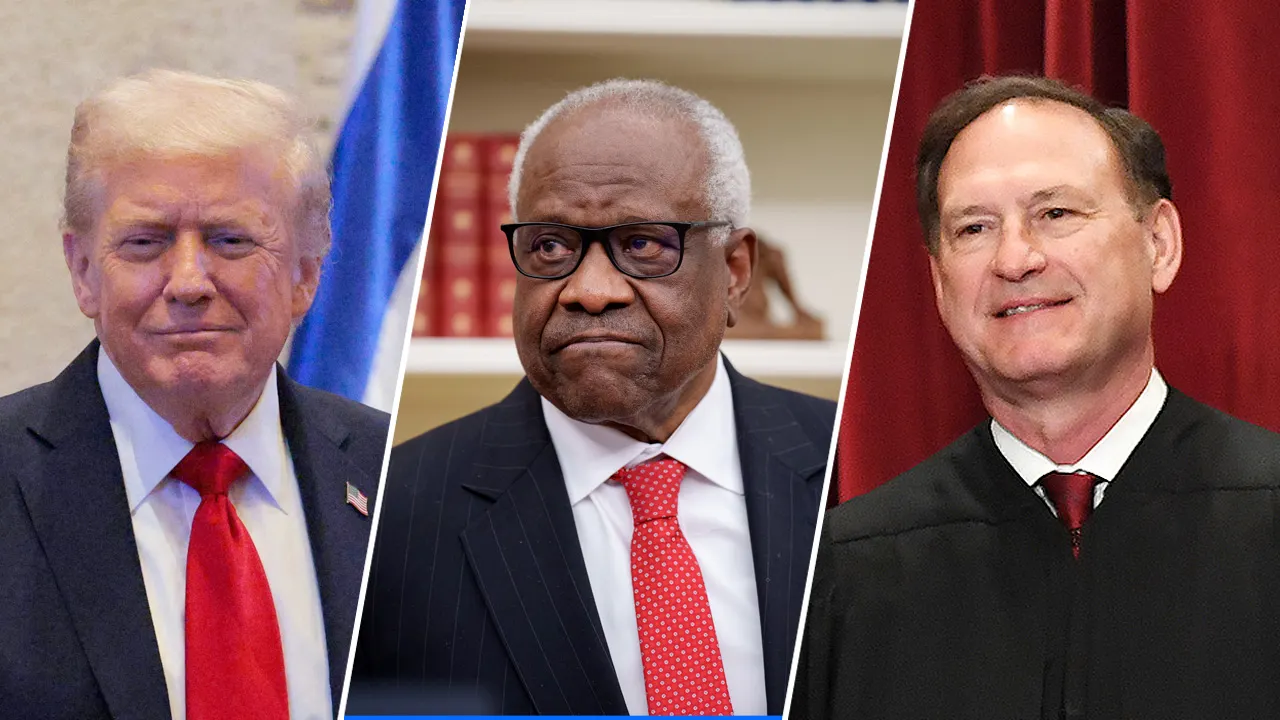
In a recent interview with Politico, President Donald Trump expressed his strong support for Supreme Court Justices Samuel Alito and Clarence Thomas, pushing back against suggestions from within Republican circles that the elderly justices should consider stepping down. “I hope they stay,” Trump declared, adding emphatically, “Cause I think they’re fantastic.” This statement comes at a time when some Republicans reportedly hope the court’s two oldest conservative justices might retire while the party still maintains control of the Senate, allowing Trump to nominate their replacements. The timing of such considerations is politically significant, as the upcoming midterm elections could potentially shift the balance of power in Congress, complicating future judicial confirmations.
Despite the political calculations being made by some within his party, Trump’s unwavering support for both justices reflects his appreciation for their consistent conservative jurisprudence on the nation’s highest court. Justice Alito, now 75, was appointed by President George W. Bush in 2006 and has become a stalwart conservative voice on the bench. According to sources close to Alito who spoke with The Wall Street Journal following Trump’s election in November 2024, the justice has no plans for retirement anytime soon. One confidant emphasized Alito’s apolitical approach to his role, stating, “Despite what some people may think, this is a man who has never thought about this job from a political perspective,” and adding that retiring for political considerations “is not consistent with who he is.” This insight suggests that Alito views his position through the lens of judicial duty rather than partisan strategy.
Justice Thomas, at 77 years of age, represents an even longer-standing conservative pillar on the Supreme Court, having been appointed by President George H.W. Bush in 1991. His more than three decades on the bench have made him the most senior justice and one of the court’s most reliable conservative votes. For comparison, Justice Sonia Sotomayor, one of the court’s liberal members appointed by President Obama in 2009, is 71 years old. The age of these justices naturally raises questions about the future composition of the court, especially in today’s highly polarized political environment where Supreme Court appointments have become increasingly contentious battlegrounds between the two major parties. The lifetime appointments of Supreme Court justices make each nomination a potentially generation-spanning decision that can shape American jurisprudence for decades.
The speculation around potential retirements comes against a backdrop of heightened political scrutiny of the Supreme Court. In 2022, several House Democrats called for Justice Thomas to either step down or face impeachment due to his refusal to recuse himself from cases related to the January 6, 2021, Capitol riot. These demands followed revelations from the January 6 select committee that Thomas’s wife, Ginni Thomas, had sent text messages to then-White House Chief of Staff Mark Meadows encouraging him to challenge the results of the 2020 presidential election. This situation highlighted the complex personal and political entanglements that can affect public perception of the court’s impartiality, even as the justices themselves maintain their independence from political pressure.
The current composition of the Supreme Court already reflects significant influence from Trump’s first term, during which he appointed three justices—Neil Gorsuch, Brett Kavanaugh, and Amy Coney Barrett—cementing a 6-3 conservative majority. This transformation of the court has already resulted in landmark decisions on issues ranging from abortion rights to religious liberty and executive power. The court appears poised to continue this conservative trajectory, with recent reporting suggesting the justices may side with Trump in a case challenging the structure of the Federal Trade Commission, potentially overturning a 90-year precedent regarding the independence of federal agencies. Such decisions underscore the profound impact Supreme Court appointments have on American governance and policy.
As political observers and legal scholars continue to speculate about potential changes to the court’s membership, Trump’s unequivocal support for Justices Alito and Thomas suggests that any retirement decisions will remain strictly in the hands of the justices themselves, free from pressure from the White House. This stance aligns with traditional respect for judicial independence, even as partisan considerations inevitably swirl around the future of the nation’s highest court. The ultimate decisions of these justices regarding their tenure will likely depend on personal factors including health, desire to continue serving, and their own assessment of their ability to fulfill their constitutional duties—considerations that transcend the immediate political calculations of any administration or party, reflecting the intended lifetime independence of the federal judiciary as envisioned by the framers of the Constitution.