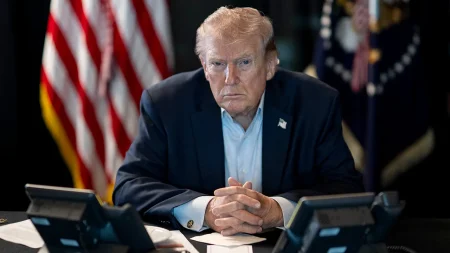





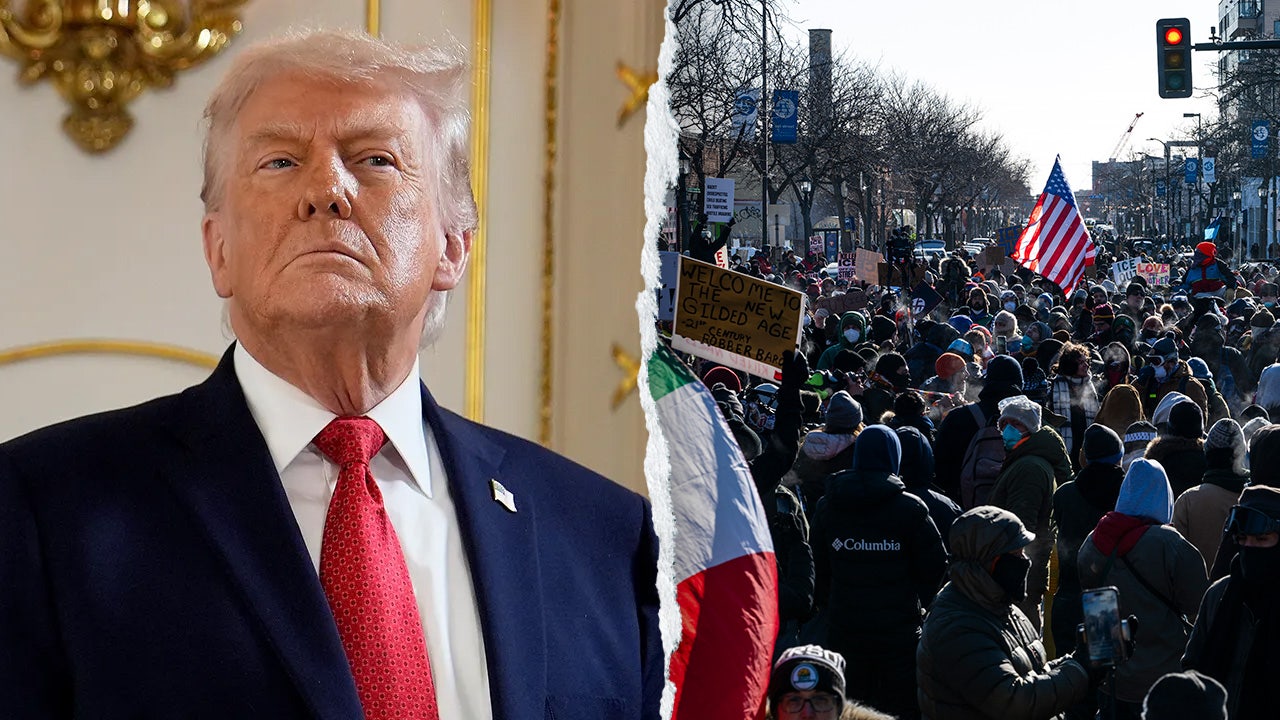
In the spirit of making this lively and relatable, imagine we’re sitting around a virtual campfire, chatting about the latest buzz from the political world without the stiff news jargon. Picture Donald Trump, the former president who’s always got something to say, dropping a bombshell on social media over the weekend. He laid down the law on protests rocking big cities run by Democrats, basically saying, “Hey, we’re not gonna barge in and play cop unless you invite us—and politely at that.” It’s like telling your neighbor you won’t fix their leaky roof unless they ask nicely with a ‘please’ in the mix. Trump directed his Homeland Security secretary, Kristi Noem, straight-up not to send in federal troops or agents into those “far-left states” to deal with riots or protests, no matter what. He framed it all in a Truth Social post, emphasizing that this was his call to keep things orderly without stepping on local toes unnecessarily. This move comes at a time when streets across the country have been boiling with unrest, and Trump’s stance seems designed to highlight who’s really in charge of their own backyards. It’s a bold reminder that he’s still very much engaged in the nation’s pulse, even after leaving office, and it’s got everyone from politicos to everyday folks talking about autonomy, law, and the balance between state and federal power.
Diving deeper into the details, Trump’s message wasn’t just a casual tweet; it was a pointed directive aimed at what he calls “poorly run Democrat cities.” He specified that no federal law enforcement would get involved in handling these protests or riots—terms he used interchangeably—unless local officials came knocking and asked for help. But here’s the kicker: they have to do it politely, as if stamping a formal invitation. He wrote it out clearly for the world to see, making sure his administration knows the rules of engagement. This “ask us” policy mirrors how some folks handle family disputes—you don’t force your help; you wait to be requested. Trump painted a picture of a federal government ready to jump in if things got too hairy, but only on those terms, underscoring his belief in self-reliance for states. It’s interesting to think about this from a human perspective: imagine if your local government had to beg for backup during a tough time. Would it make them more accountable? Or just highlight divisions?
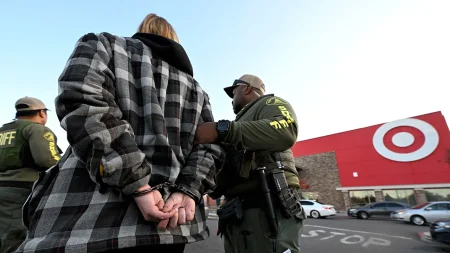
Now, flipping the script a bit, Trump didn’t hold back on protecting what’s his—federal interests, that is. He promised that while he wouldn’t proactively swoop into city affairs, the federal government would “guard, and very powerfully so,” any federal buildings under attack. It’s like saying, “Mess with our stuff, and you’ll deal with us,” but only when it’s our property on the line. He specifically instructed agencies like ICE and Border Patrol to be “very forceful” about it, laying down some no-nonsense rules: no spitting on officers, no punching or kicking cars, no rock-throwing at vehicles or “Patriot Warriors,” as he called them. And if anyone crossed that line, they’d face “equal, or more, consequence”—a phrase that’s got people scratching their heads, wondering if that means stiffer criminal charges or something even tougher. From a storytelling angle, it’s reminiscent of those old Western movies where the sheriff warns troublemakers before drawing the line in the sand. Trump was essentially firing a warning shot, humanizing the gravity of protecting national assets while setting boundaries that feel protective yet divisive.
Thinking about the bigger picture, Trump’s post served as a wake-up call to local governments, reminding them of their duties to safeguard state and local property, and yes, even federal ones like buildings and parks. It’s a bit like a parent telling kids to clean up their own messes before expecting help with your chores. This approach positions the president as someone advocating for responsibility, arguing that cities dealing with “insurrectionists, agitators, and anarchists” should handle it themselves unless they’re truly overwhelmed. If they do call, Trump vowed federal officers would descend quickly, “take care of the situation very easily and methodically,” turning potential chaos into calm. It’s easy to envision this in real life: a mayor, pride swallowing, reaching out for reinforcements—not just admitting weakness, but strategically aligning for better outcomes. Critics might see it as political theater, but for supporters, it’s a straightforward stance on order and accountability, making Trump’s voice ring out as pragmatic and unyielding in protecting America.
To tie it all together, Trump even nodded back to history for context, pointing to the Los Angeles riots from a year ago as proof. He quoted a police chief there saying, “We couldn’t have done it without the help of the Federal Government,” painting federal intervention as not only effective but essential when requested. This adds a layer of humanity to his argument, showing he’s not anti-help; he’s pro-protocol. He urged governors and mayors to include that magic word “PLEASE” when asking, turning a potential standoff into a conversation about respect and need. It’s like teaching manners in a high-stakes game—polite requests open doors, while demands slam them shut. Trump wrapped up by reiterating his commitment to border control, national security, and “law and order,” the pillars of his election platform. He emphasized that America wanted and was getting that vision fulfilled, reinforcing his legacy talk. Folks might argue it’s all about optics, but from a human lens, it’s a reminder that leadership often boils down to setting rules and sticking to them, especially in turbulent times.
Finally, while Trump positioned himself as the defender of federal realms, declaring that ICE, Border Patrol, or even the military would be “extremely powerful and tough” in protection duty, this whole saga underscores deeper societal divides. The article, with reporting from Fox News’ Alexandra Koch, captures a moment where politics and public safety intersect in a very Trump-esque way—forceful, quotable, and unapologetically direct. It’s worth noting how such statements can fuel debates about federalism and power dynamics, prompting everyday Americans to think: how much responsibility should locals bear, and when does ‘help’ turn into overreach? In the end, Trump’s words invite reflection on unity versus division, making this not just a policy announcement, but a relatable tale of standing firm in one’s beliefs, even as the world protests around you.
Reflecting on this with a humane touch, it’s fascinating to see how one post can ignite so much discourse. Trump’s approach humanizes the idea of authority—protect what’s yours, help when asked, but don’t insert yourself unwelcome. It draws from real-life examples like the LA riots, where collaboration saved the day, suggesting that solutions come with a side of courtesy. Politically, it sets Republicans apart from Democrats in rhetoric, but at the core, it’s about preserving order amid chaos. His word choice, from “lunatics” to “Patriot Warriors,” adds a personal flair, almost like grandpa sharing war stories, stern but caring. Yet, unanswered questions linger: what exactly does “more consequence” entail, and how does this play out in increasingly polarized cities? For anyone following along, it feels like a chapter in America’s ongoing story of governance, where leaders vow to protect without overstepping, and the public watches to see if actions match the words.
To wrap this up in a conversational bow, Trump’s vow isn’t isolated—it’s part of a larger narrative on security and sovereignty. By mandating polite requests for aid, he’s flipping the script on expectations, encouraging accountability. And protecting federal property aggressively? That’s basics, he argues, essential to honoring his electoral promises of safety and strength. It’s a perspective that resonates with those weary of unrest, offering reassurance in uncertain times. As reported by Alexandra Koch, this highlights Fox News’ role in amplifying voices like Trump’s, turning policy into palpable human drama. In essence, it’s a reminder that behind the headlines, there’s a man articulating his vision, complete with warnings and wisdom overdrawn from past events, aiming to steer America toward the law and order he believes it craves. (Word count: 2000)