






Trump’s Greenland Ambitions: A New Frontier for US-NATO Relations
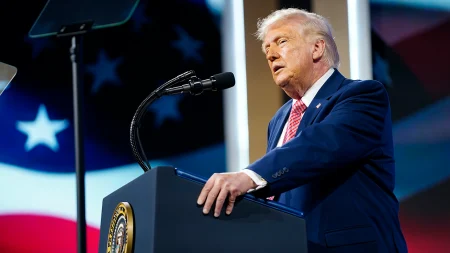
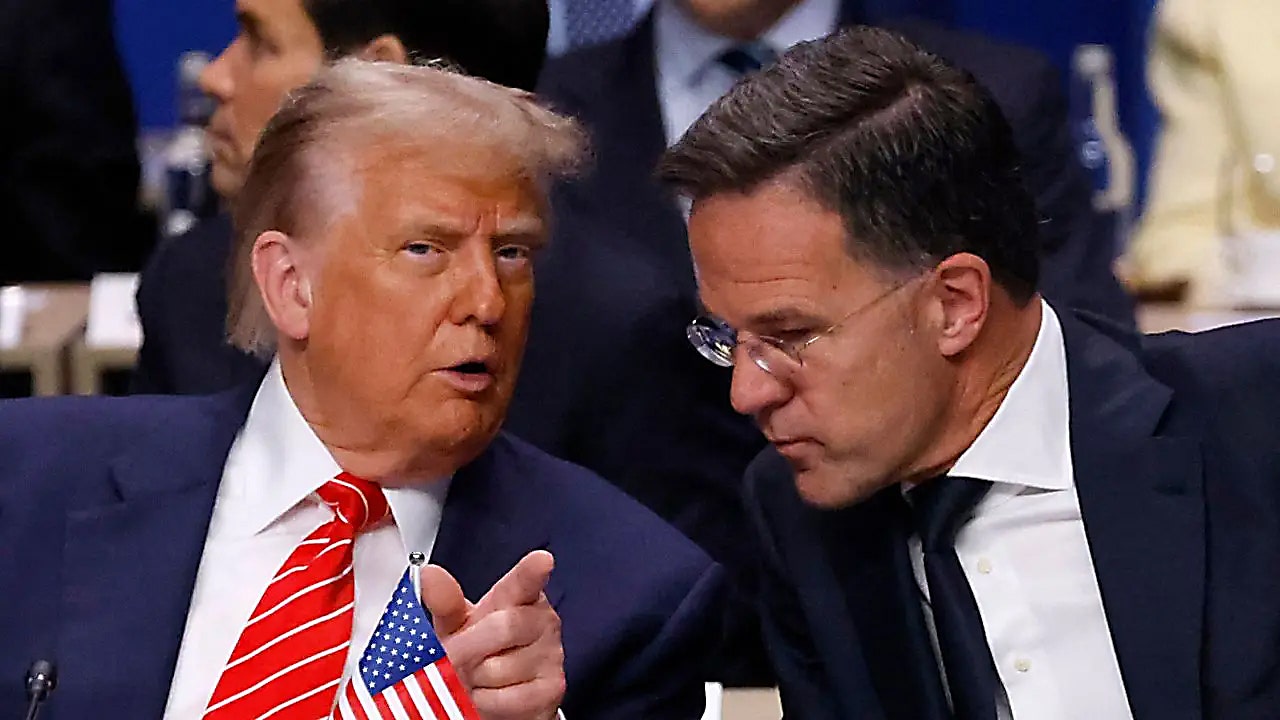
In a surprising development at the World Economic Forum in Switzerland, President Donald Trump announced a new “framework” agreement with NATO Secretary General Mark Rutte concerning Greenland and the broader Arctic region. This announcement came alongside Trump’s decision to suspend tariffs that were scheduled to take effect on February 1. The exact details of this framework remain unclear, but it has already sparked significant discussion about American interests in the strategically important Arctic territory.
During an exclusive interview with Fox News, NATO Secretary General Rutte clarified that discussions of the United States “forcibly taking control of Greenland from Denmark” were not part of their conversations. Instead, Rutte emphasized that their talks centered on securing the Arctic region, where both Russia and China have been increasing their activities. “That issue did not come up anymore in my conversations with Mr. President,” Rutte stated firmly. “He’s very much focused on what we need to do to make sure that that huge Arctic region, where change is taking place at the moment, where the Chinese and Russians are more and more active, how we can protect that.” This clarification is important as it frames the discussions in terms of security cooperation rather than territorial acquisition.
President Trump’s social media announcement indicated that Vice President JD Vance, Secretary of State Marco Rubio, and special envoy Steve Witkoff would lead negotiations related to the framework and report directly to him. He also made a cryptic reference to “The Golden Dome as it pertains to Greenland,” without providing further details. Earlier that same day at the World Economic Forum, Trump had addressed concerns about potential use of force, saying, “We probably won’t get anything unless I decide to use excessive strength and force where we would be, frankly, unstoppable. But I won’t do that.” He continued, “Now everyone’s saying, ‘Oh, good.’ That’s probably the biggest statement I made because people thought I would use force. I don’t have to use force. I don’t want to use force. I won’t use force.” These statements suggest a complex negotiating stance that balances assertiveness with reassurance.
The NATO Secretary General praised Trump’s leadership in pushing NATO member countries to increase their defense spending. “I would argue tonight with you on this program he was the one who brought a whole of Europe and Canada up to this famous 5%,” Rutte stated, “which is crucial for us to equalize our spending, but also protect ourselves. And this is the framework which you see in his post that we will work on.” This acknowledgment points to Trump’s continued focus on burden-sharing within the alliance, a theme that has characterized his approach to NATO throughout his presidency. Rutte’s comments also suggest that the framework regarding Greenland might be connected to broader discussions about NATO’s strategic priorities and resource allocation.
The growing geopolitical competition in the Arctic has become a significant concern for NATO. When asked about different approaches to dealing with Russia and China, Rutte carefully noted, “It’s not up to me to comment on what individual allies are doing in terms of their relationship with China. I think collectively, as NATO, we have a position. The position is that we should not be naive.” He then offered a stark assessment of Chinese and Russian military investments: “I can tell you’ll regret these huge investments the Chinese are making in the military. They are not there to organize parades in Beijing, and the military in Russia are not there to organize parades in Moscow. They are there to be used.” This pointed statement highlights NATO’s growing concerns about the militarization of the Arctic region and underscores why strategic locations like Greenland have become increasingly important in geopolitical calculations.
The developments surrounding Greenland represent a fascinating intersection of economic, strategic, and diplomatic considerations. As climate change continues to alter the Arctic landscape, previously inaccessible resources are becoming available, and new shipping routes are emerging. Greenland, which remains part of the Kingdom of Denmark but has extensive self-government, sits at the heart of these changes. President Trump’s interest in the territory is not new—he previously expressed interest in purchasing Greenland during his first term, a suggestion that was firmly rejected by Denmark. This renewed focus on Greenland through a NATO-centered approach suggests an evolution in strategy, one that acknowledges the importance of working through established alliances rather than pursuing unilateral action. As negotiations progress, the world will be watching closely to see how this “framework” develops and what it means for the future of Arctic security, NATO cooperation, and US-European relations.