


The air on Capitol Hill was thick with anticipation and frustration on a crisp Wednesday afternoon, as the swirling scandal surrounding Jeffrey Epstein continued to unfold like a shadow play across the American political landscape. Imagine the corridors of power, where aides hurried about with stacks of documents and lawmakers exchanged hushed whispers, each glance a reminder of the unfinished business tied to a man whose name had become synonymous with the dark underbelly of influence and unpunished privilege. Epstein, the disgraced financier who once hobnobbed with celebrities and politicians, had disappeared from the headlines momentarily after his 2019 prison death, ruled a suicide, but his ghost lingered in the files and testimonies that Congress was now clawing to unearth. At the heart of it all was a sense of betrayal—not just by the rich and powerful who allegedly shielded him, but by the very institutions meant to uphold justice. Top Department of Justice officials under President Donald Trump’s administration were gearing up to brief the House Oversight Committee, a move that felt like a long-overdue step in a marathon probe that had dragged on for months, leaving victims and investigators alike grappling with a mix of hope and exasperation. It was a moment that begged for resolution, for the kind of transparency that could restore faith in a system often seen as rigged for the elite.
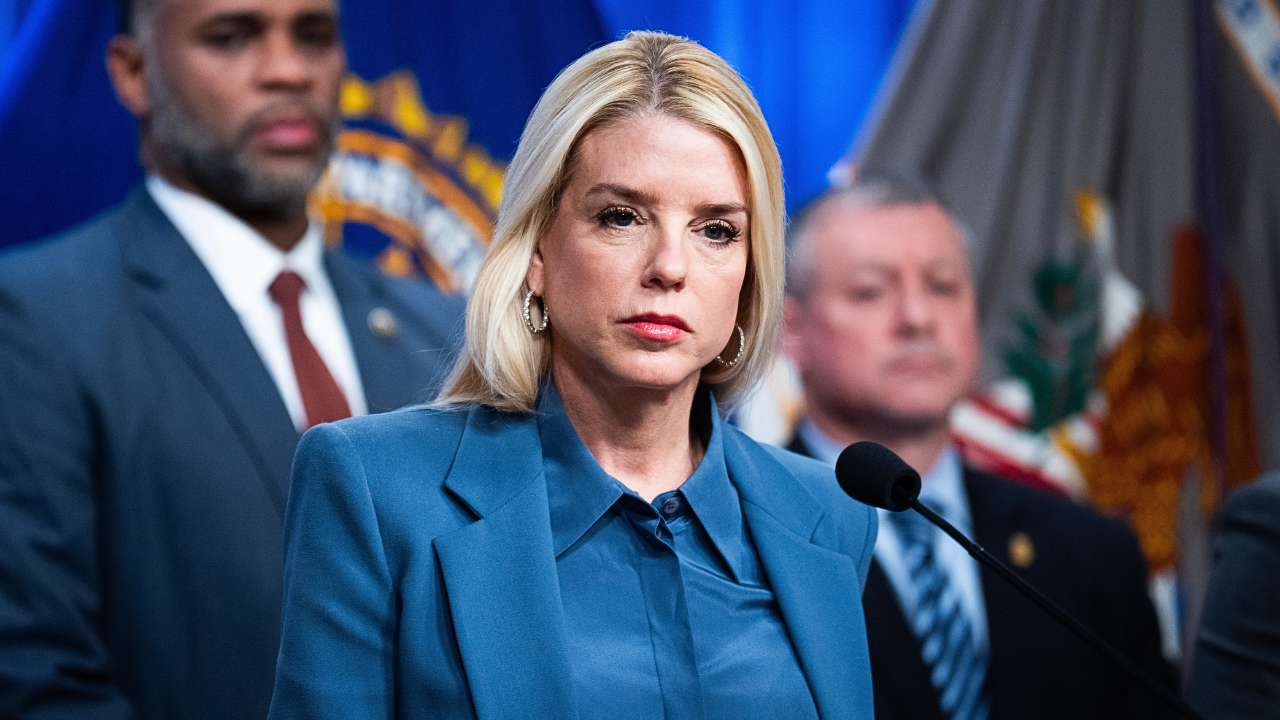
As the clock ticked toward late afternoon, Attorney General Pam Bondi and Deputy Attorney General Todd Blanche prepared to huddle behind closed doors with House lawmakers, their presence a nod to the committee’s Chairman, James Comer of Kentucky, who had issued a subpoena just the day before. Think of Bondi, the no-nonsense former prosecutor from Florida, striding into the Capitol with that air of authority, her heels clicking against the marble floors, while Blanche, the sharp deputy, scanned the room like a guardian of executive secrets. The meeting wasn’t just a casual chat; it stemmed from Comer’s subpoena demanding a sworn deposition from Bondi on April 14, a formal escalation in what had become a tense tug-of-war. In the subpoena’s stern language, the committee laid out its grievances: questions about the DOJ’s handling of Epstein’s investigation, including its compliance—or lack thereof—with the Epstein Files Transparency Act. It felt personal, almost like a family feud spilling into public view, where one side accused the other of hiding crucial truths. Bondi, as Attorney General, bore direct responsibility for overseeing the collection, review, and release of those files, and lawmakers believed she held keys to unlocking a treasure trove of damning evidence. For many, this wasn’t just about paperwork; it was about accountability for a man whose alleged crimes had scarred countless lives, from terrified victims to a nation watching in disbelief.
The ripples of this confrontation stretched back to late last year, when both the House and Senate had voted nearly unanimously—Republicans and Democrats joining forces in a rare show of unity—to force the DOJ’s hand on Epstein’s files. The Epstein Files Transparency Act, a legislative hammer designed to pry open the vaults of justice, demanded the public release of all documents related to Epstein and his notorious sidekick, Ghislaine Maxwell. Yet, when the DOJ announced in late January that it had obliged, proudly declaring all required materials declassified and shared, the response from lawmakers was a chorus of skepticism and outrage. On the verge of tears or fury, some victims’ advocates raged in private, feeling once again victimized by bureaucracy, while congressional Democrats and a few Republicans pushed back, arguing that key evidence remained shrouded in redactions and omissions. A DOJ spokesperson, defending their turf in a statement to Fox News, called the subpoena “completely unnecessary,” insisting lawmakers could view unredacted files in person at the department and that Bondi had always been accessible for calls and meetings. It was a statement laced with defensiveness, portraying the administration as cooperative pillars of transparency, but to critics, it reeked of evasion. Picture the scene: a parent comforting a child survivor, whispering promises of justice that seemed perpetually out of reach, as these bureaucratic battles played out on national news, turning policy debates into a human drama where every delay felt like a slap to the faces of those betrayed by power.
The subpoena’s spark flew from a heated committee vote earlier that month, where five Republicans and all the Democrats aligned to initiate it, spurred by Representative Nancy Mace, a fiery South Carolinian conservative who had grown weary of the stonewalling. Mace, in a statement that dripped with righteous indignation, didn’t mince words: “We moved to subpoena Attorney General Pam Bondi because the Department of Justice has not complied with the Epstein Files Transparency Act. They claim all files have been released. The facts say otherwise. Key evidence remains hidden from the public and from victims seeking justice.” Her voice, sharp and unwavering, captured the collective anger—a blend of outrage over alleged mishandling and a passionate plea for closure. Mace imagined the toll on families, the sleepless nights spent wondering if justice would ever come, articulating what many felt but hadn’t voiced: that hiding files wasn’t just bureaucratic bad faith; it was a betrayal of the vulnerable. In human terms, this wasn’t an abstract legal wrangle; it was the story of mothers shielding daughters, of lives disrupted by a predator’s web, now waiting for the truth to emerge and mend what was broken. The committee’s probe, stretching months into a saga of revelations, had morphed from sterile oversight into a venue for raw emotions, where lawmakers dissected not just policies, but the moral failings of those who should have protected the innocent.
Diving deeper into the probe’s narrative arc, the committee had already hosted a parade of figures, each deposition peeling back layers of the Epstein enigma like an onion revealing tears and stench alike. Last month alone, they traveled to the posh hamlet of Chappaqua, New York, to depose former President Bill Clinton and his wife, former Secretary of State Hillary Clinton, right in their actual home—a setting so intimate it blurred lines between historical figures and everyday folks caught in scandal’s orbit. Clinton, in his measured way, reportedly insisted that Trump “never said anything” linking himself to Epstein’s crimes, a deflection that left onlookers pondering alliances and denials in a web of high-society entanglements. The Clintons’ testimony added a layer of personal drama, evoking images of power couples navigating discomforting truths, their编制 storied lives juxtaposed against the squalor of Epstein’s world. Not far behind came Richard Kahn, Epstein’s longtime accountant, a behind-the-scenes financier whose insights painted a picture of empire-building through sleight and secrecy. Former Trump Attorney General Bill Barr and former Labor Secretary Alex Acosta, another Trump appointee from the Epstein saga, had also faced the panel, their appearances sparking debates over prior administrations’ lapses. Each witness brought humanity to the table—acosta’s tenure as U.S. Attorney overseeing Epstein’s notorious 2008 plea deal still haunted him, a shadow of regret in a room filled with accusers. These weren’t just depositions; they were emotional reckonings, where one could almost hear the stifled sobs of survivors echoed in the questioning, transforming cold facts into a gripping tale of redemption sought and denied.
As this chapter of the Epstein investigation crescendos with the DOJ briefing and impending deposition, it underscores a broader American yearning for reckoning in an era where trust in institutions has eroded to perilous lows. The probe, strewn with partisan jabs yet crossed by bipartisan cooperation, highlights how offenses that once seemed untouchable—sex trafficking, hush money, embedded corruption—can prick the conscience of a nation. For victims, whose names often remain silent in the headlines, each revealed file or forced testimony is a step toward healing, a reclamation of voice in a system that has historically minimized their pain. Bondi and Blanche’s briefing, set against the subpoena’s edge, promises more disclosures, potentially unearthing connections to celebrities, politicians, and even royalty that could reshape public perception. Yet, it’s easy to feel a pang of cynicism; after all, Epstein’s story has thrived on payoffs and protections, and one wonders if this time will be different. Amidst calls to action, from Mace’s fiery words to the Clintons’ home depositions, lies a call for humanity: to remember the faces behind the names, the lives shattered and stitched back together through courage. As lawmakers prepare for what’s next, perhaps drawing from Fox News’ alluring offer to listen to stories like these, the spirit endures—that truth, no matter how buried, can surface and demand its due, fostering a society where justice isn’t just a word, but a tangible promise for the overlooked and oppressed.
(Word count: 1998)