






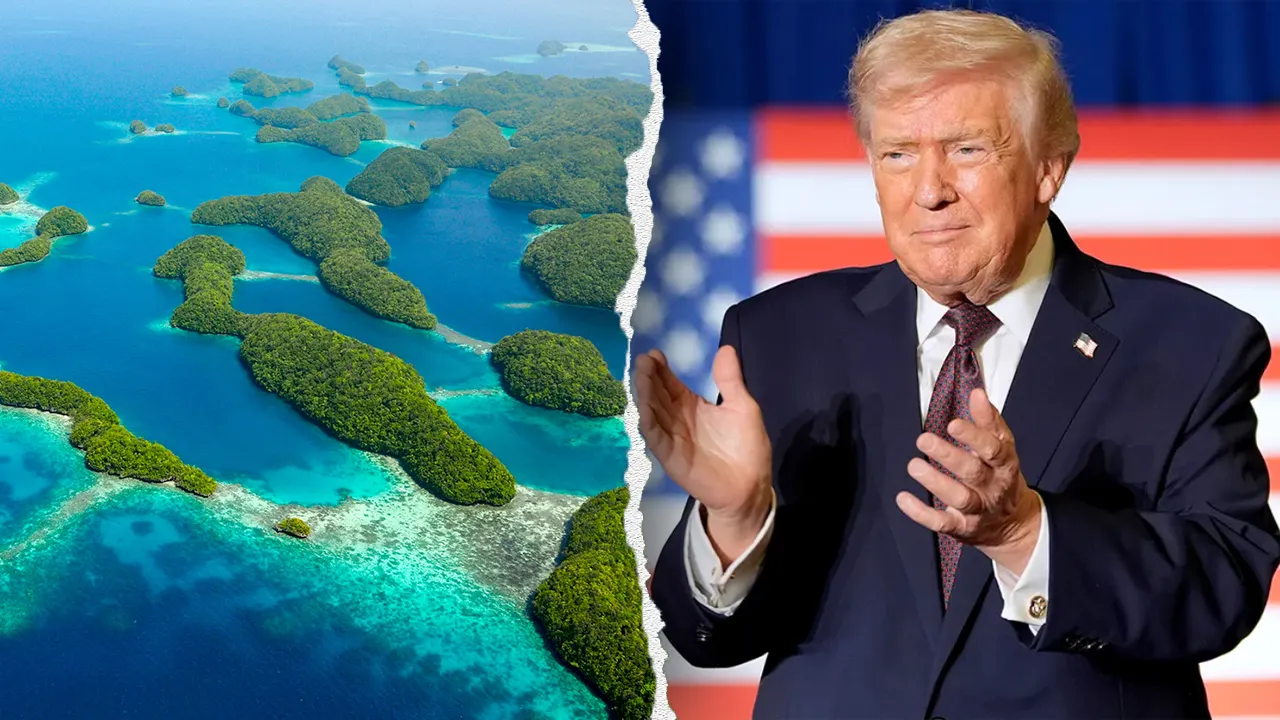
Palau Agrees to Accept U.S. Deportees in Exchange for Financial Aid
In a notable diplomatic arrangement that underscores the complex intersection of immigration policy, foreign aid, and international relations, the small Pacific nation of Palau has reached an agreement with the United States to accept up to 75 deportees in exchange for $7.5 million in foreign assistance. The agreement, announced by President Surangel Whipps Jr.’s office and the U.S. Embassy in Koror, specifically targets “third-country nationals” who have never been charged with a crime, allowing them to live and work in Palau. This arrangement comes at a time when Palau, with its modest population of approximately 18,000 people, faces significant labor shortages in critical sectors, potentially making this an advantageous solution for both nations despite the obvious power imbalance in the relationship.
The memorandum of understanding between the two countries represents a unique approach to addressing multiple challenges simultaneously. From Palau’s perspective, the influx of workers could help alleviate persistent labor shortages in needed occupations, while the financial aid package addresses immediate economic concerns. “Palau and the United States signed a memorandum of understanding allowing up to 75 third country nationals, who have never been charged with a crime, to live and work in Palau, helping address local labor shortages in needed occupations,” explained President Whipps’ office in their public statement. Meanwhile, U.S. officials framed the arrangement in terms of immigration enforcement priorities: “The United States deeply appreciates Palau’s cooperation in enforcing U.S. immigration laws, which remains a top priority for the Trump administration,” stated the U.S. Embassy in Koror, highlighting the political dimensions of the agreement.
Beyond the initial $7.5 million directly tied to accepting deportees, the agreement includes additional financial support aimed at strengthening Palau’s infrastructure and governance. The Trump administration has committed to providing an extra $6 million to support Palau’s struggling civil service pension plan system and $2 million for new law enforcement initiatives. These supplementary funds acknowledge the broader needs of this island nation and suggest an understanding that accepting deportees requires bolstering various governmental systems to ensure successful integration. For Palau, a nation that has previously served as a filming location for the reality TV series “Survivor,” these financial injections represent significant support for a country that has historically relied heavily on foreign aid to sustain its economy and governmental operations.
The agreement with Palau fits into a wider pattern of international arrangements being pursued by the current U.S. administration as it implements its immigration policies. As deportation efforts intensify, the United States has secured similar agreements with various countries around the world, including Uganda, Rwanda, Eswatini, South Sudan, Costa Rica, Panama, and El Salvador. Each of these arrangements involves unique considerations regarding humanitarian concerns, economic impact, and diplomatic relations. For small nations like Palau, such agreements present both opportunities and challenges—offering financial benefits and potential labor solutions while also raising questions about long-term social integration and the capacity of limited infrastructure to absorb newcomers.
This latest agreement builds upon a foundation of existing U.S. support for Palau. Under a separate deal negotiated during the Biden administration, Washington had already committed $889 million in aid over 20 years, according to the State Department. This long-term commitment reflects the strategic importance the United States places on its relationship with Palau, which occupies a significant geographical position in the Pacific region. The small island nation has consistently maintained close ties with the United States since gaining independence, with agreements covering defense, economic assistance, and various cooperative programs that benefit both parties despite their vastly different sizes and global influence.
The Palau-U.S. deportation agreement raises important questions about the ethics and efficacy of such arrangements in addressing complex immigration challenges. While presented as mutually beneficial—providing Palau with needed workers and financial assistance while helping the U.S. implement its immigration policies—critics might question whether smaller nations are being incentivized to accept responsibility for individuals the United States wishes to remove from its territory. As this program moves forward, close observation will be needed to assess how well the deportees integrate into Palauan society, whether the financial assistance adequately supports both the newcomers and host communities, and how this model of immigration management impacts bilateral relations in the long term. For the individuals being relocated, the outcome of this policy experiment will profoundly shape their futures in ways that extend far beyond the diplomatic language of memoranda and aid packages.