





White House Defends Second Strike on Alleged Drug Boat in Ongoing Anti-Narcotics Campaign
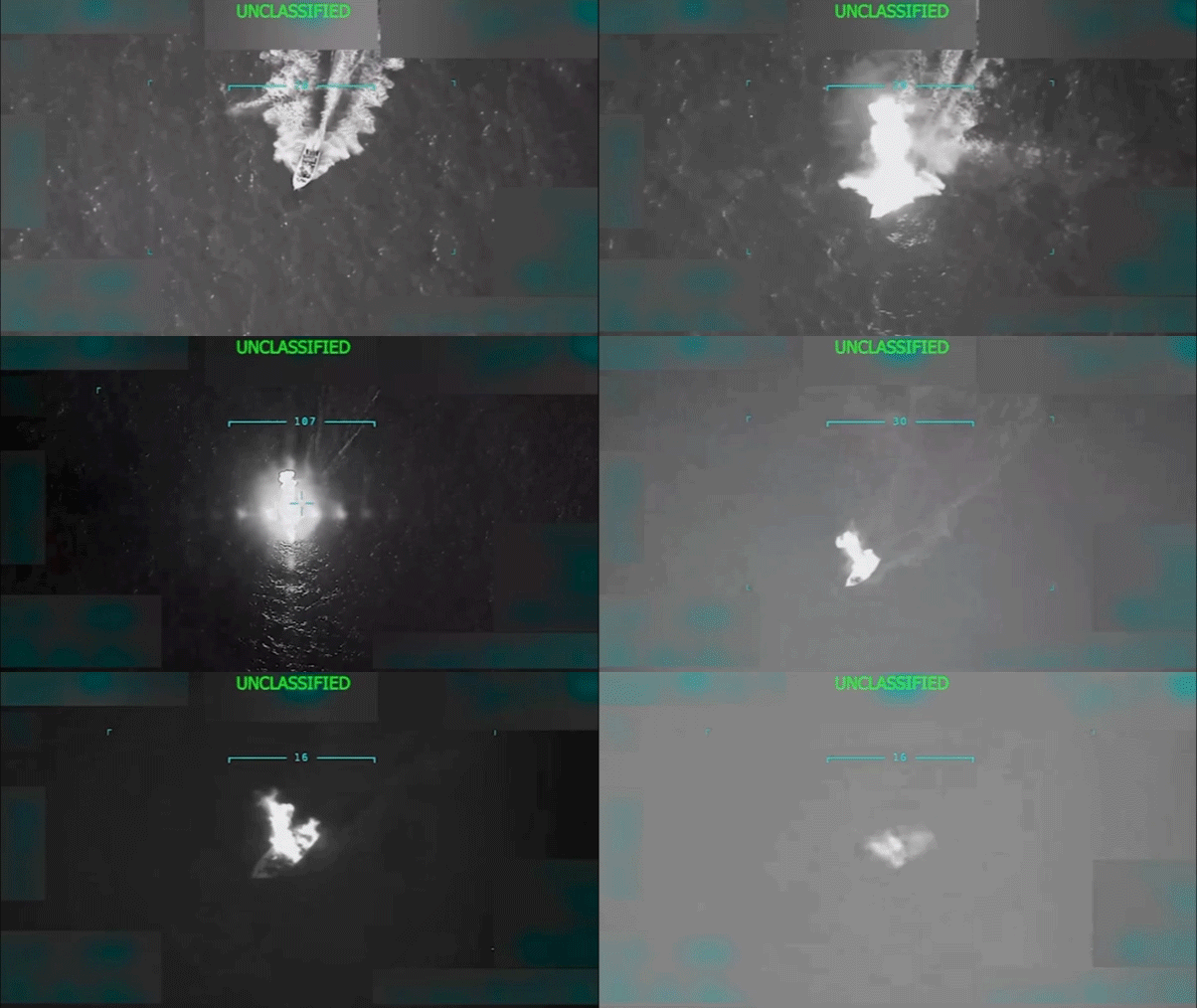
In a recent development that has drawn attention from lawmakers and the public alike, the White House confirmed conducting a second strike against suspected drug smugglers in the Caribbean in September. This operation is part of the Trump administration’s broader campaign targeting drug trafficking into the United States. The confirmation came after a Washington Post report alleged that Secretary of Defense Pete Hegseth had ordered the killing of everyone aboard the vessel, prompting scrutiny and calls for greater oversight. White House Press Secretary Karoline Leavitt, while confirming the second strike occurred, characterized it as a self-defense measure conducted in international waters “in accordance with the law of armed conflict.” The administration’s stance represents an important dimension of President Trump’s promised crackdown on drug trafficking, though questions remain about the operation’s execution and authorization.
The White House clarified command responsibility for the operation, explaining that while Secretary Hegseth authorized the strike on September 2, it was Admiral Frank “Mitch” Bradley, then-commander of Joint Special Operations Command, who ordered and directed the engagement. “Secretary Hegseth authorized Admiral Bradley to conduct these kinetic strikes,” Leavitt stated during a press briefing. She emphasized that Bradley “worked well within his authority and the law, directing the engagement to ensure the boat was destroyed and the threat to the United States of America was eliminated.” When pressed about whether the second strike specifically targeted survivors from the first attack, Leavitt declined to provide details but insisted the actions were within legal boundaries. She also explicitly rejected allegations that Hegseth had ordered the killing of all people on the boat, stating, “I would reject that the secretary of War ever said that,” while adding that President Trump has made clear his position that “if narco-terrorists are trafficking illegal drugs toward the United States, he has the authority to kill them.”
The administration’s messaging on this incident has revealed apparent discrepancies between the White House and Pentagon positions. While the White House acknowledged and defended the second strike, the Pentagon took a different approach, with spokesperson Sean Parnell completely denying the Washington Post’s reporting. “We told the Washington Post that this entire narrative was false yesterday,” Parnell wrote on social media, characterizing the story as “fabricated” and “fake news.” This divergence in official responses has only intensified questions about what exactly happened during the operation and how decisions were made in real time. The lack of alignment between two key national security entities raises concerns about transparency and consistency in communicating about military operations, especially those conducted as part of the administration’s counter-narcotics efforts.
Congressional leaders have responded to these reports with bipartisan calls for increased oversight of the military operations in the Caribbean. House Armed Services Committee leaders Representatives Mike Rogers (R-Alabama) and Adam Smith (D-Washington) issued a joint statement expressing their commitment to “providing rigorous oversight of the Department of Defense’s military operations in the Caribbean.” They indicated they are “taking bipartisan action to gather a full accounting of the operation in question.” Similarly, Senator Jeanne Shaheen (D-New Hampshire), the top Democrat on the Senate Foreign Relations Committee, announced her intention to call for an investigation, stating that Secretary Hegseth “owes answers to the American people immediately.” These responses highlight the seriousness with which lawmakers view allegations of potentially unauthorized or excessive force in military operations, regardless of the target.
The Caribbean strikes represent just one component of the Trump administration’s intensified approach to combating drug trafficking. The administration has conducted over 20 strikes against alleged drug boats in Latin American waters since taking office and has significantly increased military presence in the Caribbean region. This strategy aligns with President Trump’s campaign promise to aggressively address drug trafficking into the United States, which he has consistently identified as a critical national security concern. The administration views these operations as necessary measures to disrupt the flow of illegal narcotics that contribute to addiction and crime within American communities. The White House also confirmed that President Trump was scheduled to hold a meeting to discuss future actions concerning Venezuela, suggesting that regional security operations may be expanding beyond direct interdiction efforts.
As this situation continues to unfold, questions remain about the nature of authorization for lethal force in counter-narcotics operations, the rules of engagement being employed, and the oversight mechanisms in place to ensure operations are conducted within legal boundaries. The bipartisan concern expressed by lawmakers underscores the delicate balance between effective counter-narcotics operations and adherence to legal and ethical standards in military engagements. While the administration maintains that its actions are justified and necessary to protect American interests, the calls for investigation and additional oversight indicate that the manner in which these operations are conducted will remain under scrutiny. How the administration responds to these inquiries may set important precedents for future counter-narcotics operations and military engagements in the region.