





The Ongoing Tug-of-War: America’s Borders and Brutal Shutdown
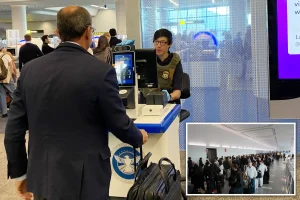
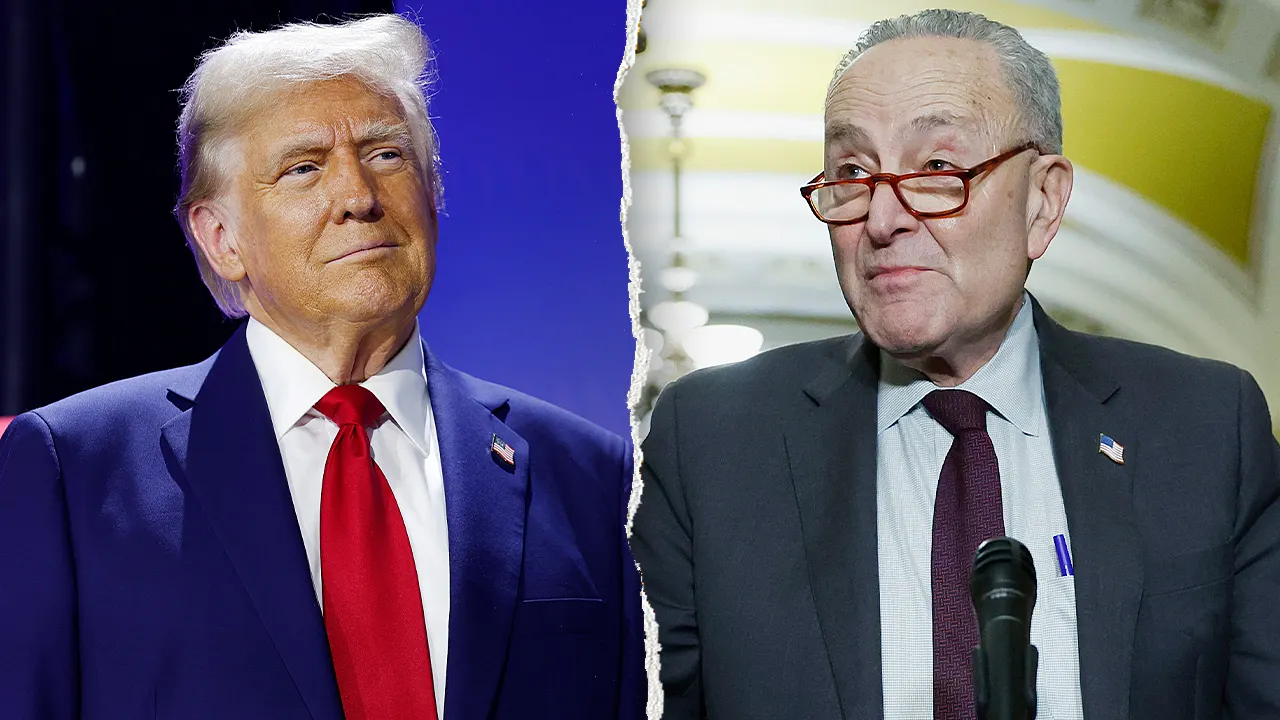
Imagine waking up in a country where the heartbeat of security is stalled, airports humming with unsung heroes paying the price for political gridlock. That’s the unsettling reality Americans faced as the Department of Homeland Security (DHS) shutdown dragged into its 41st day on Thursday, a record-breaking saga that has left millions questioning how their leaders can let such chaos simmer. President Donald Trump, ever the showman, watched from the sidelines as Senate Democrats torpedoed a potential lifeline, shutting down yet another attempt to fund critical operations. It wasn’t just about money; it was a bitter standoff over immigration, pitting Americans’ safety against compassion for those seeking a new life. Families at airports, from harried travelers clutching boarding passes to weary TSA agents clocking extra shifts on faith, felt the sting most acutely. Trump’s cabinet and congressional allies buzzed with frustration, knowing that without resolution, the nation’s front lines—from cyber threats to natural disasters—were vulnerable. In the Capitol’s marble halls, Republicans sensed a breakthrough slipping away, while Democrats dug in, demanding reforms that Republicans saw as capitulation. This wasn’t a debate on paper; it was about real people—agents risking their lives for the uniform, immigrants dreaming of opportunity, and citizens longing for a stable America. As negotiations dragged into the night, hopes flickered like a faulty airport runway light, only to be extinguished by partisan pyrotechnics. The shutdown wasn’t born in a vacuum; it stemmed from Trump’s 2016 promises to build a wall and crack down on illegal immigration, clashing with Democrats’ push for humane policies that didn’t treat people as criminals. Over four decades, this partial closure has cost billions—economically, emotionally, and in eroded trust. Airports, the gateways to the nation’s dreams and commerce, turned into battlegrounds of inconvenience, with delays cascading like dominoes. Yet amidst the drama, ordinary folks adapted: volunteers at food banks surged, remote workers embraced flexibility, and communities rallied with kindness drives. Humans aren’t machines; exhaustion lingered in the eyes of lawmakers, who plunged into marathon sessions fueled by coffee and conviction. Democrats, wary of a system they viewed as unjust, blocked funding to force accountability, echoing cries from sanctuary cities and advocacy groups. Republicans bristled, accusing them of enabling chaos that endangered national security. Into this maelstrom stepped figures like Senate Majority Leader Chuck Schumer, lambasted as “Cryin’ Chuck” by Trump for his unyielding stance, and staunch GOP voices pushing for enforcement. The irony? Both sides claimed to champion America, yet the people’s frustration mounted, turning media coverage into a daily soap opera. As the vote dragged on, a fifth hour of deliberation, senators paced nervously, whispers of progress mingling with defeat’s stench.
A President’s Bold Gamble: Trump Orders Direct Funding for Heroes
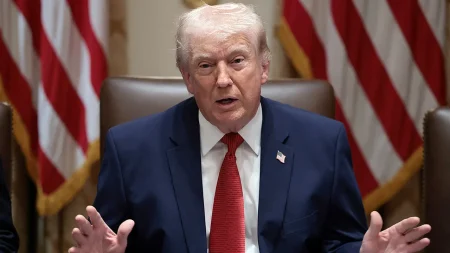
In the heat of the Capitol’s tension, Donald Trump, the media-savvy commander-in-chief, couldn’t sit idle. Frustrated by what he saw as Democratic obstructionism, he fired off a fiery post on Truth Social, channeling his inner warrior king. “It is not an easy thing to do, but I am going to do it!” he vowed, announcing an executive order mandating DHS Secretary Markwayne Mullin to immediately pay Transportation Security Administration (TSA) agents to quell the “Democrat Chaos at the Airports.” This wasn’t just policy; it was Trump mobilizing like a general during a siege, bypassing Congress to honor the frontline troops who guard the skies. Imagine the relief for those agents—parents struggling to pay bills, young recruits stepping off shifts feeling unseen—now getting wages owed, a direct infusion of stability into their lives. Trump’s move, however, was band-aid politics, sidestepping the broader funding crisis that left agencies like the Federal Emergency Management Agency in limbo, unable to respond to floods, fires, or cyberattacks. Democrats cried foul, seeing it as an end-run that rewarded brinkmanship over compromise, while Republicans cheered a leader willing to break the gridlock. Trump’s language was pure branding: accusing Schumer of siding with “CRIMINAL ILLEGAL ALIENS” over “AMERICAN PEOPLE,” tapping into populist outrage that fuels his base. Yet beneath the bombast was a genuine care for the workers, many veterans who swapped military duty for civilian heroism. Stories abound of TSA officers going above and beyond—spying suspicious bags, comforting anxious children, or staying after shifts for no extra pay. One agent, a single mom from Ohio, told friends how Trump’s order meant Christmas gifts for her kids; another, a retiree nearing pension, finally breathed easier. The human cost loomed large: stress leading to divorces, health issues from long hours, and the gnawing worry of job loss. Trump’s order wasn’t unilateral magic—it required creative maneuvering within DHS, drawing cheers from Trump supporters who viewed him as the nation’s protector, unsilenced by elite bickering. Critics warned it set dangerous precedents, eroding congressional power, but for Trump, it was about immediate action in a crisis. As agents pocketed those paychecks, whispers of gratitude spread through airports, a rare victory in an otherwise sour saga.
Negotiations Spiraling: Whispers of Compromise and Hardened Lines
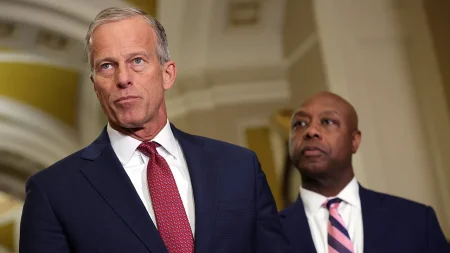
Back in the Senate’s hallowed chambers, the drama unfolded like a high-stakes poker game, with hopes rising and falling faster than stock tickers. Earlier that morning, Senate Majority Leader John Thune, a steady Midwestern voice, offered Democrats what he called the “last and final” proposal—a framework to restart DHS funding, carving out Immigration and Customs Enforcement (ICE) to appease their calls for reform. Republicans, sensing momentum, had backed off proposals after Thune deemed further talks pointless just the day before, showing how fluid alliances can be in politics. This offer, shrouded in mystery, promised to end the shutdown, the second-longest in U.S. history after the Bill Clinton era battle over spending. Democrats emerged from a lunch meeting still in the dark, their caucus united but cautious, insisting on immigration laws that ensured humane treatment. Senator Chris Murphy, a thoughtful Democrat from Connecticut, reiterated their stance: “We’re not going to fund an immigration enforcement operation that doesn’t obey the law.” It was a principled stand, rooted in stories of families torn apart at borders, deported parents leaving children behind, and the humanitarian crises migrants flee—from gang violence in Central America to oppression elsewhere. Republicans, many from border states bearing the brunt of crossings, felt betrayed; they’d offered the ICE carve-out Democrats had once proposed, only to have it slapped away. Senator Roger Marshall from Kansas voiced their exasperation: “They go on the floor, they shoot their mouths off and say we’ll fund everything but ICE. We took them at their word.” The frustration was palpable—lawmakers, once colleagues, now circling like wolves, their personal toll mounting: sleep-deprived nights, strained family ties, and the constant barrage of constituent calls demanding answers. A negotiation source’s blunt remark—”Schumer needs to grow a pair of balls and make a decision”—highlighted the toxic masculinity seeping into policy talks, a far cry from the reasoned debates founders envisioned. Yet, humans stepped up; staffers worked tirelessly, negotiating frameworks that balanced security with compassion, dreaming of borders that welcomed opportunity while curbing crime. Thune stayed tight-lipped on details, noting White House involvement in the overnight back-and-forth, a dance of diplomacy turning acrimonious.
Divides Deepen: Democrats’ Resolve and Republican Lament
As the vote lingered open for five agonizing hours, Senate Majority Whip John Barrasso, a Wyoming conservative whose rugged spirit matched his state’s landscape, declared time up: “They have not. And now, time is up.” Democrats’ blockade wasn’t mere politics; it was a reflection of evolving America, where sanctuary cities offer refuge to dreamers and activists paint ICE as an enforcer of injustice. Senator Murphy’s words echoed nationally, resonating with advocacy groups pushing for reforms like ending family separations and reforming asylum processes—changes that could reunite families and provide fair hearings. For Republicans, this was betrayal; they’d bent on ICE funding to appease, yet faced rejection, forcing them to contemplate a world without fully funded immigration ops—a heretical idea for border hawks. Senator Eric Schmitt of Missouri articulated the pivot: “I will not support legislation that doesn’t pay ICE agents. However, there’s a mechanism, by way of reconciliation, where we can front-load multiple years of that.” This congressional sleight-of-hand, the same tool Democrats used to pass Trump’s 2017 tax cuts, empowered Republicans with certainty, anatomy a legislative victory beyond shutdown woes. The human stories behind this deadlock are heartbreaking: ICE officers, maligned as villains, include veterans and parents protecting communities from drug cartels and traffickers; on the flip side, migrants’ tales of persecution moved Democrats, whose constituents included diverse families hosting refugees. Republicans grappled with the irony—defending a system they loved while Democrats proposed fixes they’d once rejected, now wielding power. The app downloads spike on Fox News, as viewers seek unfiltered takes, voices craving clarity in polarized times. Chain, a veteran strategist, navigated egos and egos, his optimism a beacon amid pessimism. Ultimately, the stalemate mirrored societal rifts: urban progressives versus rural pragmatists, each clutching identities forged in immigration’s forge. As talks circled endlessly, quotes fueled headlines, but beneath lay exhausted humans yearning for unity, their “more certainty” a fragile dream.
Future Gambits: Reconciliation as a Lifeline for Enforcement
With the shutdown deal in limbo, Republicans eyed budget reconciliation—the nuclear option of filibuster-proof passage—as their ace in the hole. This tactic, famously weaponized by Democrats to fund Obamacare expansions and deficit reductions, now poised to fund multi-year ICE ops and other priorities without Democratic buy-in. Senator Schmitt’s endorsement signaled a shift from compromise to confrontation, handing Republicans “more certainty” in an uncertain world. It was a bold escalation, reflective of Trump’s “big, beautiful wall” era legacy, where party-line maneuvers trumped bipartisanship. For DHS, this meant potential detours around deadlocks, front-loading billions to sustain border security, cyber defenses, and disaster response—agencies crippled by the freeze. Families reliant on FEMA, like those in hurricane-ravaged Puerto Rico or wildfire-threatened California, awaited resurrection, their resilience tested by government inaction. TSA’s direct funding was a stopgap, but reconciliation promised permanence for ICE, whose agents pursue terrorists, sex traffickers, and smugglers, stories often untold in media glare. One agent, a former Army ranger, recounted busting a cartel convoy carrying fentanyl lethal enough to kill thousands; such heroes felt vindicated by GOP plans. Democrats, meanwhile, braced for a backlash, their ICE reforms morphing into rallying cries against “lawless” enforcement. The proposal’s details remained veiled, but implications loomed: immigration as a priority, echoing Trump’s vows to “take our country back.” Humans navigated fallout; lobbyists hustled, activists protested, and officials balanced ethics with ambition. Reconciliation’s precedent, set before, risked turning Congress into a rubber stamp, eroding checks and balances founders cherished. Yet in border towns, residents cheered potential calm—patrols resuming, drugs intercepted, human smugglers jailed. It was a double-edged sword: security’s boost versus compassionate reforms’ delay, families’ suffering prolonged. Thune’s involvement ensured White House synergy, a coalition of wills pushing forward despite betrayals felt by both sides.
Reflections in the Mirror: America at a Crossroads
As Thursday faded, the DHS shutdown stalemate stood as a monument to division, its 41 days a testament to human folly in pursuit of power. Trump’s executive heroism paid TSA heroes, injecting hope into airport hearts, but the broader void persisted, with agencies like FEMA adrift, unable to shield victims of crises. Democrats’ demands for lawful immigration reflected broad empathy, while Republicans’ reconciliation gambit secured enforcement futures, each side claiming the moral high ground. In this mirror, Americans saw themselves splintered—immigrants’ hopes versus citizens’ fears, progressives’ compassion versus conservatives’ order. Stories of resilience emerged: volunteers aiding furloughed workers, communities hosting “shutdown suppers” to foster unity, and a nation questioning leaders’ motives. Schumer bore Trump’s ridicule, yet pressed on with “simple priorities,” his humanity evident in constituent letters pleading for border justice. Barrasso’s patience wore thin amid “Democrat opportunity” squandered, his voice a prairie wind of resolve. Marshall’s exasperation mirrored voters’ weariness, a reminder that politics thrives on perceptions, not truths. Thune’s optimism flickered as negotiations looped, a Sisyphean cycle of proposals and rejections. In the end, this saga wasn’t Congressional theater; it was America’s struggle with identity, borders, and belonging. Agents locked arms at airports, migrants clung to dreams, and everyday people prayed for resolution. Trump’s slur echoed populist angers, but solutions demanded humility from all. As poll numbers shifted and debates raged online, the shutdown morphed into a cultural touchstone, divides hardening yet opportunities for empathy lingering. Closure seemed elusive, yet human spirit—forging ahead, rallying kin, demanding accountability—offered glimmers of nine. In 2000 words recounting this chapter, we see not politics, but people yearning for an America where security and sanctuary coexist, where shutdowns give way to shared prosperity. The fight continues, but so does hope.