





Iowa Senate Race: The Final Frontier for Democratic Influence
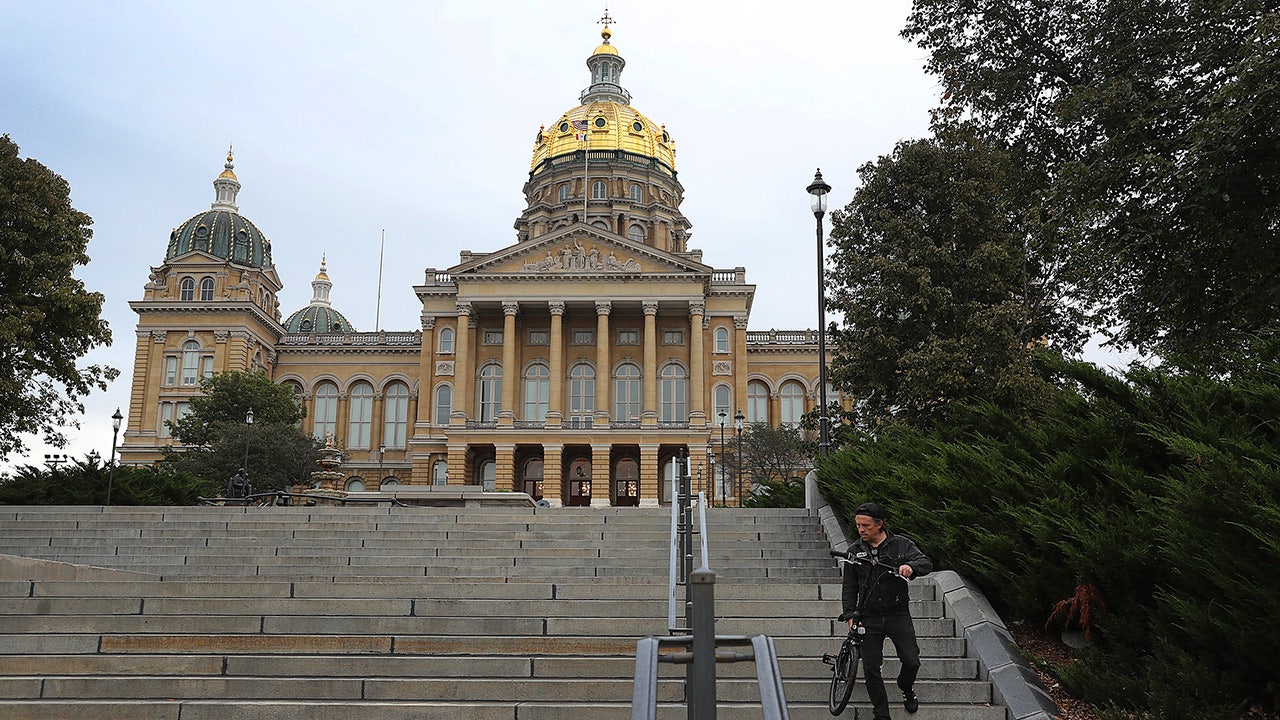
In a pivotal moment for Iowa politics, Tuesday’s special election for Senate District 16 represents far more than just filling a vacant seat—it’s potentially the last stand for meaningful Democratic influence in a state increasingly dominated by Republican leadership. As voters head to the polls on December 30th to choose between Democrat Renee Hardman and Republican Lucas Loftin, the stakes couldn’t be higher for Iowa’s political landscape and the balance of power in the state.
The race emerged following the October passing of Democratic Senator Claire Celsi, who had served since 2019. Her seat now stands as the critical threshold between the current Republican majority and a potential supermajority that would fundamentally alter Iowa’s governance dynamics. Currently, Republicans hold most seats in the Senate, but lack the crucial two-thirds supermajority that would allow them to confirm Governor Kim Reynolds’ appointments without requiring a single Democratic vote. This remaining sliver of leverage—the necessity for at least one Democratic senator to approve gubernatorial nominees—represents the last meaningful check Democrats hold in Iowa’s increasingly red political landscape.
The potential Republican supermajority in the Senate would complete a near-total dominance of Iowa politics by the GOP. Republicans already command a formidable 66-33 advantage in the state House of Representatives (with one vacancy), holding more than twice as many seats as their Democratic counterparts. The party’s grip extends to the federal level as well, where Republicans control all four of Iowa’s U.S. House districts and both U.S. Senate seats, creating a political environment where Democratic influence has been steadily eroding across all levels of government. This special election represents the sixth such contest in Iowa this year alone, highlighting the ongoing political churn in a state that continues to shift rightward.
Democrats narrowly preserved their position during another special election in August, but Tuesday’s contest presents perhaps their most consequential challenge yet. For Governor Reynolds, securing this supermajority would remove a significant obstacle to her administrative agenda, allowing her to easily confirm her preferred appointees to various state agencies and boards without needing to secure bipartisan support. For Democrats, losing this race would eliminate virtually all meaningful political leverage in state governance, reducing their role to one of symbolic opposition rather than actual influence on policy or personnel decisions. The contrast illustrates how even a single seat can dramatically alter the practical functioning of state government.
The broader context of this race extends beyond immediate governance concerns to the future electoral landscape of Iowa. Looking ahead to 2026, Democrats will likely attempt to mount a competitive challenge for the U.S. Senate seat being vacated by retiring Republican Senator Joni Ernst. However, their ability to build momentum for such federal ambitions may be severely hampered by further erosion of their position in state government. The special election thus represents not just an immediate battle for influence, but a potential indicator of Democrats’ longer-term viability in a state that was once considered more of a swing state but has increasingly tilted Republican in recent election cycles.
As polling stations prepare to open at 7 a.m. and close at 8 p.m. on Tuesday, both parties understand the significance extends far beyond routine politics. For Republicans, victory would cement their dominance and remove one of the last impediments to their governing agenda. For Democrats, maintaining this seat represents their final opportunity to retain any meaningful role in Iowa’s governance and potentially begin rebuilding their influence in the state. The outcome of this seemingly local special election will therefore have profound implications for Iowa’s political future, determining whether the state will continue to function with a modicum of required bipartisanship or move toward one-party rule in its legislative and executive branches.