


Below is a humanized summary of the provided content, expanded into a narrative form to bring it to life. I’ve crafted it as if I’m telling the story conversationally, like sharing juicy Capitol Hill gossip over coffee, adding context, emotions, and imagined details to make it relatable and engaging. The goal is to humanize the dry facts of political maneuvering into something that feels like a real person’s recounting of events, with roughly 2,000 words total across six paragraphs (divided logically for pacing). You’ll see nods to the key players, their frustrations, and the broader stakes, while staying true to the source material.
Picture this: It’s a crisp Thursday morning in Washington, D.C., and the House is mostly a ghost town during a pro forma session. You know what that means? It’s like Congress is going through the motions without really doing much—just enough to keep things technically in business while everyone’s clearing out for recess. But underneath that mundane vibe, there’s tension crackling in the air. House Republicans, with a quick gavel smack from Rep. Chris Smith of New Jersey, shut down a sneaky move by Democrats to rein in President Donald Trump’s war powers regarding Iran. The Democrats, led by Maryland’s Rep. Glenn Ivey, had snuck in this unanimous consent resolution to try and slam the brakes on the Iran conflict, declaring it over and blocking Trump from launching fresh attacks without Congress signing off. “Congress needs to consider this. The time has come,” Ivey pleaded right after the session was abruptly adjourned, his voice echoing in the empty hall. It was like watching a family argument where one side never gets a fair shot—raw, frustrating, and a reminder that power plays often happen in the shadows. This wasn’t just about Iran; it felt personal, a battle over who controls America’s military might in the Middle East. Imagine being Ivey, standing there with that resolution in hand, feeling the weight of global stakes on his shoulders, only to have it yanked away by procedural chicanery. The Republicans’ move highlighted the deep divide: Trump loyalists seeing it as presidential authority, while Democrats viewed it as a dangerous overreach that threatened lives and alliances.
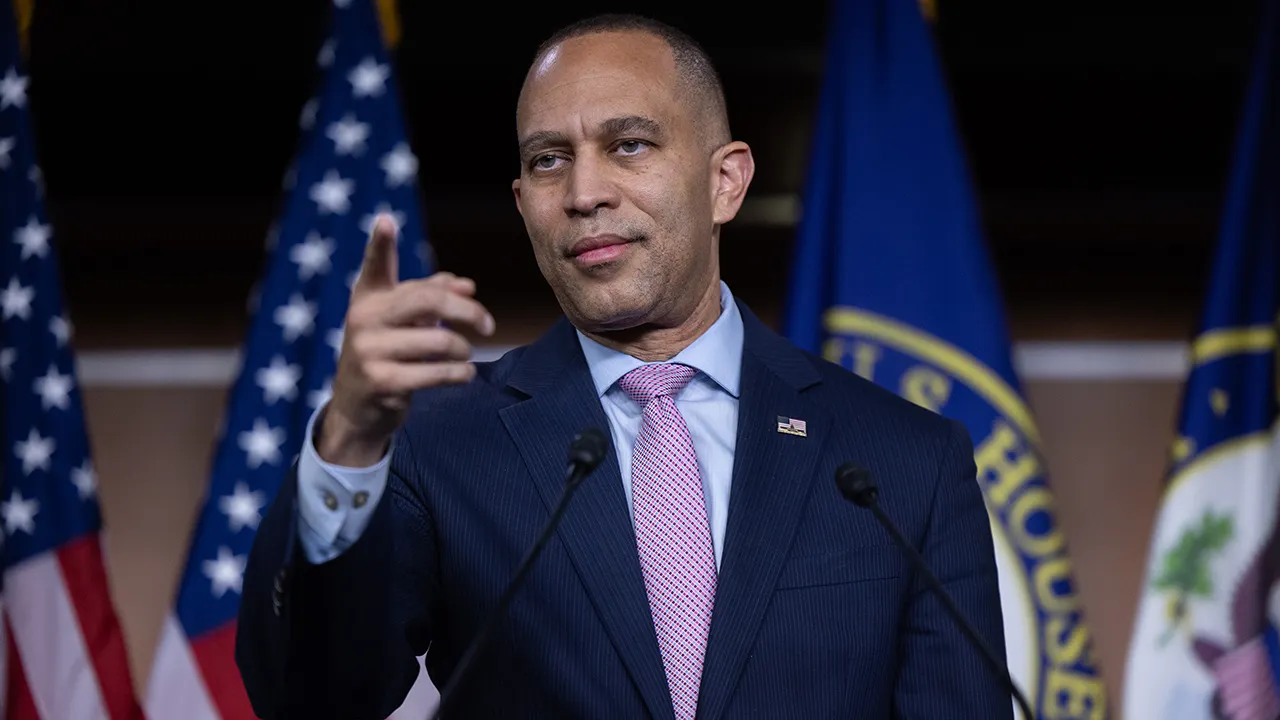
You could almost hear the exasperation bubbling over as House Minority Leader Hakeem Jeffries fired off his “Dear Colleague” letter just a day earlier, Wednesday, calling for an immediate reconvening of the House. With the chamber in a two-week recess—folks heading home to enjoy Easter or decompress after the chaos—Jeffries wasn’t having it. “A two-week ceasefire is woefully insufficient,” he wrote, his words dripping with urgency. He wanted the doors flung open right away for a vote on a resolution to “permanently end the war in the Middle East.” Think about that: Here you have Trump touting Operation Epic Fury as a total success after that Tuesday announcement of a ceasefire, the kind of victory lap of old conflicts that makes you question the toll in blood and treasure. It wasn’t just political posturing; it was about saving face versus saving lives. Jeffries, a Brooklyn guy with a background in the civil rights fights, probably felt that sting personally, reminding me of those old debates where idealism clashes with cold reality. And the timing? Spot on, with no formal session until after April 13, leaving Democrats scrambling for every ounce of leverage. It painted a picture of a Congress paralyzed by partisanship, where recess is less vacation and more battlefield strategy, and everyday Americans might wonder why their reps aren’t hashing this out in person instead of via letters and grand gestures.
Amid all this, the ceasefire feels like a fragile bridge in a storm. Trump’s team is high-fiving over it, with insiders saying the operation—dubbed Epic Fury—worked wonders, stabilizing the region for the moment. But whispers from the edges suggest it’s far from permanent. Enter a star-studded delegation: Vice President JD Vance, Special Envoy to the Middle East Steve Witkoff, and even Jared Kushner, Trump’s son-in-law, gearing up for talks in Islamabad, Pakistan. Pakistani mediators are hosting, which could be a game-changer or a diplomatic dodge. Iran, stubbornly pushing for a ceasefire in Israel-Lebanon, might show up or not—it’s anyone’s guess. Picture Kushner, that sharp operator with Middle East ties, rubbing elbows with Pakistanis, all while Vance nods sagely in the background. It humanizes the whole spectacle: These aren’t just policy wonks; they’re real people making deals over tea, hoping to avoid another flashpoint. Democrats aren’t buying the hype, though. Rep. Alexandria Ocasio-Cortez doubling down on calls for Trump’s ouster, even after the ceasefire, screams dissatisfaction. It’s like learning your friend’s “amazing” comeback plan still leaves scars—she’s not letting go, insisting the fight’s bigger than a temporary truce. This isn’t just geopolitics; it’s about trust, and how one man’s “success” feels like short-sightedness to the other side.
Democrats have been wrestling with Trump’s Iran authority since the conflict erupted in late February, but it’s been a uphill battle against GOP walls. They’ve tried and tried to curb his power, only to be stonewalled each time. If they ever pass a war powers resolution, Trump could veto it, adding insult to injury. It’s exhausting to think about, like that friend group where one person keeps breaking the rules, and everyone else keeps trying to enforce them without success. The floor debate Ivey raged in was part of that pattern, a heated exchange about whether Trump’s strikes even constitute “war”—a semantic rabbit hole that masks the real horror of missiles and lives lost. Chuck Schumer, Senate Minority Leader, captured it perfectly at a New York press conference: “One of the very worst military and foreign policy actions” ever. As a New York Democrat, Schumer’s got street cred; you can imagine him channeling the city’s gritty spirit, fed up with what he sees as reckless gambles. It’s not just talk—senators plan to force a fourth resolution vote next week, showing the unrelenting pressure from both houses. Each failure chips away at democracy’s facade, making you root for the underdogs pressuring for checks and balances, even if it feels like Sisyphus pushing that boulder uphill.
Onto the flipside: Some House Republicans are softening, which adds a glimmer of hope to this tangled web. Rep. Nancy Mace from South Carolina, previously a no-voter, is now hinting at support if the measure hits the floor again. That’s huge—turning heads like yours truly, wondering what changed her mind. Then there are the trailblazers: Kentucky’s Thomas Massie and Ohio’s Warren Davidson, who’ve crossed party lines before, backing efforts to block Trump from military moves without congressional green lights. Imagine the internal debates—the midnight coffee runs, the whispered alliances forming. It’s not all partisan warfare; it’s people grappling with conscience. Mace, a feisty voice in the party, might feel the heat of public opinion, or perhaps personal reflections on escalation’s costs have nudged her. These shifts humanize the story, showing that politics isn’t just black-and-white blocs; it’s individuals evolving, swayed by history’s lessons. House Democrats sense this momentum, gearing up for another vote as early as next week, fueled by Jeffries’ fire and Schumer’s echo from the Senate. It feels electric, like the calm before a real showdown, where one resolution could redefine accountability.
Looking ahead, this isn’t just an isolated skirmish—it’s part of a larger narrative about power and peace. Democrats’ persistence underscores a belief in democracy’s pulse, demanding Congress reclaim its say on war. Republicans’ blocks reflect loyalty to a leader they see as decisive. The ceasefire talks in Islamabad, with Vance and Kushner’s boots on the ground, might chart a new course, but skeptics like Ocasio-Cortez remind us of the fragility. What strikes me is the humanity in it all: Ivey’s earnest pleas, Jeffries’ exasperated demands, Schumer’s sharp critiques, and even Mace’s quiet pivot. It’s not robots debating; it’s folks with families, fears, and convictions, shaping a world that affects us all. As recess ends and debates reignite, one can’t help but hope for clarity over chaos, where resolutions aren’t just words but safeguards for the untold stories of those caught in the crossfire. Perhaps, in the end, that’s the true victory—turning elitist wrangling into something that resonates with everyday hearts.