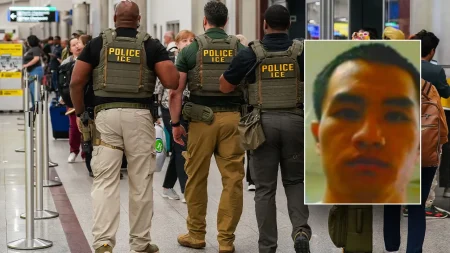






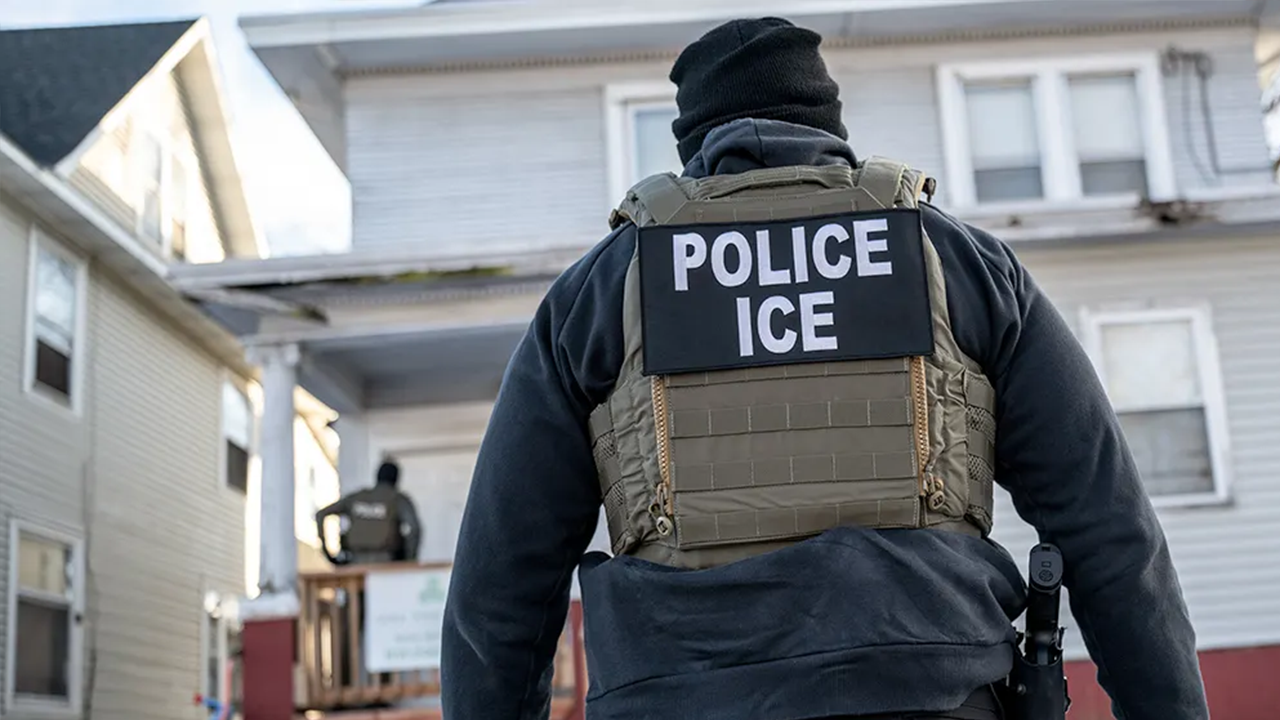
In the heart of Portland, Oregon, where the streets are often alive with passionate voices demanding justice, a stark confrontation unfolded over the weekend that shook the community to its core. Mayor Keith Wilson, a man deeply rooted in his city’s progressive spirit, took a bold stand, urging U.S. Immigration and Customs Enforcement (ICE) to abandon their facility and leave the Portlanders they were meant to serve. This wasn’t just another political statement; it was a heartfelt plea born from witnessing federal agents unleash a barrage of tear gas, pepper balls, flash-bang grenades, and rubber bullets on a crowd of demonstrators, including vulnerable young children. As a father and leader himself, Wilson couldn’t ignore the human cost—the fear in the eyes of families, the confusion on kids’ faces as chemical agents burned their skin and filled the air with chaos. He painted the scene vividly: a peaceful daytime protest turned into a nightmare, where most participants posed no threat, violating no laws, yet were treated as enemies. Imagine being a parent there, holding your child’s hand while toxic fumes cloud the atmosphere, forcing you to shield an innocent from the very forces sworn to protect citizens. Wilson’s words echoed this outrage, a raw, emotional outcry against what he saw as an unconstitutional overreach, making the powerful feel human pain too.
Diving deeper into the mayor’s impassioned response, it’s impossible not to feel the personal anguish woven through his demands. “To those who continue to work for ICE: Resign,” he implored, speaking not just as an official but as a compassionate soul grappling with moral clarity. He urged those controlling the facility to pack up and leave, branding their actions as a shameful trampling of the Constitution through violence that lost all legitimacy. In a gut-wrenching twist, Wilson confronted them directly: “Go home, look in a mirror, and ask yourselves why you have gassed children. Ask yourselves why you continue to work for an agency responsible for murders on American streets.” This isn’t cold rhetoric; it’s the cry of a man who envisions the agents as everyday people, perhaps parents or friends, forced to reckon with their choices. He highlighted how no one has a gun to their head, yet they participate in failing the very citizens they vowed to serve. For Portlanders, this wasn’t abstract politics—it hit home, reminding them of the fragility of trust in authority. The mayor’s call to action resonated because it bridged the gap between the powerful and the powerless, urging empathy over enforcement.
Yet, Wilson’s defiance wasn’t born in isolation; it mirrored a burgeoning national wave of unrest and bipartisan criticism toward immigration tactics that have spiraled out of control. Just a month prior, tragic killings in Minneapolis laid bare the dangers: Renee Nicole Good, an unarmed woman, was shot dead by an ICE agent on January 7, and Alex Pretti, a dedicated ICU nurse and community hero, was fatally gunned down by Border Patrol agents on January 24 while filming operations and trying to help others. Pretti’s story cuts deep—he was sprayed, shoved, and beaten before being shot multiple times, his lawfully owned handgun yanked from him in a frenzy. As a nurse who saved lives during the pandemic, his death symbolizes the ultimate betrayal: an unarmed man aiding a fallen person, turned into a casualty of supposed justice. Families like theirs, ripped apart by bullets instead of dialogues, fuel the fire of cities like Portland, where people are impatient yet methodical in pushing back legally. Wilson shared that impatience, emphasizing that while evidence-gathering and prosecutions demand time, the fight for dignity can’t wait—every delay feels like another wound to the community soul.
Amid this tension, Portland has armed itself with a new ordinance, slated into effect last month, aiming to impose fees on detention facilities resorting to chemical agents—a tangible way to hold feet to the fire. The mayor promised to operationalize this law swiftly, diligently documenting the weekend’s chaos to build an ironclad case for accountability. “The federal government must, and will, be held accountable,” he vowed, infusing hope into the hardworking Portlanders who witnessed the horror firsthand. This isn’t just bureaucracy; it’s a community reclaiming its narrative, where everyday advocates—teachers, activists, and neighbors—preserves evidence like cherished family photos, ensuring voices are heard. For many, including immigrant families who’ve built the city’s vibrant fabric, this stance affirms a longing for safety and dignity in a world that too often turns violent. Imagine the relief of a newcomer to America, finally settling into a home, only to see protests erupt and wonder if their asylum story could end in tragedy—Wilson’s words offer solace, pledging solidarity that feels personal and protective.
Portlanders, proud of their resilient spirit, showed up in droves for that protest, standing in peaceful solidarity against federal overreach, embodying shared values of compassion and human rights. These weren’t faceless masses but neighbors, friends, and families united by a common rage against injustice, their presence a testament to the city’s unwavering heart. Mayor Wilson celebrated them as heroes of the day, showcasing strength and clarity even amidst the sting of munitions. It’s this collective courage that humanizes the struggle—parents pushing strollers through tear gas, elderly protesters shielding the young, all driven by a belief that love and justice triumph over fear. Their stories echo in kitchens and on front porches, where discussions turn to how one bad decision by agents can shatter lives irrevocably, yet how community bonds mend them stronger.
Looking ahead, Wilson’s message underscores a broader truth: no nation thrives when agents wield deadly force against those they serve, eroding the very fabric of democracy. As Portland vows to protect its immigrant neighbors—those who’ve poured sweat and dreams into caffeinated startups, eclectic art scenes, and bustling markets—the mayor’s call isn’t just for resignation or departure; it’s a wake-up for all Americans to confront the shame of systemic violence. This isn’t political theater; it’s a human plea for mirrors facing inward, for accountability that honors the lives lost and the children gassed. In Portland’s streets, marked by both beauty and battle, the fight continues, reminding us that empathy isn’t weakness—it’s the antidote to a divided land, where every protester’s story reminds us of our shared humanity.