






America’s Economic Recovery Under Trump: Progress, Perception, and the Path Forward
The American economy is showing signs of renewed vitality under President Donald Trump’s second administration, yet a striking disconnect exists between improving economic indicators and public sentiment. As the country navigates this complex economic landscape, understanding both the statistical gains and the persistent affordability concerns of everyday Americans has become essential to evaluating the administration’s economic performance.
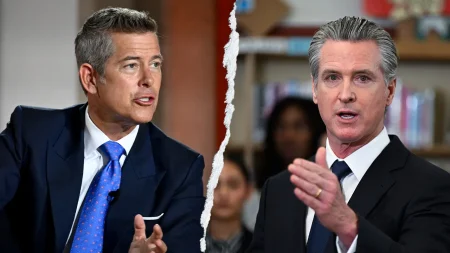
According to economist Stephen Moore, a former Trump adviser and co-founder of the free-market advocacy organization Unleash Prosperity, the economic data tells a positive story. “The reality is what the numbers show,” Moore explains, pointing to a $1,200 increase in median family income this year after adjusting for inflation. This economic growth extends beyond just income measures, with approximately 160 million Americans seeing gains in retirement savings thanks to stock market performance. The latest economic reports indicate impressive 4.3% growth—a robust rate that suggests the recovery is not only underway but accelerating. These objective measures paint a picture of an economy gaining momentum under policies designed to stimulate growth and prosperity across various sectors. For the approximately 160 million Americans with retirement savings tied to the stock market, these improvements represent tangible financial progress affecting not just the wealthy but middle-class families as well.
Despite these encouraging indicators, most Americans continue to express deep dissatisfaction with the economic situation. A recent Fox News national survey found that 76% of voters rate the economy negatively—an increase from 67% in July and worse than the 70% reported at the end of President Biden’s term. Perhaps more concerning for the administration, voters are three times more likely to say Trump’s policies have hurt rather than helped them personally. This perception problem represents a significant political challenge, as Americans continue to feel the squeeze of costs in areas that impact their daily lives. As Moore acknowledges, “People tend to focus on the things that are rising in price, and I understand that.” While he notes decreases in gasoline prices, airline tickets, and some everyday items, these improvements haven’t sufficiently offset the psychological impact of persistent inflation in essential categories like housing, healthcare, and groceries that form the backbone of household budgets.
The gap between economic data and public sentiment isn’t merely a communication failure but reflects a deeper reality about how Americans experience the economy in their daily lives. When families struggle to afford housing, put food on the table, or manage healthcare costs—regardless of what broader economic indicators suggest—their lived experience becomes their economic reality. This disconnect has created political openings for Democrats, whose messaging focused on affordability has resonated in recent state and local elections. The administration faces the challenge of not only continuing to improve economic fundamentals but also demonstrating genuine understanding of the financial pressures facing ordinary Americans. As Moore suggests, “People in the middle and working class want to know that this president understands the struggles of working 40 hours a week and still having a hard time meeting their bills.” This empathy gap may be as important to address as the policy specifics themselves.
Moore draws an instructive historical parallel between Trump’s current situation and Ronald Reagan’s early presidency, which also followed a period of economic turbulence. “Trump should use an old line from Ronald Reagan, because Reagan’s first 18 months in office were very tough. We had a very bad economy as a residual effect from Jimmy Carter. And Reagan told the American people, stay the course, these policies are going to work and they’re going to make America better off.” This comparison suggests that economic recoveries often require patience and consistent messaging to bridge the gap between when policies are implemented and when their benefits become widely felt by the public. The challenge for the administration is to maintain both policy consistency and public confidence during this transition period, particularly when many Americans remain skeptical about whether the administration’s approach will ultimately deliver on its affordability promises.
Looking ahead, Moore expresses optimism about the trajectory of the American economy, predicting that the current momentum will continue to build. “In the last couple of months, the economy has really sped up,” he notes, adding that he expects “2026 to bring very strong continued economic growth.” The coming months will be crucial in determining whether this economic acceleration translates into broader improvements in affordability and financial security for average Americans. The administration’s success will likely be judged not just on statistical measures of growth but on whether Americans feel genuine relief from economic pressures in their everyday lives. Bridging this perception gap may require both continued policy focus on cost-of-living issues and more effective communication that acknowledges current hardships while articulating how current policies are designed to address them. If the administration can successfully navigate this challenge, the improving economic fundamentals may eventually align with public perception, creating both economic and political dividends as the recovery continues to unfold.