





In the ever-twisting world of American politics, where principles often bend like willow branches in a storm, a video clip has bubbled back to the surface that’s got everyone scratching their heads and raising eyebrows. Picture this: former U.S. House Speaker Nancy Pelosi, back in 2011, standing at a press event, being asked point-blank by a reporter if then-President Barack Obama’s strikes on Libya needed congressional authorization. Her response? A crisp, no-nonsense “Yes,” echoing through the room like a gavel’s final bang. She was defending the Obama administration’s decision to launch Operation Odyssey Dawn, a series of airstrikes aimed at protecting civilians during Libya’s uprising against dictator Muammar Gaddafi. The reporter pressed further: “You’re saying that the president did not need authorization initially and still does not need any authorization from Congress on Libya?” And Pelosi? She doubled down with unwavering certainty, painting a picture of executive power that prioritized swift action over legislative checkboxes. It’s the kind of moment that feels raw and unfiltered, capturing a leader’s conviction in the heat of crisis. Fast-forward to today, and this clip isn’t just history—it’s a spotlight on perceived hypocrisy, especially with tensions in the Middle East simmering like a pot ready to boil over. People online are sharing it furiously, with hashtags like #PelosiFlipFlop trending, as folks debate whether political winds are what really guide these views. It’s human nature to cling to consistency, and yet, in the messy theater of Washington, D.C., ideals often get reshuffled faster than a deck of cards. Watching her in that 2011 video, you can almost feel the gravity of the time—Libya was erupting, protests turning into chaos, and Obama was weighing heavy decisions that could shape global stability. Pelosi’s stance then seemed rooted in pragmatism, the urgency of stopping a madman before he slaughtered more innocents outweighing the need for formal approvals. But oh, how the tables turn, making you wonder if it’s the president at the helm or the party colors that dictate these calls. This resurgence isn’t just a random TikTok loop; it’s a reminder of how past words can haunt, prodding at our collective memory and sparking debates in living rooms across the country about trust, power, and the Constitution’s gray areas.
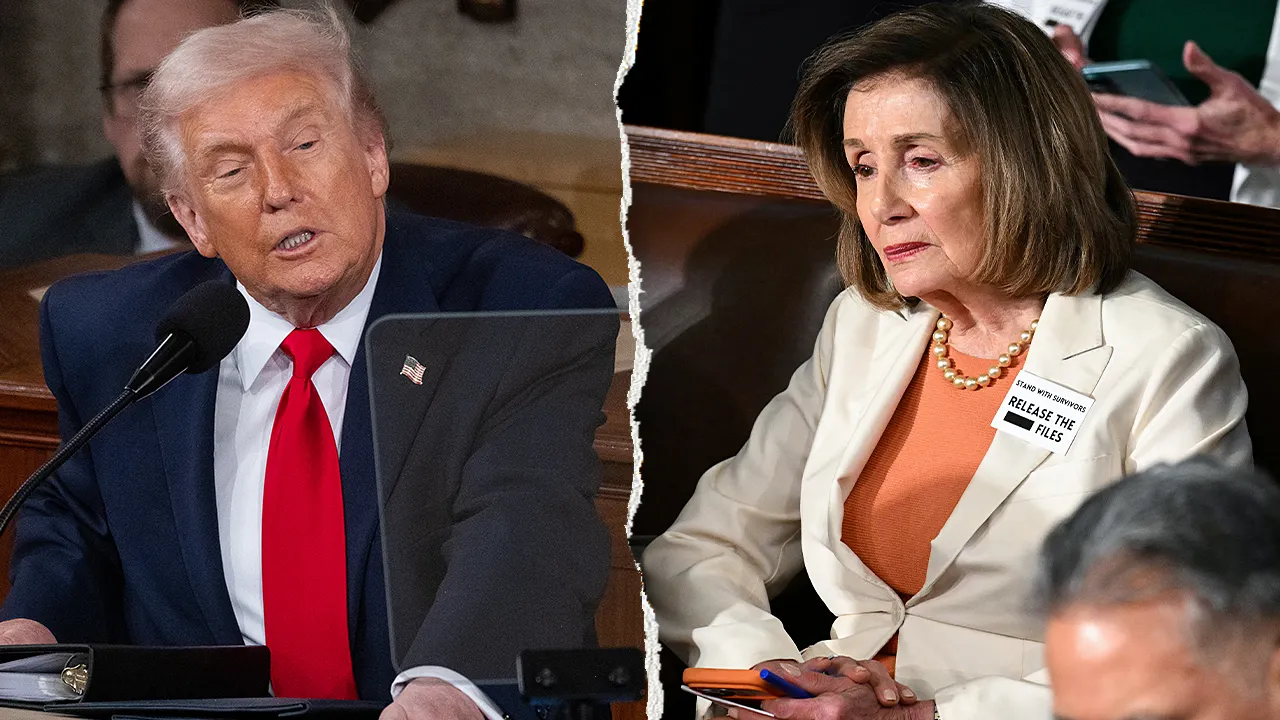
Now, juxtapose that straightforward defense with Pelosi’s sharp condemnation of President Donald Trump’s recent military actions, and you’ve got a tale of contrasts that pulls at the heartstrings of American ideology. Just days ago, Trump authorized joint U.S.-Israel strikes in Iran, targeting the country’s military leadership and ultimately leading to the death of Iran’s Supreme Leader, Ayatollah Ali Khamenei. The operation was framed as a preemptive measure to thwart Iran’s nuclear ambitions, a move that echoed the bold gambles of past presidencies. But Pelosi? She jumped into the fray with fiery words, slamming the strikes on her X account (formerly Twitter) as reckless and unconstitutional. “President Trump’s decision to initiate military hostilities into Iran starts another unnecessary war which endangers our servicemembers and destabilizes an already fragile region,” she wrote, her tone dripping with alarm. It felt personal, like a protective mother warning against a playground bully, urging quick congressional intervention to reel in the executive branch. She pointed to the Constitution’s war powers clause, insisting that no president should plunge the nation into conflict without Congress’s explicit nod—a call echoed by fellow Democrats pushing a war powers resolution to curb any further unilateral moves. Publicly, it played out like a family feud, with social media exploding in threads where everyday folks weighed in, some cheering Pelosi’s vigilance, others labeling it selective outrage. At its core, this isn’t just about policy differences; it’s about the emotional weight of leadership. Imagine the sleepless nights lawmakers spend, balancing national security with democratic checks, their families bearing the invisible toll. Pelosi’s pivot highlights how personal experiences and shifting geopolitics can reshape stances overnight, leaving voters to navigate a maze of integrity and maneuvering. For many, it evokes nostalgia for a more bipartisan era, while others see it as the tough love America needs to avoid endless quagmires abroad.
Digging deeper into the Iran operation, it’s a story wrapped in secrecy and high-stakes drama that reads like a thriller novel come to life. On that fateful Saturday, U.S. forces, alongside Israeli counterpart, executed precise strikes that eliminated key figures in Iran’s regime, including Khamenei, whom they viewed as a ticking nuclear time bomb. The administration cited intelligence pointing to Iran’s relentless push for weapons of mass destruction, a threat that had simmered for years, much like unresolved tension between old rivals. This wasn’t a spontaneous outburst; Trump’s team framed it as a calculated intervention to prevent escalation, drawing parallels to historical preemptions that saved lives and shifted global balances. Yet, the ripple effects were immediate—regional allies ducked for cover, oil markets fluctuated with nervous energy, and families of deployed troops braced for backlash. From a human perspective, it’s easy to empathize with the uncertainty; servicemembers, gearing up in the dead of night, texting loved ones with promises of return, while diplomats scramble behind closed doors. Pelosi’s criticism underscored this vulnerability, painting the operation as an invitation to chaos in a neighborhood already scarred by sanctions and skirmishes. Some supporters of Trump hailed the strikes as a bold stroke for peace, akin to dismantling a rogue element before it spirals out of control, while critics warned of retaliatory cycles that could engulf allies. It’s a poignant reminder of war’s human cost—the pride of a mission accomplished tinged with the dread of unintended consequences. Watching this unfold, one can’t help but feel the pulse of history, where daring decisions forge legacies but also leave scars on the soul of a nation. In coffee shops and boardrooms alike, conversations swirl around whether such actions flip the page on peace or merely inscribe new chapters of conflict.
To truly grasp the irony Pelosi’s stances reveal, let’s rewind to Obama’s Libya intervention in 2011, a chapter in Middle East history that’s as complex as it is cautionary. Back then, the Arab Spring was in full bloom, protests sweeping nations like wildfire, and Libya was no exception. Muammar Gaddafi, the infamous “Mad Dog of the Middle East” who’d ruled with an iron fist since 1969, faced a people’s revolution in cities like Benghazi. His response was brutal, dispatching troops to crush dissent, massacring civilians in what Obama’s administration decried as genocide. Enter the U.S., partnering with NATO allies to launch Operation Odyssey Dawn—a series of devastating airstrikes aimed at crippling Gaddafi’s advance and safeguarding rebels. Obama justified it as a humanitarian imperative, protecting vulnerable populations under the guise of international law, much like a global good Samaritan stepping in. It was a time of intense global scrutiny, with news outlets broadcasting live from the frontlines, and citizens worldwide holding their breath, hoping for a just outcome. Yet, behind the scenes, the operation raised flags about legality; Obama consulted lawmakers but bypassed a full congressional declaration, opting for expediency over protocol. This choice mirrored earlier administrations, where the fog of war blurred ethical lines. Gaddafi, once a U.S. ally in fits and starts, had alienated the world with terror sponsorship and oppressive decrees, making him a symbol of tyranny. The strikes didn’t directly bury him—revolutionaries did in October—but they paved the way, leaving Libya fragmented. Humans connect with these stories through empathy for the displaced families fleeing bombs, the soldiers grappling with moral dilemmas, and the policymakers wrestling with colossal what-ifs. It’s a narrative of courage muddied by fallout, reminiscent of Hollywood blockbusters where heroes save the day but at the expense of chaos.
Building on that, Gaddafi’s saga was a rollercoaster of alliances and betrayals that underscored the capriciousness of international relations, much like dealing with a fickle friend who keeps switching sides. From the late 1960s onward, he played both ends against the middle—cozying up to Western powers when it suited him, only to pivot into adversaries, sponsoring groups like the parents of the Lockerbie bombing that tore hearts apart in 1988. His eccentric persona, sporting wild outfits and bizarre speeches, made him a caricature on the global stage, yet his grip on Libya was unyielding, built on fear and patronage. The 2011 uprising felt like a tipping point, with echoes of Egypt’s revolution inspiring Benghazi residents to demand freedom. Gaddafi’s crackdown was swift and savage, his forces barreling toward cities, promising obliteration. Obama’s coalition intervened just in time, bombing convoys to halt the advance on key areas like Benghazi. In his public remarks, the president portrayed it as a moral duty: “We struck regime forces approaching Benghazi to save that city and the people within it,” he stated, aiming to reassure Americans of righteousness. It wasn’t a decapitation strike like Trump’s Iran moves, but the intent was parallel—preventing catastrophe before it engulfed the innocent. Reflect on the human element: mothers shielding children during aerial thunder, journalists embedded in bunkers, sharing raw footage that tugged at universal conscience. Republicans like John Massie would later join Democrats against Trump’s Iran actions, showing bipartisanship in opposition, much like the mixed bag of support Obama garnered. This operation’s legacy lingers in Libya’s instability, refugee crises, and lessons on intervention’s unintended ripples. It’s a sobering tale of good intentions gone astray, urging us to question if power’s flexing ever truly uplifts without breaking something in return.
Finally, wrapping it all up, Obama’s bold claims post-Libya strikes captured his resolve, but they also highlight the evolving conversation on presidential authority that Pelosi now champions. “For those who doubted our capacity to carry out this operation, I want to be clear: The United States of America has done what we said we would do,” he declared, a rallying cry meant to restore faith in American might amid global doubts. The bipartisan consultations lent a veneer of unity, yet critics—ahem, Pelosi back then—raised fewer brows, tacitly approving the action. Fast-forward, and she’s wielding the Constitution as her shield against Trump, teaming up with Dems for resolutions to check executive overreach. Her office’s silence on direct comparisons between Libya and Iran speaks volumes, like an unspoken admission of context’s flux. Perhaps the difference lies in personalities or escalating aggressions—Iran’s nuclear shadow feeling more ominous than Gaddafi’s cavalry charges. As Fetterman praises Trump’s Iran hits as a historic pivot, divisions deepen, mirroring Democratic rifts. From a human standpoint, these echoes invite reflection: Do we value decisive action in dire straits, or safeguard democracy’s hoops? Families impacted by policy echo this, blending pride in sacrifices with fears of endless strife. Fox News alerts fans of this development, with apps now letting you listen to stories like this, bridging the digital divide. Ultimately, it’s a reminder that leadership flourishes in nuanced judgment, where yesterday’s allies become tomorrow’s cautions, and every strike reverberates through the tapestry of human lives.