


Bringing Our Heroes Home: Project Recover’s Mission to Find Missing Service Members
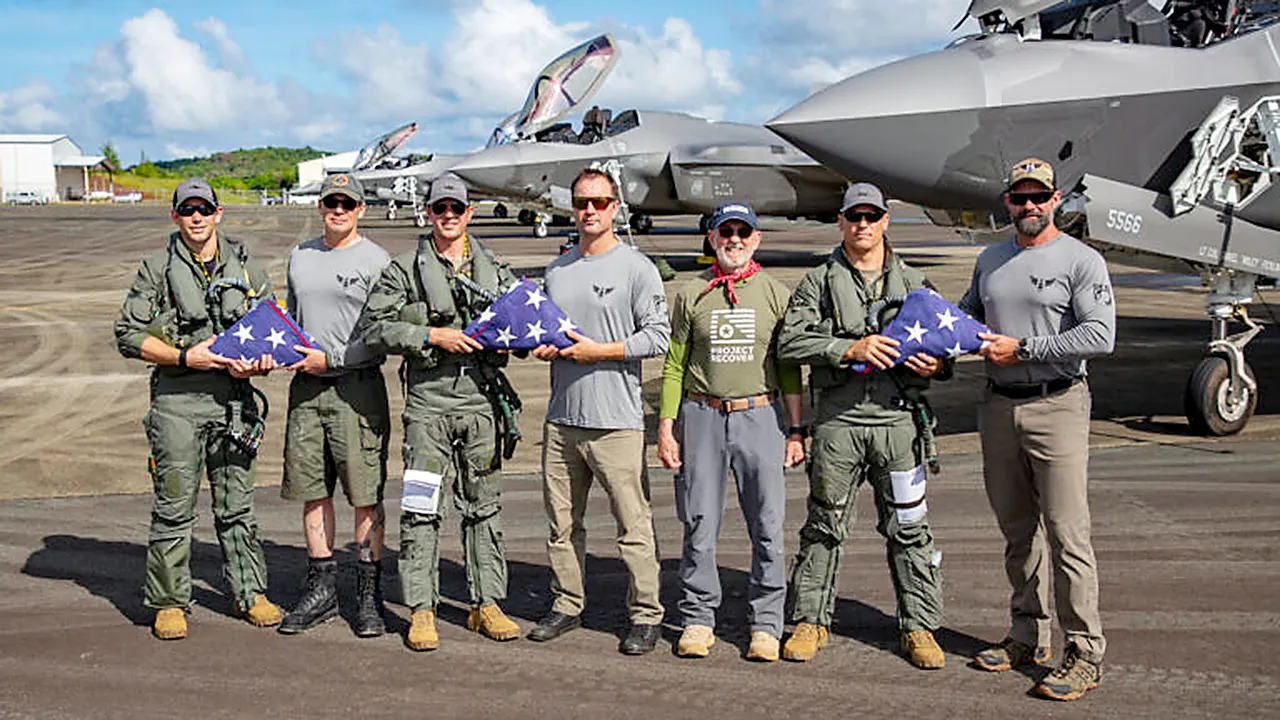
In the quiet depths of the ocean, remnants of America’s military history lie silent, holding secrets of brave men and women who never returned home. More than 80,000 American service members who went missing in action during previous conflicts remain unaccounted for today. Yet, there is hope. The Defense POW/MIA Accounting Agency believes that with modern technology and dedicated research, approximately 38,000 of these fallen heroes could be recovered and returned to their families. Leading this noble cause is Project Recover, a nonprofit organization working alongside government agencies to conduct complex underwater missions that locate and identify the final resting places of these American heroes. As former Navy Rear Admiral Tim Gallaudet, who serves on Project Recover’s advisory council, aptly puts it, “This is a great American story.” Their work employs cutting-edge technology like underwater drones and specialized diving equipment to locate aircraft and vessels where service members perished, followed by meticulous DNA analysis to match recovered remains with those listed as missing.
The organization’s inspiring journey began in 1993 when Dr. Patrick Scannon was touring the Palau islands with his wife. During their visit, he discovered the wing of a downed World War II aircraft—a 65-foot piece of metal that would change his life forever and spark the creation of Project Recover. The Palau islands hold particular significance in American military history, especially from World War II. In 1944, U.S. military strategists identified these islands as crucial to their larger mission of liberating the Philippines. What was expected to be a quick battle for the island of Peleliu turned into a brutal 74-day campaign. American forces faced a determined enemy of more than 10,000 Japanese troops who had ingeniously hidden in coral caves and mine shafts, rendering the initial bombardment of 600 tons of bombs largely ineffective. The cost was staggering: 1,800 Americans killed in action, over 8,000 wounded or missing, and nearly all 10,000 Japanese defenders killed. Across the Palau islands, nine major air campaigns resulted in approximately 200 lost aircraft—and with them, countless American lives vanished into the Pacific waters.
One particularly moving recovery effort centered on the crew of a bomber that crashed during pre-invasion strikes in September 1944. Lieutenant Jay Manown, AOM1c Anthony Di Petta, and ARM1c Wilbur Mitts were conducting bombing runs in preparation for the Peleliu invasion when enemy fire struck their aircraft, causing it to burst into flames before spinning out of control and crashing into the surrounding waters. For more than seven decades, their families lived without closure, until Project Recover located the plane wreckage in 2015. After conducting more than a dozen investigative dives, teams carefully removed the remains of all three service members. The recovery wasn’t immediate—it took years of forensic analysis and DNA technology to positively identify each man, with Lt. Manown being the last to be repatriated. The homecoming culminated in a ceremony in Manown’s hometown in West Virginia, where relatives of all three service members gathered to honor their long-lost loved ones. What emerged from this shared experience was something unexpected yet beautiful—a close bond between the three nieces of the fallen men.
“We’ve communicated beautifully and become friends through this experience and almost a sisterhood of type,” explained Rebecca Sheets, Manown’s niece. Diana Ward, Mitts’ niece, added, “We’ve talked so much by phone and feel so close. This is just a joy to meet each other in person, and we’re just sharing the emotion we’ve felt about bringing our uncles home.” Suzanne Nakamura, Di Petta’s niece, reflected on their unique connection: “We have a connection because our uncles were involved in not only defending the freedom of the United States, but as human beings who fought together and died together.” Their relationship illustrates how the recovery of these heroes creates ripples of healing that extend far beyond individual families, building communities connected through shared sacrifice and, finally, closure.
Project Recover’s impact extends well beyond the Palau islands. The organization has completed more than 100 missions across 25 countries, successfully repatriating 24 missing Americans and locating more than 200 others who are awaiting recovery efforts. Now, they’re turning their attention to a challenging case closer to home—a B-52 aircraft that disappeared during a training accident off the Texas coast in February 1968. Eight servicemen vanished when the Air Force bomber lost radar and radio contact during a routine mission. Despite an extensive nine-day search at the time, only three pieces of debris washed ashore in Corpus Christi, Texas. What makes this case particularly difficult is that the Defense POW/MIA Accounting Agency cannot allocate funds toward the search effort because the crash occurred during a non-conflict training accident. Yet approximately 32 family members of these eight men are still alive today, waiting for answers about what happened to their loved ones.
The mission to locate the missing B-52 exemplifies Project Recover’s unwavering commitment to leaving no service member behind, regardless of when or how they disappeared. “Not having found the wreck yet, we don’t know what the cause of the failure was. And so it’s our goal to find that wreckage and then take the remains and repatriate them to the families,” Gallaudet explains. The organization has already raised more than $300,000 for this mission but estimates another $200,000 is needed to complete the search. If successful in locating the aircraft, the Defense POW/MIA Accounting Agency will then be able to allocate resources for a recovery effort. This work stands as a powerful testament to America’s promise to its military personnel—that no matter how much time passes, their sacrifice will not be forgotten, and efforts to bring them home will never cease. Through organizations like Project Recover, the nation honors its sacred obligation to those who gave everything in service to their country, working tirelessly to ensure that even after decades, these heroes will finally come home.