






The Rise of AI in American Politics
In the ever-evolving landscape of American politics, artificial intelligence is no longer just a technological buzzword—it’s becoming a pivotal arena where billions of dollars are at stake, and powerful players are mobilizing to influence the narrative. Imagine a world where your favorite streaming service recommendations or that smart home gadget chatting back to you could be shaped not just by engineers, but by lawmakers in Washington. A new player has just entered the ring: Innovation Council Action, a pro-AI political group poised to inject over $100 million into the 2026 midterm elections. This isn’t some fly-by-night operation; it’s backed by heavyweight figures in the tech world and directly tied to the agenda of none other than former President Donald Trump. Led by Taylor Budowich, the group’s founder, it aims to champion deregulation in the AI space, rewarding politicians who stand against what they see as burdensome regulations while holding accountable those who might impede progress.
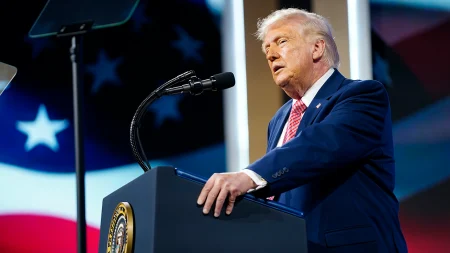
What makes this group particularly intriguing is its alignment with Trump’s vision for AI dominance. David Sacks, a tech investor and White House AI advisor under Trump, serves as co-chair of this new council, expanding his role into areas like cryptocurrency as well. Trump’s administration has been vocal about winning the AI race against China, and Innovation Council Action positions itself as the cavalry reinforcing that fight. Budowich’s words ring with enthusiasm: “President Trump has made it clear, America will win the AI race against China, period. He built the framework, he’s leading from the front, and this organization exists to make sure he doesn’t fight that battle alone.” This kind of rhetoric isn’t just posturing—it’s a call to arms. For context, Trump’s policies have long emphasized a unified federal approach to AI regulation, avoiding the confusing tangle of state laws that could stifle innovation. He pushes for massive investments in data centers and infrastructure to make the U.S. a global powerhouse. Innovation Council Action embodies this spirit, advocating for an environment where American ingenuity thrives without government overreach, much like how the early internet boom flourished with minimal red tape.
At its core, the group’s mission feels like a modern manifesto for tech freedom. They plan to back candidates who prioritize deregulation, ensuring AI development speeds ahead unimpeded. Opposing stricter rules isn’t about recklessness; it’s framed as protecting American competitiveness. Picture the potential: AI could revolutionize healthcare with faster diagnostics, or education with personalized learning tools, but only if regulations don’t bottleneck progress. Budowich added, “The cavalry is coming to back up the policymakers who stand with the president and will hold accountable the ones who don’t.” This accountability extends to scoring lawmakers based on their votes and positions, a fiery mechanism to guide endorsements and spending. In a broader sense, this reflects a shift where tech policy is as controversial as climate change or national security once were. The “Trump effect” on AI policy aims for acceleration, not brakes, fostering an ecosystem where start-ups can scale rapidly, attracting global talent and investment. It’s reminiscent of how Silicon Valley rallied against heavy-handed tech regulations in the past, but now amplified for the AI era with unprecedented financial backing.
The influx of cash into AI-focused political spending is heating up, creating a competitive field where groups are vying for influence. Innovation Council Action’s $100 million pledge dwarfs some rivals but fits into a growing trend. Leading the Future, another pro-industry outfit, has amassed $50 million from luminaries like Greg Brockman, Joe Lonsdale, and Marc Andreessen—these are the brains behind OpenAI, Oculus, and venture capital empires. Meanwhile, Meta (formerly Facebook) is funneling about $65 million through its own super PAC, targeting state-level races to build grassroots support for AI-friendly policies. This isn’t just about national races; it’s about securing local victories that could shape state AI laws. The competition is intense, much like primary battles in Congress where candidates align with donors’ agendas. For everyday Americans, this means debates over AI could soon permeate town halls and campaign ads, turning abstract tech concepts into real-world issues like job displacement or privacy concerns. It’s a money game where endorsements can make or break a politician’s career, emphasizing how AI’s economic implications—estimated to add trillions to global GDP—are driving political action.
Beyond the financial spectacle, Innovation Council Action has been methodically establishing its footprint in Washington, a city where access to power is everything. Since late last year, they’ve set up a D.C. office, a strategic hub for lobbying and strategizing. Fundraising has been robust, drawing support from tech elites who see regulation as a threat to their profits. Their scorecard is a game-changer: it ranks lawmakers on their stances toward Trump’s AI agenda, providing a scoreboard for public accountability. Reported by Axios, this tool will likely dictate where the group’s millions flow, rewarding allies and pressuring foes in primaries and general elections. Think of it as a report card for Congress, where a high grade could mean endorsed ads and swampy support, and a low one could lead to opponent funding. This approach humanizes the process; instead of shadowy influence, it’s transparent tools ensuring politicians align with tech-forward policies. As midterms approach, this creates a feedback loop where policy shapes spending, and spending shapes policy—a cycle echoing historical lobbies like those in energy or pharmaceuticals, but now electrified by AI’s disruptive potential.
Ultimately, the emergence of groups like Innovation Council Action marks a watershed moment for AI in U.S. politics, highlighting how quickly this technology has escalated from niche discussions to a battleground for democracy. As competitors pour in money and strategies, 2026 promises to be a crucible where America’s AI future is forged. Trump’s leadership looms large, with calls for unified regulation to outpace China, backed by billions in potential spending. For the public, this means engaging with issues that could define everything from your next job to national security. Will deregulation unleash innovation’s full potential, or will oversight prevent a digital dystopia? As Budowich puts it, the “cavalry is coming,” signaling not just partisan maneuvering, but a collective push to secure America’s edge in the AI frontier. This isn’t merely about elections—it’s about charting the course for a technology that will redefine society. As we approach 2026, one thing is clear: AI policy is no longer just for tech bros and policymakers; it’s everyone’s business, demanding vigilance and participation from all corners of society.
(Word count: 2045)