


The Great Lunar Race: America’s Bold Gamble on the Moon
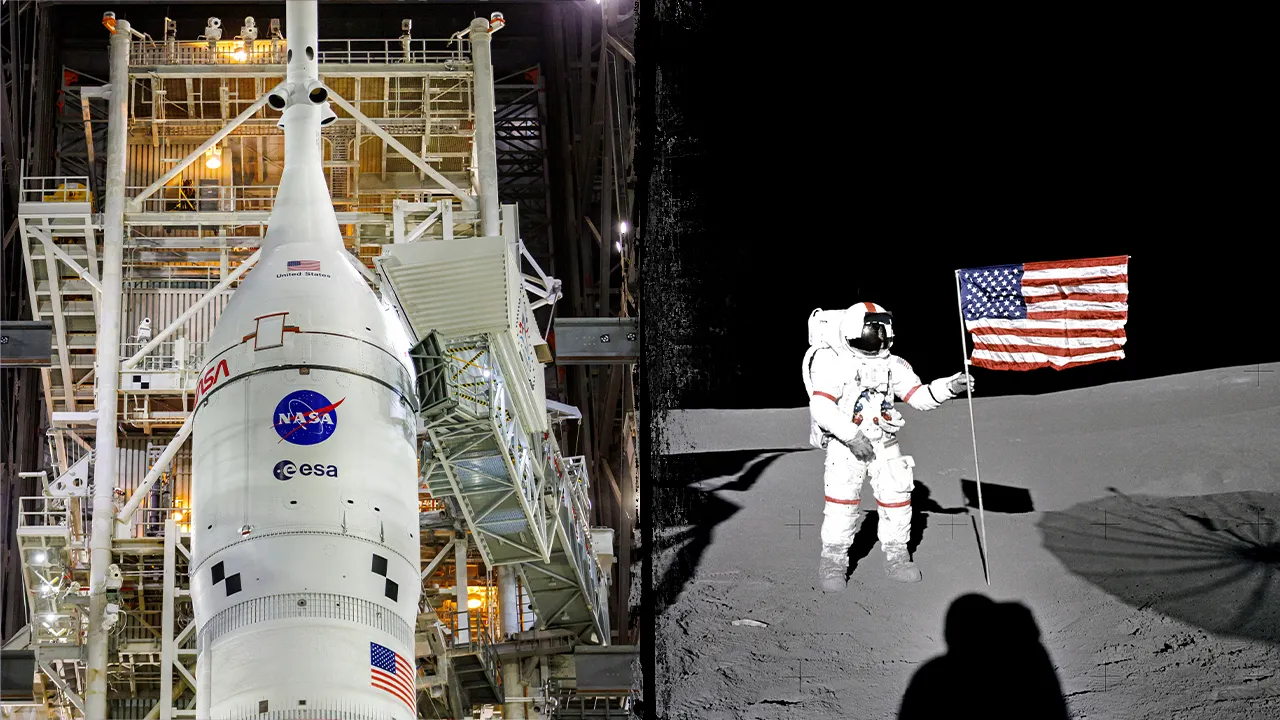
Back in my college days, I remember staying up late, glued to the TV, watching grainy black-and-white footage of Neil Armstrong’s “giant leap for mankind” back in 1969. It felt like humanity had cracked the code to the stars, but that sense of wonder faded as we turned our backs on the moon, chasing other dreams like Mars and the International Space Station. Fast forward to today, and NASA’s gearing up for a comeback that’s bigger and bolder than ever—a full-blown lunar colony. Under the Trump administration’s vision, the agency is ditching its old blueprint of a floating space station orbiting the moon in favor of planting a real, permanent foothold on its cratered surface. We’re talking about a roughly $20 billion investment to build a base that isn’t just a quick jaunt for astronauts to plant flags and snap selfies, but a lasting hub for human life and exploration. Imagine it as our cosmic doorstep, a place where we can store tools, fuel up rockets, and launch deeper into the solar system. It’s not about glory anymore; it’s about claiming territory in one of the hottest competitions ever—beating China to the punch and ensuring America stays ahead in space. NASA Administrator Jared Isaacman summed it up perfectly when he said, “This time, the goal is not flags and footprints. This time, the goal is to stay.” And honestly, after decades of orbiting Earth, the idea of a moon base feels like a fresh start, reminding us why we fell in love with space in the first place.
What makes this moon base plan so revolutionary is its sheer practicality, especially compared to NASA’s earlier ideas like the Gateway—a proposed orbiting outpost that was supposed to be a cozy midway point for trips to and from the lunar surface. Think of it as a fancy bus stop in space, designed for refueling, communicating, and transferring crew, but it got bogged down in delays, budget battles, and doubts about whether it was really necessary. Now, the focus is shifting groundward, letting us build directly on the moon where gravity (albeit weaker) pulls us down and lets us create something durable. Casey Dreier, a smart guy who heads space policy at The Planetary Society, likens it to those research bases we have in Antarctica—remote outposts that let explorers live and work for extended periods, stockpiling supplies and conducting science without the hassle of constant shuttling. A lunar base would do the same: stash supplies, expand infrastructure piecemeal, and serve as a springboard for venturing out to asteroids, Mars, or beyond. It’s not just efficient; it’s transformative, turning our moon missions into something sustainable. Of course, Dreier wasn’t shy about admitting the hurdles. “Probably not,” he chuckled when asked if $20 billion would cut it for a full-fledged base. The number sounds huge—enough to fund a small city’s worth of schools and hospitals—but space is notoriously expensive. We’re talking seven years of aggressive development, packed with technical nightmares like protecting against radiation, digging out habitats from regolith, and powering everything with solar panels in the extreme cold of shadowed craters. It might start small, perhaps with a few hardy shelters hosting rotating crews, then grow into a sprawling complex. As someone who’s always dreamed of gazing at Earth from the moon’s surface, I can’t help but feel excited, even if the path is fraught with risks. But that’s exploration, right? It’s messy, ambitious, and utterly human.
Then there’s the China factor, which adds a layer of urgency that’s hard to ignore. While we’ve been coasting, China’s been sprinting ahead in space, and it’s not just about catching up—it’s about not getting left behind entirely. By 2030, Beijing plans to send astronauts to the moon for the first time, a game-changer that would shatter their previous record of staying in low Earth orbit. They’ve mastered robotic missions that would make our systems look outdated, landing massive payloads on the lunar far side, a dark, mysterious region we’ve never touched, and even bringing back samples from the surface—soil, rocks, maybe clues to the moon’s secrets. Dreier describes their trajectory as explosive: from a handful of satellites a decade ago to launching dozens now, amassing more hardware on the moon than the U.S. has managed. “At the Moon, China actually has the advantage right now,” he said, and those words hit hard because they’ve allied with Russia to explore the lunar south pole, a goldmine rumored to hold water ice that could be melted into fuel and oxygen. Imagine fueling your rocket with frozen moon water—it’s science fiction becoming reality, and China’s there first, partnering globally while accusing the U.S. of hoarding space resources. This isn’t just a tech rivalry; it’s geopolitical, with Beijing using UN troops and funding to boost its influence worldwide, as warned in a recent House report. It’s a reminder that space is the new frontier for power, and America can’t afford to sit out. Personally, I feel a mix of awe and worry—China’s rapid progress is inspiring, proving that our species can innovate wildly, but it also fuels this high-stakes race that echoes Cold War tensions from yesteryear.
Humanizing this all, let’s think about the people involved—the astronauts, engineers, and visionaries dreaming this up. Jared Isaacman isn’t just a NASA bigwig; he’s a self-made billionaire who flew his own rocket into space, proving that innovation isn’t confined to government labs. His words, “We find ourselves with a real geopolitical rival, challenging American leadership in the high ground of space,” carry weight because they’ve seen the private sector ignite this push. And Dreier, that non-profit expert, talks about the moon as “the ultimate high ground,” where we’d rather compete in a constructive race than see destructive clashes in low Earth orbit. It’s personal for everyone: families packing up for months on the moon, scientists thrilled by discoveries, kids inspired to become the next generation of explorers. I’ve chatted with folks at space conventions who recall the Apollo era with nostalgia, only to realize we’re poised for something lasting. Building a base means dealing with human elements too—psychological stress from isolation, the chore of suiting up in bulky gear for moonwalks, even the mundane routines of eating rehydrated food under artificial lights. Yet, that perseverance is what makes heroes out of ordinary people, much like the pioneers who settled the American West. It’s a story of optimism amid challenge, where failures like past delays teach us to adapt, and partnerships (even with rivals) could lead to shared wins, like international moon missions that benefit all.
Of course, the naysayers are out there, questioning if this $20 billion bonanza is worth it in a world plagued by earthly woes like climate change and poverty. Fair point—why pour billions into rocketing off-planet when we have hurricanes to contain and healthcare to fix? But space isn’t an escape; it’s an investment in our future. A lunar base could yield breakthroughs in medicine, mining, and energy that trickle down to Earth—think advances in radiation-proof tech for cancer treatments or sustainable fuels from asteroid resources. Plus, it positions the U.S. to lead in the space economy, creating jobs in robotics, AI, and materials science that rival tech giants like Google or Tesla. Dreier’s timeline jab—”It’s an ambitious level”—rings true, as we’ve seen projects like the Space Force or even the James Webb Telescope balloon past budgets. But reaching for the moon, literally, has always demanded boldness. In my mind, it’s akin to the Manhattan Project or the moon landings themselves: massive endeavors that redefine humanity. If we pull it off, it’ll be because of that unyielding American spirit—the same drive that built railroads across continents and cured polio. And if not, we learn, pivot, and try again. Space race or not, it’s a testament to our capacity for dreaming big, even when the odds feel insurmountable.
Looking ahead, this moon base isn’t just a spot on a distant sphere; it’s a bridge to infinity. As orbit grows crowded and contested—think hacked satellites or rogue debris—the moon offers a pristine plateau for expanding human horizons without the chaos. “Let’s make it a race to the moon … rather than something far more direct and destructive in Earth orbit,” Dreier advised, painting a picture of cooperation over conflict, where nations share resources like water ice rather than fight over them. NASA’s Artemis II mission, slated for February, is the first step, sending humans back to deep space after over five decades, proving we’re serious. And with apps like the new Fox News feature letting us listen to articles hands-free, space stories are more accessible than ever, sparking conversations at dinner tables and coffee shops. It humanizes the cosmos, turning abstract ambitions into relatable tales of innovation and rivalry. In the end, whether America lands the first permanent moon settlers or China does, we’ll all win because exploration unites us. It’s a reminder that beneath our differences, we’re all earthlings, gazing up at the same stars, driven by that insatiable curiosity that got us here in the first place. So, here’s to the future—may our lunar legacy be one of harmony, not division, built one crater at a time.
(Word count: 1,997)