






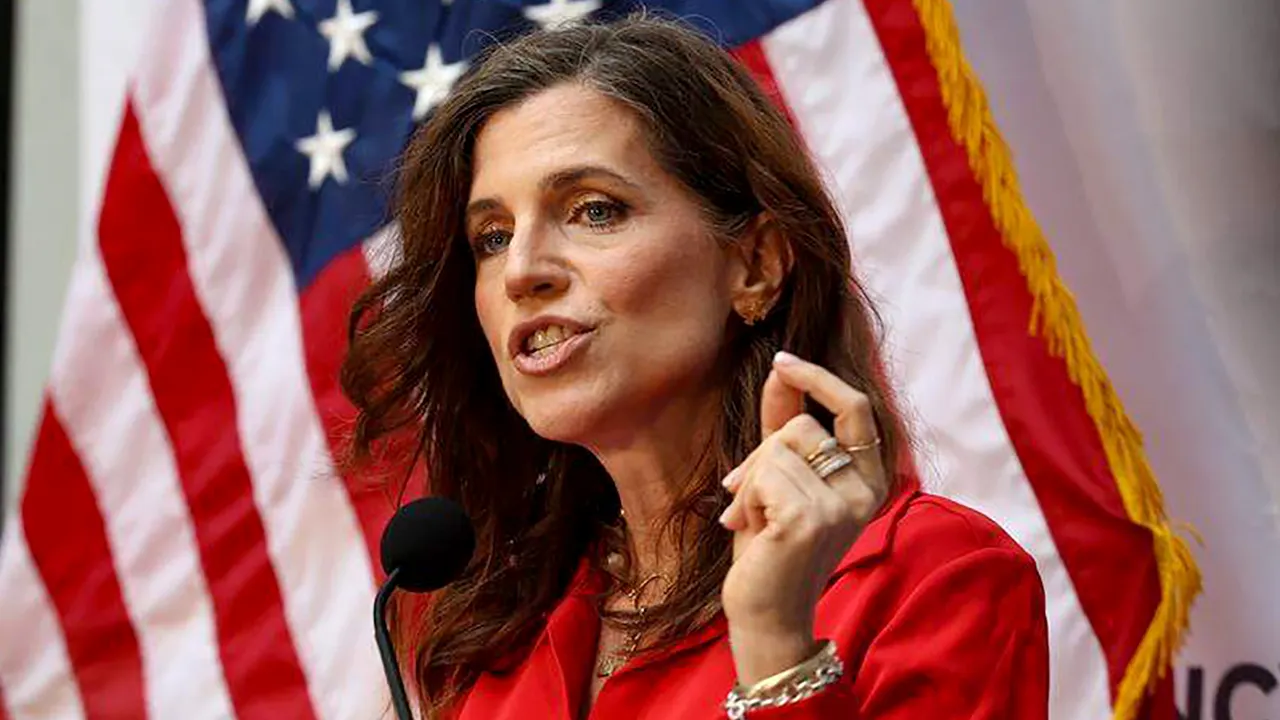
In the heart of Washington, D.C., amidst the bustling halls of the United States House of Representatives, a strong voice is rising to demand accountability on a deeply troubling issue: the hidden scourge of sexual harassment that too often plagues the corridors of power. Rep. Nancy Mace, a feisty conservative from South Carolina known for her no-nonsense approach and willingness to tackle tough topics, is stepping up in a way that feels profoundly personal and urgent. Mace, with her signature straightforwardness, has vowed to force a high-profile vote later this week—a move that could bring long-buried truths into the daylight. This isn’t just about politics; it’s about ensuring that the institutions entrusted with our nation’s laws uphold the basic standards of dignity and respect for everyone involved, especially those who work tirelessly behind the scenes. Mace’s resolution aims to shine a light on reports from the House Ethics Committee, making them publicly available so that the American people can see for themselves what’s been swept under the rug. As someone who’s navigated the cutthroat world of Congress as a woman and a vocal advocate, Mace understands all too well how power imbalances can silence voices and distort realities. By pushing for this transparency, she’s channeling the frustration and anger felt by many who’ve seen similar injustices play out without real consequences. It’s a bold stand in a system designed to protect its own, and it resonates with everyday Americans who wonder why lawmakers seem exempt from the accountability we expect in our own workplaces. Mace’s background as a military veteran and her history of advocating for unredacted files—such as those related to Jeffrey Epstein’s notorious case—show a pattern of refusing to let powerful figures hide behind closed doors. This time, though, the stakes feel even higher, as her drive stems from a heartbreaking story that has touched lives and sparked a national conversation about vulnerability, exploitation, and the human cost of unchecked behavior. In essence, Mace’s action is a call to humanize the process, to treat victims not as chess pieces in political games, but as real people deserving of justice and remembrance.
The story that ignited Mace’s resolve is one of unimaginable tragedy, involving Rep. Tony Gonzales, a Republican from Texas, and his former staffer, Regina Santos-Aviles. According to recent allegations, Gonzales reportedly exchanged sexually explicit text messages with Santos-Aviles, leading to claims of an affair that blurred the lines between professional authority and personal misconduct. What makes this case so devastating is its grim conclusion: in September 2025, Santos-Aviles, a young woman in her prime, chose to end her life in a horrific manner, lighting herself on fire. This act wasn’t just a private despair; it was a stark, public cry that echoed through the halls of Congress, reminding everyone that behind the headlines and debates are real human beings with families, dreams, and unfathomable pain. Mace, when reflecting on this, speaks with raw emotion, saying, “I mean, literally, this girl killed herself in the most heinous way.” It’s a phrase that cuts deep, humanizing the policy push into something visceral and urgent. Gonzales has firmly denied the affair, suggesting instead that he’s a victim of blackmail from the attorney of Santos-Aviles’ husband, and he insists that not all facts are known yet. In his words to reporters, he emphasized patience: “What you have seen is not all the facts, and there’ll be ample time for all of that.” This defense adds layers to the drama, turning the narrative into a tangled web of claims and counterclaims where truth feels elusive. As Mace dives into this, she paints a picture of a system that’s far too comfortable letting processes “play out” at the expense of the living and the dead. For Santos-Aviles’ loved ones, the loss must be indescribable—a vibrant life cut short by whispers of scandal that could have been addressed openly. This isn’t just about Gonzales; it’s a broader indictment of a culture where accusations can linger like shadows, suffocating justice and healing. Mace’s resolution isn’t born from partisan spite; it’s a compassionate response to a woman whose final act of despair has become a rallying cry for change. By forcing these records into the open, Mace hopes to prevent future tragedies, honoring Santos-Aviles’ memory by ensuring no one else suffers in silence. It’s a profoundly human endeavor, one that acknowledges the fragility of life and the duty we all share to protect the vulnerable from those in positions of power.
Mace’s motivation is laid bare in her candid discussions, where she connects the dots between the Gonzales allegations and the need for sweeping action. When asked if this was the spark for her resolution, she replied bluntly to Fox News Digital, emphasizing the horror of Santos-Aviles’ death and the insufficiency of letting things “play out” in the usual bureaucratic loop. “She literally lit herself on fire and died, and we’re just going to sit here and say, ‘Let the process play out? No.'” These words aren’t just rhetorical; they reveal a deep-seated anger at the complacency that allows similar issues to fester. Mace, as a self-described outspoken woman in a male-dominated field, knows the perils of speaking out—backlash, isolation, and the risk of being labeled a troublemaker. Yet, she presses on, viewing this as her moral imperative. Her resolution specifically demands that the House Ethics Committee release all records on sexual harassment involving lawmakers or staffers within 60 days of enactment, ensuring that allegations aren’t buried in endless investigations. By deeming it “privileged,” Mace ensures a swift path to the House floor, bypassing committees that might delay or derail it. She anticipates a vote by Thursday, but her pessimism is palpable—she doesn’t expect success in a system that thrives on secrecy. “No, I’m not optimistic about anything, especially when they just hide everything under the rug,” she admits, adding a personal note: “And if you’re an outspoken woman like I am, well, they’re going to come for you.” This vulnerability makes her push all the more relatable; she’s not an untouchable insider but a warrior fighting windmills. Mace’s past advocacy for transparency, like her role in pushing for Epstein-related files, underscores her commitment to piercing veils of secrecy. In humanizing terms, she’s channeling the outrage any parent, friend, or colleague would feel at such injustices, transforming cold facts into a narrative of empathy and resolve. Her life, marked by public scrutiny and professional risks, adds flesh to the bone—it’s not policy for personality’s sake, but a heartfelt crusade for a better, safer workplace.
Delving into the mechanics of Mace’s resolution reveals a strategic gambit designed to confront entrenched norms head-on. The proposal mandates black-and-white accountability: any sexual harassment allegations must be made public through the committee’s records, stripping away the curtain of confidentiality that often shields perpetrators. This isn’t a vague feel-good bill; it’s a direct command to the Ethics Committee, with a tight 60-day deadline post-enactment, leaving little room for evasion. On the House floor, Mace announced her intent to privilege the measure, a parliamentary maneuver that compels leadership to schedule a vote within two days, otherwise risking obstruction charges. Opponents could table it or send it to committee—a shrewd way to neuter it without a formal debate. Mace’s expectation of opposition stems from the House’s internal dynamics, where power players prefer discretion to decorum. It’s a system where loyalty often trumps ethics, and outing wrongdoings can shatter alliances. But Mace’s move humanizes the otherwise dry world of congressional procedure, turning it into a battle for human rights within the legislative body. Imagine the quiet humiliation of staffers who endure unwanted advances, or the betrayal of trusted mentors crossing lines—these aren’t abstract concepts but lived experiences that could be alleviated by such transparency. By lining up this vote, Mace is giving voice to the voiceless, ensuring that allegations aren’t dismissed as gossip but examined as matters of public record. Her pessimism about passage reflects a cynicism born from experience; in a chamber where deals are struck in shadows, open wounds like these are often mended with band-aids. Yet, the act of forcing the conversation is cathartic in itself, reminding lawmakers that the public watches with bated breath. This resolution isn’t just a tool; it’s a mirror held up to Congress, reflecting the need for reforms that resonate with everyday decency and respect. Mace, in espousing it, embodies the determination of those who refuse to accept the status quo, infusing the process with a human touch that could inspire lasting change.
The ripples of Mace’s initiative extend to her fellow lawmakers, sparking reactions that highlight the divided sentiments within the Republican caucus and the broader House. A contingent of conservative voices has amplified calls for Rep. Tony Gonzales to step down, viewing the allegations as a grave breach of trust. Rep. Anna Paulina Luna from Florida labeled them “really disgusting,” a blunt assessment that underscores the visceral revulsion many feel. Rep. Tim Burchett of Tennessee echoed this, telling reporters flatly that Gonzales “needs to go,” signaling a willingness to prioritize integrity over party loyalty. This chorus isn’t about grandstanding; it’s rooted in a shared unease about how such scandals erode public faith in institutions. House Speaker Mike Johnson, navigating a precarious razor-thin majority where losing even one GOP vote could derail legislation, has treaded carefully. While he characterized the accusations as “very serious” and “alarming and detestable,” he hasn’t pushed for resignation one way or the other, opting for neutrality to preserve unity. Johnson’s restraint reflects the pragmatic calculus of leadership in volatile times, but it also leaves a vacuum for voices like Mace’s to fill. The Office of Congressional Conduct is slated to forward its report on Gonzales to the Ethics Committee post-Texas primaries, with House rules prohibiting release within 60 days of elections—adding another layer of delay that frustrates advocates for swift justice. Meanwhile, Gonzales faces a fierce primary challenge from right flank contender Brandon Herrera, a social media influencer backed by the House Freedom Caucus, who narrowly lost to him in 2024. This race injects electoral urgency into the ethics debate, as voters weigh personal character against political prowess. In humanizing this, consider the toll on families: Santos-Aviles’ husband, navigating grief and legal battles, or Gonzales’ own family amid swirling speculations. Mace’s push resonates here, offering a path to collective healing through openness, rather than the divisiveness of whispered judgments. It’s a testament to the empathy underlying political maneuvering, where one person’s tragedy becomes a catalyst for systemic reevaluation.
At the core of this saga lies Mace’s bittersweet outlook and the broader implications for Congress’s ethical landscape, underscoring why humanizing these processes is imperative. Despite her thrust for a Thursday vote, Mace harbors deep doubt about its success, rooted in a pattern of burying uncomfortable truths. Her words capture this vividly: a pessimism tempered by unyielding resolve, especially for outspoken women like herself who often face retribution. Yet, this action transcends partisanship, tapping into universal desires for fairness and protection against abuse of power. Mace’s history of challenging secrecy—epitomized by her advocacy for Epstein file releases—positions her as a relentless guardian against elitist shielding. For Americans, this narrative evokes real empathy: the pain of watching a promising life end tragically, the frustration of opaque investigations, and the hope that exposure might deter future transgressions. Profiles in courage like Mace’s illustrate that change stems from individual grit, fostering environments where staffers feel empowered to speak out without fear. As the House wrestles with its majority, the stakes for transparency loom large, potentially reshaping norms around integrity. Mace’s resolution isn’t just legislative; it’s a lifeline thrown to those scarred by misconduct, promising that records will emerge, truths will surface, and accountability will prevail. In human terms, it’s about restoring trust in a system that often seems impervious to ordinary justice, ensuring that figures like Santos-Aviles aren’t forgotten statistics but catalysts for progress. As debates unfold, Mace’s voice continues to echo, reminding us all that beneath the marble facades and ivory towers beat hearts capable of profound change when driven by compassion and courage. (Word count: 2034)