






Judge’s Unusual Ruling Stirs Controversy in Minnesota Medicaid Fraud Case
The Unexpected Overturn of a Major Fraud Conviction
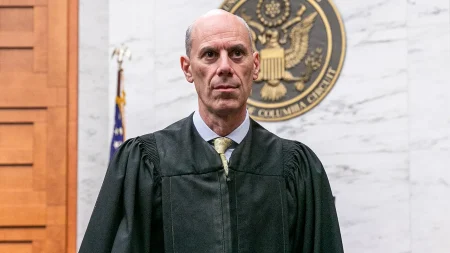
In an extraordinary move that has sent ripples through Minnesota’s legal community, Hennepin County Judge Sarah West recently overturned a unanimous jury verdict in a $7.2 million Medicaid fraud case. This decision has raised eyebrows across the state, coming at a particularly sensitive time when Minnesota faces multiple welfare and human-services fraud scandals that have already captured national attention. The case involved Abdifatah Yusuf, who a jury had unanimously found guilty of six counts of aiding and abetting theft. Prosecutors alleged that Yusuf and his wife stole millions from the state’s Medicaid program while operating a home-healthcare business that existed primarily “out of a mailbox” and used the stolen funds to finance luxury shopping sprees at high-end retailers. Despite the jury’s conviction, Judge West determined that the prosecution’s case relied too heavily on circumstantial evidence and failed to eliminate other reasonable explanations for Yusuf’s involvement, particularly the possibility that his brother might have committed the fraud without his knowledge.
An Uncommon Legal Decision Draws Expert Scrutiny
Legal experts have emphasized just how unusual this judicial intervention is, especially in white-collar crime cases. JaneAnne Murray, a University of Minnesota law professor specializing in criminal procedure, expressed surprise at the decision, noting that “it is highly unusual for a judge to reject a jury’s verdict in any case, much less a white-collar one, where issues of intent will almost always be circumstantial.” Former federal prosecutor Andy McCarthy characterized the ruling as extending “far beyond what trial judges are normally permitted to do,” adding that the rationale seemed “untenable.” McCarthy explained that circumstantial evidence frequently provides a strong foundation for conviction, and that judges typically instruct juries to view evidence holistically rather than in isolation. The jury foreperson, Ben Walfoort, publicly stated his shock at the reversal, claiming the jury’s decision to convict “was not a difficult decision whatsoever” based on the evidence presented during trial.
Minnesota’s Unique Legal Standard at the Center of Controversy
The judge’s decision highlights Minnesota’s uniquely stringent standard for circumstantial evidence, which requires prosecutors to “exclude any reasonable hypothesis of innocence.” This standard, which is currently under review by the Minnesota Supreme Court, gives judges broader latitude to vacate convictions if they determine that prosecutors haven’t ruled out every reasonable alternative explanation for a defendant’s conduct. Judge West, a former public defender appointed to the bench in 2018 by then-Governor Mark Dayton, appears to have applied this standard strictly in her ruling. While acknowledging that the scale and nature of the fraud was “of great concern,” she ultimately concluded that the state failed to prove beyond reasonable doubt that Yusuf knowingly participated in the scheme, writing that “there is a reasonable, rational inference that Mr. Yusuf was the owner… but that his brother, Mohamed Yusuf, was committing the fraud… without Mr. Yusuf’s knowledge or involvement.”
Political Dimensions of a Legal Decision
The ruling has quickly taken on political dimensions, with Republican Minnesota Senator Michael Holmstrom publicly criticizing Judge West as a “true extremist” and demanding she unseal key exhibits and the entire case record. In a formal letter, Holmstrom argued that the public “must know what is happening in their courts and in their welfare programs,” characterizing the decision to lock away documents produced in open court as a violation of Minnesota’s tradition of transparency. Judge West’s background as a public defender who previously handled juvenile and child-protection cases in Hennepin County, along with her leadership roles in the Hennepin County Bar Foundation, which funds legal aid and community justice programs, has become part of the political discourse surrounding the case. The decision comes at a time when Minnesota is already facing scrutiny over its ability to prevent and prosecute fraud in its welfare systems.
Broader Implications for Fraud Prosecution in Minnesota
Beyond the specifics of this case, the ruling has triggered broader concerns about Minnesota’s resolve to prosecute white-collar and welfare fraud at a time when billions in public funds could be vulnerable. The state is already grappling with what some reports describe as “schemes stacked upon schemes” in its human services programs, with alleged fraud potentially reaching into the billions of dollars. McCarthy suggested that because Judge West waited until after jury deliberations to overturn the verdict, the state may still have the ability to appeal—a procedural opening that wouldn’t exist had she dismissed the case before the jury deliberated. Indeed, Minnesota Attorney General Keith Ellison has already filed an appeal, signaling that this unusual legal battle is far from over.
A Test Case for Minnesota’s Justice System
As this case moves through the appeals process, it represents a significant test for Minnesota’s justice system and its ability to address complex fraud cases. The outcome will likely influence public perception of the state’s commitment to protecting public funds and holding accountable those who misuse them. The strictness of Minnesota’s circumstantial evidence standard, which gives judges substantial power to overrule juries, may itself face greater scrutiny as a result of this high-profile case. With the Minnesota Supreme Court already reviewing this decades-old standard, the timing of Judge West’s decision adds another layer of complexity to ongoing legal debates. Meanwhile, the public, lawmakers, and legal community will be watching closely as the appeals process unfolds, with potentially far-reaching implications for how white-collar crime is prosecuted in the state going forward.