

The Heart of the Debate: Congress Steps In on Iran’s War Path
In the tense world of American politics, especially when it involves matters as grave as war and national security, few things stir up as much passion and division as the clash between presidential power and congressional oversight. Picture this: it’s a Thursday in the House of Representatives, and lawmakers are voting on something called the Iran War Powers Resolution, spearheaded by Democrats. This isn’t just any vote—it’s a bold attempt to rein in President Donald Trump’s ability to wage military action against Iran without first getting explicit approval from Congress. The resolution basically says that unless Congress signs off, Trump can’t keep using U.S. armed forces against Iran. It’s a direct challenge to the executive branch, rooted in the Constitution’s Article I, which gives Congress the sole power to declare war. As someone who’s fascinated by how democracy checks and balances its own leaders, I can’t help but see this as a pivotal moment. It’s not just about policy; it’s about the soul of American governance. The vote came on the heels of a U.S. strike against Iran, sparking a full-blown regional conflict in the Middle East. Republicans and Democrats are dug in along party lines, with one side fearing overreach by the White House and the other worried that tying the president’s hands could leave America vulnerable. This resolution, if passed, would force Trump to seek congressional authorization before any further military moves, essentially pulling the trigger that could prevent escalation. But why now? Democrats argue that Trump has bypassed the proper channels, acting unilaterally in a way that echoes past administrations’ mistakes. It’s a reminder that even in times of crisis, the Founding Fathers designed our system to prevent any one person from rushing into war without collective consent. For many Americans, this vote embodies a hope that cooler heads will prevail, avoiding another protracted quagmire like the ones we’ve seen in Iraq or Afghanistan. Yet, it also highlights the fragility of bipartisanship when national interests hang in the balance. As the vote unfolded, it wasn’t just a procedural affair—it was a testament to the ongoing struggle to define who holds the reins of power in times of global uncertainty.
Jayapal’s Defense: A Voice for Constitutional Integrity
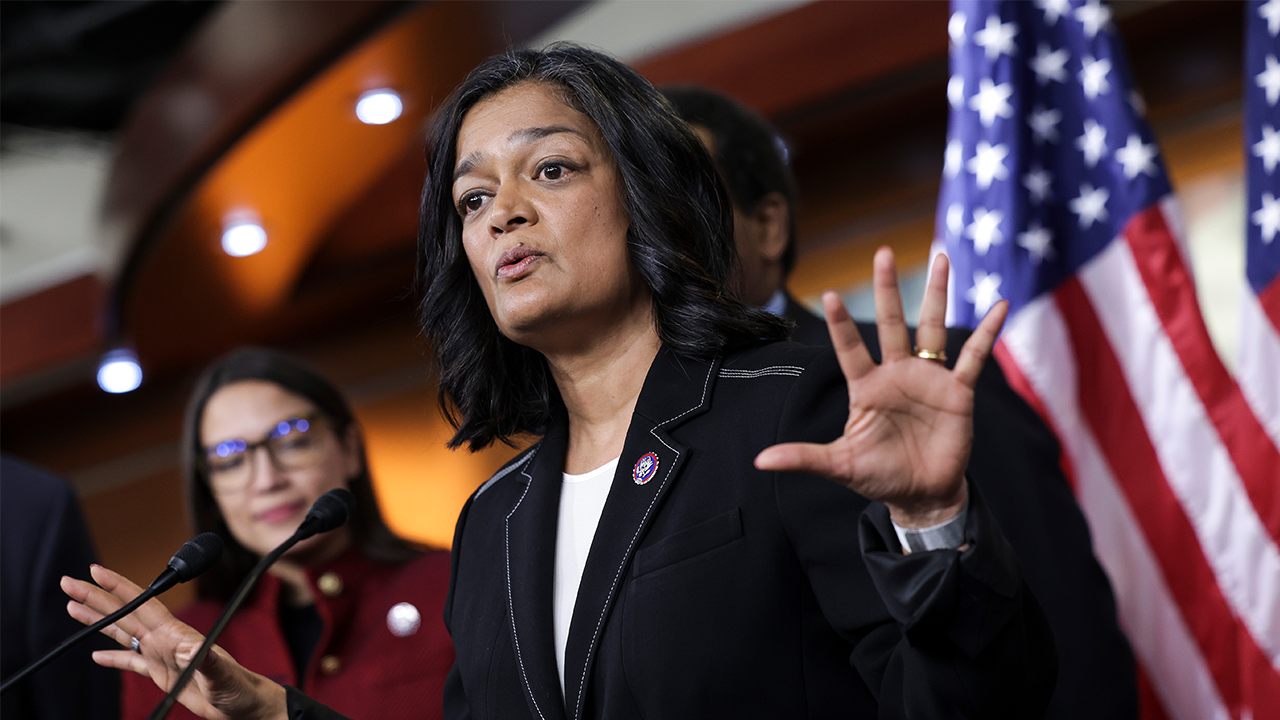
Among the voices rising above the fray was Rep. Pramila Jayapal, a Democrat from Washington, who sat down with Fox News Digital right after the vote to make her case. She’s not one to mince words when it comes to protecting what she sees as the core of our democracy. Jayapal argued that President Trump had clearly overstepped his boundaries, encroaching on Congress’s Article I powers—the ones that let lawmakers declare war and decide how to use military force. In her view, putting American troops at risk based on one person’s opinion is unacceptable. It’s a stance that resonates with anyone who’s ever worried about unchecked power leading to disastrous decisions. Jayapal didn’t pull punches; she pointed out that Trump was acting without the necessary Congressional backing, much like other presidents have done in the past. She recalled her own criticisms of former President Joe Biden, who ordered airstrikes on an Iran-backed militia in Syria back in 2021 without full consultation. “I spoke out against Biden as well,” she said, emphasizing that her stance isn’t partisan—it’s about upholding the Constitution regardless of who’s in the White House. This bipartisan consistency is refreshing in today’s polarized climate, where party loyalty often trumps principles. Jayapal went on to stress that Congress alone holds the authority to declare war, and unilateral actions by presidents undermine that. Imagine the anxiety of families across America whose loved ones could be deployed without a thorough debate in Congress. Her words paint a picture of a system where leaders must be held accountable, where the voices of elected representatives in the House and Senate aren’t sidelined by executive whims. By backing this resolution, Jayapal is championing a vision of governance where democracy doesn’t just pay lip service to checks and balances—it actively enforces them. Her interview wasn’t just defensive; it was a call to action, urging lawmakers to remember why the Framers insisted on separating powers. In a world where threats from abroad loom large, ensuring that no single leader can drag the nation into conflict without oversight feels like common sense, not radicalism. It’s the kind of principled stand that reminds us why we elect representatives—to protect us from rash decisions that could cost lives and livelihoods.
The Simmering Middle East Crisis and Its American Echoes
To fully grasp the urgency of this House vote, you have to step back and look at the broader canvas of events that set it off: a burgeoning war in the Middle East triggered by the U.S. strike on Iran just days earlier. It’s a volatile situation where tensions have been building for years, with Iran’s proxies and U.S. interests clashing in unpredictable ways. Democrats seized on this to argue that Trump was racing America into yet another drawn-out conflict, this time without bothering to loop in Congress. Think about it—the Middle East has been a cauldron of unrest for decades, from the Gulf War to the Iraq War, and now with Iran emerging as a central player, the stakes feel even higher. Some House Democrats even urged Speaker Mike Johnson to keep the chamber in session next week because of the “rapidly evolving” situation, showing how real the fears are. This isn’t just abstract politics; it’s about real lives—American troops who might be sent into harm’s way without full backing from elected officials. On the flip side, Republicans contend that the White House is operating within its lawful authority, prioritizing national security in a world that’s anything but stable. The strike itself was a response to attacks, and for many conservatives, second-guessing the president during such a sensitive time is not only impractical but dangerous—it could signal weakness to adversaries like Iran, emboldening them further. As someone trying to make sense of it all, I feel a pang for the ordinary people caught in these geopolitical games: civilians in Iran fearing escalation, U.S. families awaiting news of loved ones, and lawmakers wrestling with impossible choices. The resolution aims to prevent a repeat of past blunders, where limited actions morphed into full-scale wars. Yet, the Trump administration’s defenders argue that flexibility is key—presidents need leeway to protect U.S. personnel and interests abroad without bureaucratic hurdles. It’s a debate as old as the republic, echoing the framers’ fears of tyranny while acknowledging the realities of modern threats. In human terms, this isn’t just about military strikes; it’s about preventing another generation from inheriting wars we didn’t fully debate. The Middle East crisis serves as a stark reminder of how interconnected global events are with domestic politics, forcing Americans to confront whether their leaders are truly serving the people’s will.
Republican Resistance: Safeguarding Presidential Prerogative
Not surprisingly, the Iran War Powers Resolution faced stiff opposition from nearly all GOP House members, who view it as an overcorrection that could handcuff the commander in chief when swift action is needed. They argue that criticizing Trump’s decisions, especially mid-conflict, undermines the very executive powers that have historically kept America safe. Picture a scenario where enemies exploit any perceived delay or division—Republicans say this resolution does just that, by demanding explicit Congressional authorization for every move against Iran. It’s not that they don’t believe in oversight; it’s that they prioritize the president’s ability to respond decisively to foreign threats. Some critics of the Democrats’ push have labeled it as Monday-morning quarterbacking, accusing lawmakers of playing politics during a crisis. For instance, they point to the lack of an “imminent” threat that Democrats allege, suggesting Trump’s actions under Article II powers (presidential authority for military action) are justified by national security necessities. In the eyes of Republicans, restricting Trump’s authority could weaken America’s global standing, making adversaries bolder and less likely to fear U.S. resolve. This isn’t idle chatter—think of hostages or sailors in danger; a president needs flexibility to act without waiting for Congressional gridlock. Moreover, they highlight the hypocrisy, noting that Democrats have supported executive actions in the past. Rep. Jayapal’s criticisms, while consistent, are seen by some as opportunistic, especially when contrasted with her stances on other administrations. For many conservatives, this vote is about preserving the checks already in place, like the War Powers Resolution of 1973, which already limits presidential actions to 60 days without Congressional approval. Yet, they worry that this new measure sets a precedent for endless interference. In humanizing this, consider the weight on a president like Trump, dealing with real-time intelligence and the safety of troops—second-guessing from D.C. could feel paralyzing. Republicans aren’t just defending party lines; they’re articulating a pragmatic view that strong leadership requires some latitude. It’s a perspective that appeals to those who value decisiveness over deliberation in the face of danger, reminding us that America’s strength has often depended on a unified front against threats abroad.
Democrats’ Unified Front and Historical Parallels
Meanwhile, Democrats have doubled down on their concerns, painting the Iranian situation as another in a long line of conflicts where the U.S. risks getting bogged down without proper authorization. Their resolution counters what they see as Trump’s disregard for consultation, drawing parallels to how Biden’s 2021 Syria airstrike sparked similar criticisms from Jayapal herself. She’s not alone—many in her party believe this isn’t about partisanship but about safeguarding the Constitution’s framework. They emphasize that Article I vesting war powers in Congress is non-negotiable, designed to prevent presidents from wielding unchecked authority. In this context, the Trump administration’s approach feels alarming, especially since the U.S. presence in Iran could escalate into something far more substantial than the Syrian engagement. Jayapal pointed out that “real troops on the ground” and the potential for a “much bigger war” necessitate congressional involvement, lacking the Biden case’s “imminent threat.” This resonates with a public weary of endless wars, where Iraq and Afghanistan serve as cautionary tales. Some Democrats have even risked internal party divides by supporting the resolution, acknowledging that lessening presidential flexibility could hamper rapid responses, but arguing it’s a necessary evil to avoid abuses. The call for Congress to stay in session underscores their belief in urgency—waiting for a formal declaration could mean the difference between prevention and catastrophe. For everyday Americans, this debate isn’t abstract; it’s about ensuring that their tax dollars and soldiers aren’t deployed on presidential whims. Democrats like Jayapal frame it as a principled stand, non-partisan in nature, critiquing every administration that skirts Congressional roles. It’s a narrative that humanizes the stakes: imagine explaining to a grieving family why their son was sent into battle without a national consensus. By pushing this resolution, Democrats aim to reclaim their Article I mantle, fostering a dialogue that hopes to curb reckless foreign policy. In the grander scheme, it revives debates from Vietnam and Korea eras, where executive excesses led to Congressional reforms. For those on the left, this vote is a bulwark against authoritarian drifts, a chance to make governance more participatory and less perilous.
The Broader Imprint: Balancing Power in a Divided Era
As this episode unfolds, it underscores a timeless American tension: the delicate interplay between presidential initiative and Congressional duty in matters of war and peace. Spanning administrations and conflicts, the debate over war powers—from the Gulf of Tonkin Resolution to the 2001 AUMF—has never been fully resolved, and this Iran resolution brings it roaring back. Democrats see it as a corrective, forcing clearer lines to prevent unilateral disasters, while Republicans warn against weakening the Oval Office’s edge in a dangerous world. Yet, humanizing this reveals deeper truths: our democracy thrives on these clashes, as messy as they are, ensuring no branch overruns the others. For civilians, the implications are profound—escalation without consultation could mean more wars, more losses, and more distrust in leadership. Jayapal’s optimism in her Constitutional case offers hope that future presidents might tread more carefully, consulting lawmakers to build consensus. Meanwhile, critics fear that such constraints could invite chaos, with foreign actors testing America’s resolve. In the end, whether the resolution passes or not, it’s a catalyst for reflection on priorities: security, yes, but with accountability. This isn’t just about Trump or Iran—it’s about forging a system resilient against overreach. Americans from all walks—parents, veterans, policymakers—watch closely, knowing that the decisions made today shape our collective future. As the Middle East simmers, so too does the commitment to a government where power is shared, not seized. In empathizing with lawmakers on both sides, one feels the weight of history: wars avoided through dialogue versus those ignited by haste. This debate, messy and partisan, reminds us that democracy’s strength lies in its ability to argue, adapt, and ultimately protect. For those pondering the path ahead, it’s a call to engage, to humanize the processes that govern us, ensuring that war’s horrors are debated openly, not decreed solitarily. The resolution’s legacy might just redefine how America confronts global threats, blending vigilance with wisdom in an unpredictable world.