


Judge Rules NY’s Republican District Unconstitutional: What This Means for Representation and Democracy
A significant court decision has reshaped the political landscape in New York City, as State Supreme Court Justice Jeffrey Pearlman ruled Wednesday that New York’s 11th Congressional District—currently the city’s only Republican-held seat—violates the state constitution. The judge determined that the district’s configuration dilutes the voting power of Black and Hispanic residents, ordering the Independent Redistricting Commission to create a new map by February 6. The ruling highlights ongoing tensions between racial representation and partisan politics, with implications that extend beyond New York’s borders as both parties engage in redistricting battles nationwide ahead of the 2026 midterms.
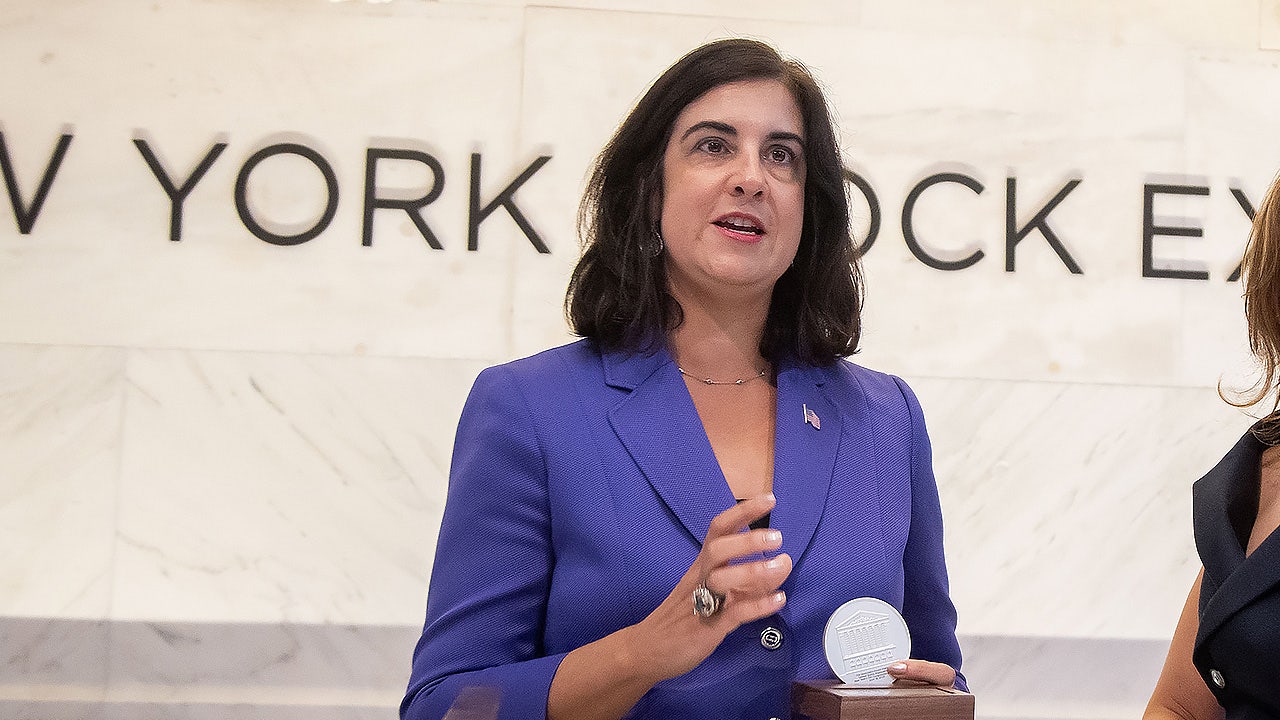
The district in question, represented by Republican Nicole Malliotakis since 2020, encompasses all of Staten Island and portions of southern Brooklyn. It has increasingly favored Republicans in recent years, supporting former President Trump in multiple elections and backing GOP Senate candidates after previously supporting Democrats. The lawsuit challenging the district’s configuration was filed by Democratic attorney Marc Elias’s law firm, which argued that the district systematically undermines the growing minority populations on Staten Island. Aria Branch, a partner at Elias Law Group, celebrated the decision, noting that it “reaffirms that New York’s Constitution provides robust protections against racial vote dilution.” Judge Pearlman’s ruling cited evidence of “racially polarized voting” and “a history of discrimination that impacts current day political participation and representation” as key factors in his decision.
Republican response to the ruling has been swift and forceful, with Rep. Malliotakis condemning it as “a frivolous attempt by Washington Democrats to steal this congressional seat.” New York State Republican Committee Chairman Ed Cox characterized the lawsuit as “a cynical attempt to enact an illegal partisan gerrymander under the guise of a voting rights case,” while Staten Island Republican Party Chairman Michael Tannousis called the decision “a complete sham,” arguing that Democrats are “trying to fracture our community because they don’t like how we vote.” These reactions underscore the deeply partisan nature of redistricting fights, where questions of fair representation often collide with party interests. Republicans are expected to appeal the decision, extending a legal battle that has already seen multiple redraws of New York’s congressional maps since the 2020 census.
In contrast, Democratic officials have welcomed the court’s intervention. Governor Kathy Hochul endorsed the ruling, stating that “the court’s decision underscores the importance of these constitutional principles” and emphasizing that the redraw would ensure impacted communities “are fully represented and have a voice in our democracy.” The contrasting responses highlight how redistricting has become increasingly contentious, with both parties seeking advantage through map configurations. This ruling is particularly significant because it employs racial vote dilution arguments under the New York Voting Rights Act rather than purely partisan gerrymandering claims, potentially setting a precedent for similar challenges in other states.
The history of New York’s congressional maps adds another layer of complexity to the current dispute. Following the 2020 census, Democrats attempted to implement a favorable map that was subsequently struck down as unconstitutional gerrymandering. This led to a court-ordered independent redraw for the 2022 midterms, which was later thrown out and redrawn yet again before the 2024 election. This pattern of legal challenges and map revisions illustrates the high stakes of redistricting in contemporary American politics, where control of the House of Representatives can hinge on the boundaries of just a few critical districts. The current ruling represents the latest chapter in this ongoing saga, with potential ramifications for party control in Congress.
As this case moves through the appeals process, it exemplifies broader national trends in redistricting battles. Similar legal challenges are unfolding in states like California and Virginia, where courts and commissions are weighing questions of partisan advantage against constitutional requirements for fair representation. These disputes reflect fundamental tensions in American democracy between majority rule and minority protection, between partisan competition and community cohesion. Whatever the final outcome in New York’s 11th District, the case highlights how redistricting has become a crucial battleground in America’s increasingly polarized political landscape, with implications that extend far beyond the boundaries of Staten Island and Brooklyn to the very heart of representative democracy.